Embarrassing yourself in Korea – Spa Etiquette 101


Embarrassing yourself in Korea – Korean Mysteries

When you don’t speak the languge – and can’t read the signs – it’s pretty easy to make mistakes. My latest embarrassements were Spa related. The Kensington Resort in Sokcho is reputed to have one of the nicest Spa’s in the area – so naturally – I had to go. The cost was a measly 6000 Won – $6, clearly a deal.

I’ve done Spa’s before in various countries – Japan, Laos, Vietnam, Fez – so I’m not a complete idiot where Spa Etiquette is concerned – but somehow I manage to mess it up anyway.

In the case of the Kensington, I really only made a few major errors. But let’s start at the beginning.

My first Spa attempt was on Wednesday – I mention this because I think Wednesday must be a down day at the Spa – only about 5 people there – all in separate areas. Wonderfully private. My ‘oops’ – I wanted to wear my bathing suit. Heads-up people – Spa’s in Korea are ‘nudu’ – that’s nude. They have complete separate facilities for men and women – kids don’t count – so it’s not like you are suddenly visiting a nudist colony – but bathing suits are a definitely no-no.

Stripped to an approrpiate state – I could now enter the Spa. There were 2 large saunas – one labeled ‘Finnish Style’, the other called ‘Yellow Ocher’. There were also 4 large ‘pools’, each with a digital temperature display – 37.9, 40.0, 41, and 31.5. The 41 degree pool was hot sea water – and it felt great. The 31.5 degree pool was ‘cold’ water – and I ended up between these two. But first you must shower. Good news – been in Japan – know how to use a Japanese bath.

In the Korean version – you had 2 choices. You could do a standard Japanese bath – you sit on a low stool in front of a mirror, and use buckets of hot and cold water and soap to get everything clean. Or you could opt for a western style shower – which is what I took. The floor was particularly neat – it was made of large flat stones, with narrow sections that were deeper and led to the drains. So the flat stones, while wet, didn’t stay soapy and slick – all the soap was washed down into the narrow sections and from there to the drains.

After a good scrub down – I was able to enjoy the hot tubs. They weren’t very deep, just right for sitting in – and there were slabs that connected the sections that you could perch on to get out of the hot water. The view – despite the name – Ocean Spa – wasn’t much – the windows were frosted to maintain privacy.

Overall – a lovely experience. So of course – I wanted to do it again. This time on Sunday.
Well – Sunday is bath day amoung the local 20 to 40 year old crowd apparently – and the place was packed. I counted at least 40 women – plus 5 kids ranging from about 3 to 12 years of age. The 2 massage tables were filled, the saunas were in full use, and I had problems finding a quiet corner that didn’t get splashed when I was soaking in the hot salt water. Not that the noise level was high – but there was conversations here and there as friends caught up on the news (all in Korean) – and kids playing in the warm water pool. Quite the lovely scene – and easy to imagine it as a painting. Korean women are slim and have quite nice figures. The only older people were myself, and one elderly ‘auntie’ with a severe dowgers hump. The rest were young and very attractive. Most striking to me was the hair color – I know of course that Asians have black hair – but I guess I hadn’t really thought it completely thru.

I made two oops. One when I walked in. I had noticed that they had little plastic pads available – and I thought they were for people to use to sit on if they didn’t care to sit on the stones. I was right on the purpose – but I found out later that they were for sale. Oops. No money. I handed it back. The Spa lady gave it back to me. I handed it back to her – no money. She threw it in the laundry. Hope they wash it and put it back on the counter to sell.

My second oops was dress related. I knew that the Spa was ‘Nudu’ – so I wore my bathing suit and a largeish t-shirt down to the spa. I guess the gal running the spa didn’t notice when I walked in – but when I left – she got very concerned. Turns out she thought I was still ‘Nudu’ under the T-shirt. I had to show her my bathing suit before she’d let me leave!

I think this place should write up an English guide to Spa Appropriate Behavior. If they ask me – I’d be glad to help. But given the number of ‘foreigners’ I’ve seen – probably a non-issue. Or like the Leonard Cohen song – “Every one Knows”.

Signing off – The Soup Lady and the Intrepid Traveler (who refuses to go into Spas – I think she’s not into ‘Nudu’!)

PS: Sorry – no pictures for obvious reasons. Just use your imagination – you’ll be fine.

Lessons from South Korea


Having been here for several weeks – the intrepid traveler and I agree that there are somethings that Koreans just do a whole lot better than we in North America do – and what would a ‘blog’ be if we didn’t let you guys in on the facts? I hereby challenge us in North America to beat the Koreans at this game!

1. Greet your incoming guests – as soon as they walk in the door. Here in South Korea you never walk into a restaurant or a shop without someone immediately greeting you with a smile and hello and welcome. Not a snarly “how can I help you”, but a sincere sounding “Welcome”. Makes you feel glad you walked in.

2. Stand up when people walk up to you. Here in South Korea, if we walk into an information booth or up to a hotel reception desk and the staff is seated – immediately all the staff stand up, bow, and say welcome. It’s really nice. There’s eye contact – and you know that they are attentive to your request. Even if there are 2 gals – and clearly only one is going to respond – both stand up – and stay standing until you leave. They don’t chat on their cell phones, pretend to be busy on their computers, or keep their heads down to ignore you. Nope – they stand up. Every time!

3. Say thank you when people leave your place of business. On the buses, when you walk out the door, there is an automated ‘thank you’. When you press your pass to the machine – it says – ‘Thank you’ to acknowledge receipt. When you leave a shop – even if you didn’t buy anything – the staff says ‘Thank you’. How nice is that!

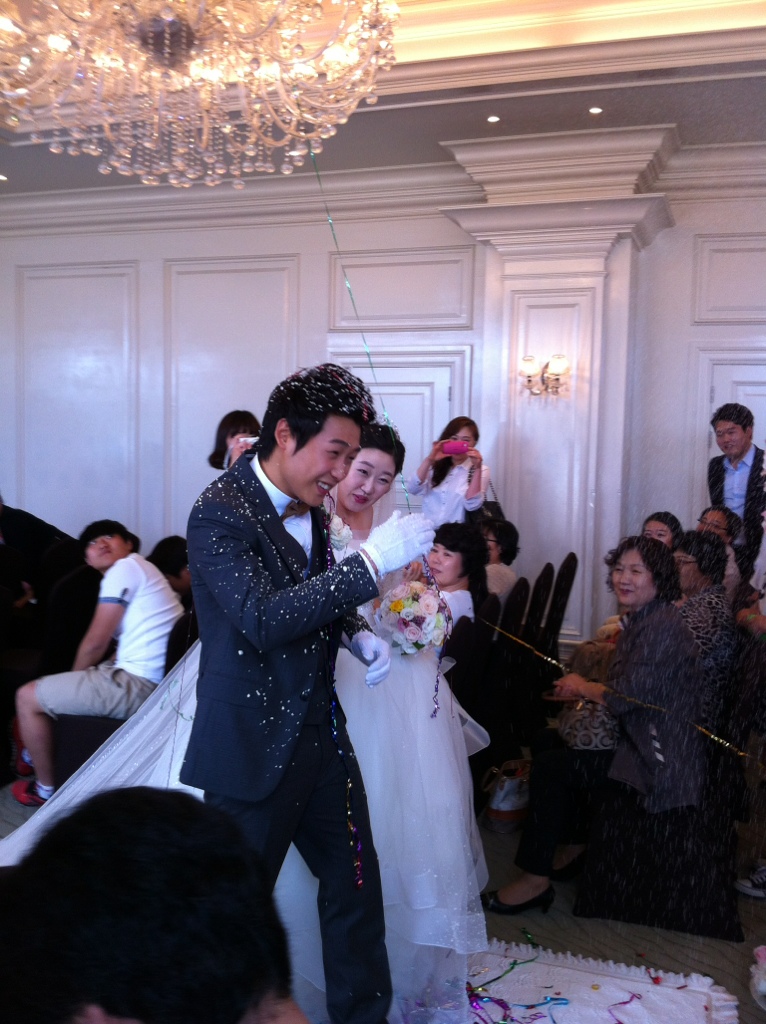
4. During a wedding ceremony – thank the guests, and thank your parents. I’ve seen 3 weddings so far – and in every single one, at the very beginning the mothers of the bride and groom walk down the aisle first – and light candles to thank the ancestors. And at the end, before the ‘you may now kiss the bride and run down the aisle’ part – the bride and groom – together – officially thank their parents – who stand, face the crowd and are applauded. And the Bride and Groom also bow and thank the guests. How nice is that. I’ve been to weddings where one side or the other was ignored because they didn’t feel comfortable about making a speech. By officially thanking them – no speech is required – it’s just a formal acknowledgement that without the ancestors and without the parents – no wedding would have take place today.

Another Beautiful and Unique moment in a Korean Wedding – the groom kneels in front of his bride – and presents her with a bouquet of flowers… not a dry eye in the house – trust me!

20130526-050013.jpg

5. Smile at strangers. We’ve been at the Kensington – a big and basically Korean only Resort – for over a week. And while the guests change – the politeness doesn’t. People here smile when you walk past – they don’t just shove you out-of-the-way – or worse – ignore you. They take a second to smile, and if you smile back – their smile goes all the way to the eyes. It’s nice.

20130526-045938.jpg

6. Clean up after yourself – Even on the Beach. There are not a lot of trash cans, and those they have they hide (check under the cash – see the flap – that’s the trash!) – but there isn’t a lot of trash on the ground either. People come prepared to gather their garbage – and because everyone cleans a little bit, the place in general stays clean. Now it’s not like Rwanda (where the President mandated no plastic bags and a monthly – everyone must clean – policy) – but it’s pretty nice.

7. Men shouldn’t be afraid to carry ladies purses. We’ve seen guys – and I mean older men – in their 50’s and 60’s – cheerfully carrying their wife’s purses. It’s the in thing. (Ok – I agree – shocked me the first time too.)

Just little things – but things you notice – and remember – and they add up to a wonderful place to visit.

20130526-051949.jpg

Korean Attractions Smack-Down – What to see – and what NOT to see!


Ranked from our least favorite to our trip highlight – these are the attractions in Korea that we loved and thought – Boring! Check it out.

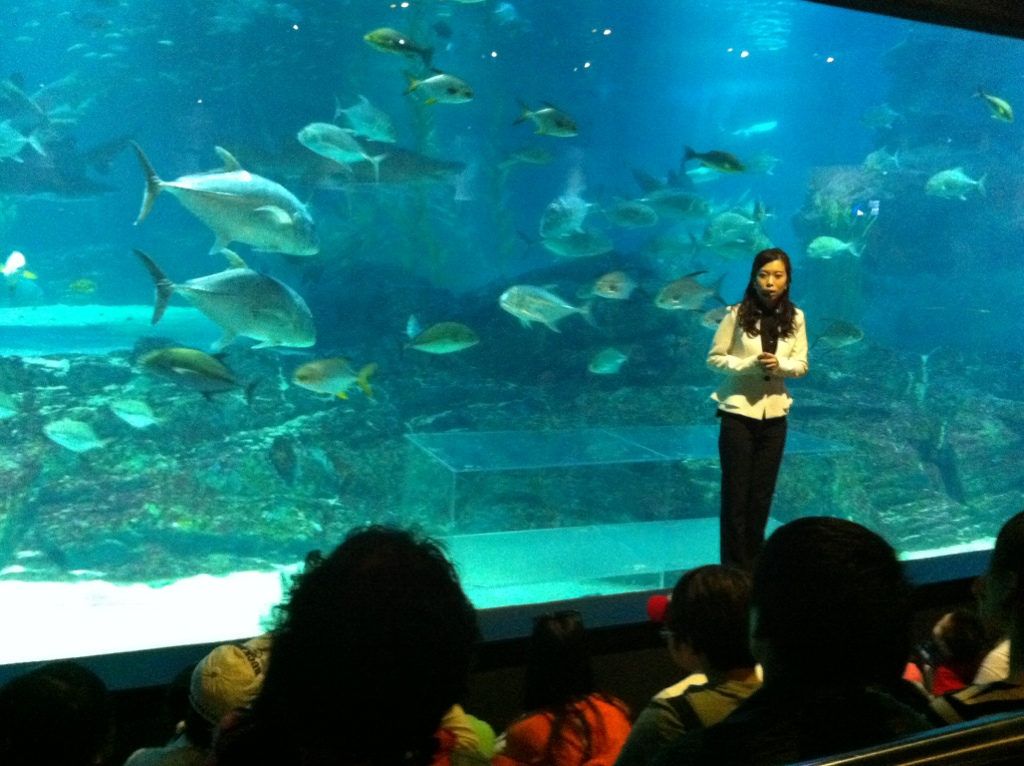
10. North of Sokcho – Fisheries Museum – Charge (Getting there – take the #1 or #1-1 Bus from Sokcho – and just keep going and going and going. It’s about an hour ride, plus a 10 minute walk). We wanted an outing – and that’s what we got. Best part were the two 3D movies, otherwise the fish looked sad, and the tanks were too small. But the building is really neat looking, which kinda sucked us in. Go for the Maritime Museum in Busan if price is important, or the Busan Aquarium if you want to see fish. Forget this one.

9. Seoul – Namsangol Hanok Maeul (traditional Village) – Free. Best part – it’s open on Monday when almost everything in Seoul besides shopping is closed – and there’s a ‘costume’ rental on site. Koreans love to rent costumes and walk the village dressed in traditional clothes – and it’s a lot of fun to watch them. Plus – when we stayed in a traditional house in Gyeongiu – these traditional houses made more sense. There are English signs – and some of the rooms are ‘furnished’ – but most are either used for other purposes – like a ‘pay for’ tea ceremony or costume rental. Nice place to visit when everything else is closed – but that’s about it.

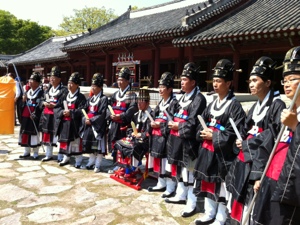
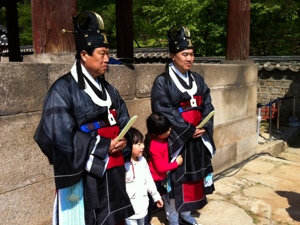
8. Seoul – Jongmyo (Royal Shrine) – Charge. We lucked into seeing this during the yearly Confusion ancestor Ceremony. If it hadn’t been for the costumed ceremony going on while we were there – I would rate this even lower. But meeting the ‘re-enactors’ after the performance of the rite was a hoot and a half as you can tell from the pictures.

20130525-232850.jpg

20130525-232904.jpg

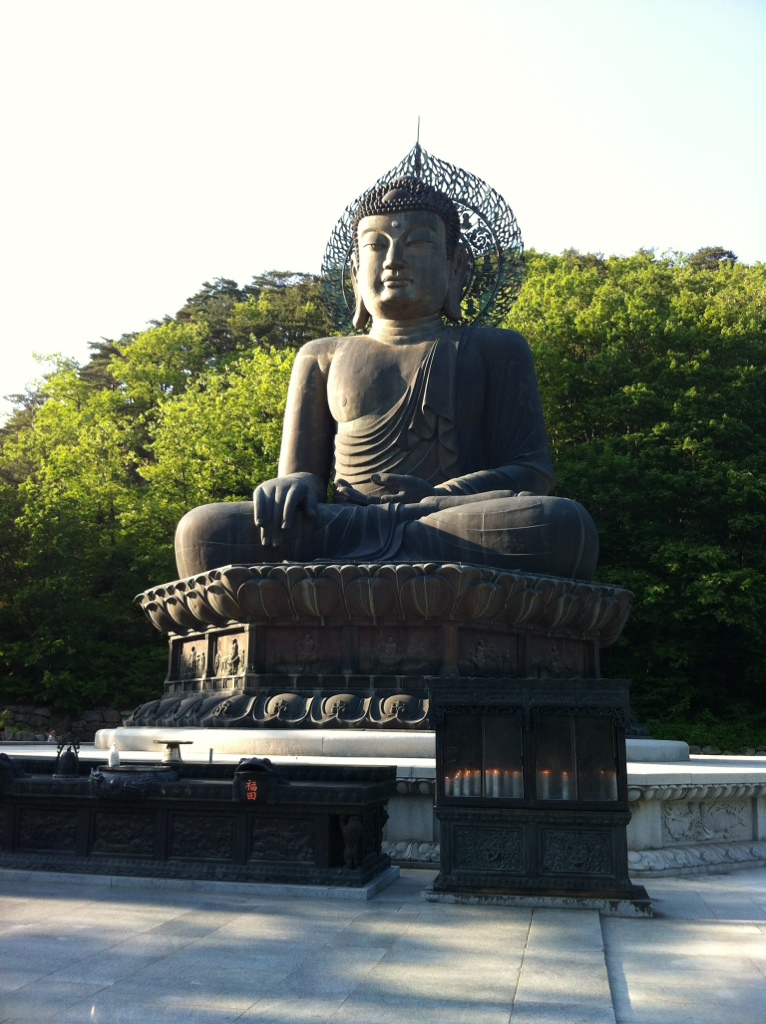
7. Sokcho – Seoraksan National Park – Charge. (Getting there – Bus 7 from Sokcho goes to the main gate – and costs just 1100 Won ($1.10)). There are apparently 4 entrances to the Park – the bus from Sokcho takes you to just one of them. To get to the others – you’ll need to take a taxi. We decided that the main entrance was fine for us. We rode the Cable Car (Separate Charge) up to the top of Gwongeumseong. The guide book warned of long waits – but it was empty when we were there – no wait at all. At the top there is a lovely little temple down about 200 stair steps, and up from the Cable Car Station is a 20 minute hike to the peak of the Mountain. Marcel (5) and his Dad did that hike, I visited the temple. We then came back down and did 3/4 of the walk to Biryong Falls. Unfortunately, the path which was rated as easy walking, isn’t easy for a stroller – and that meant carrying baby Sophie. No fun. So we turned around and went back. The park is lovely – by Korean standards outstanding, but not up to standards of a Jackson Hole, Telluride, or even Stowe. Never-the-less – it’s a fun outing with kids. I particularly liked the tiny temple I visited, and there’s a huge Buddha near the main gate that hides a wonderful temple underneath. That was also worth a visit. I think the Park would be a lot more fun without a baby in a baby stroller. Maybe in a few years we will get to return.

20130525-232916.jpg

6. Busam – UN Memorial cemetery, Peace Park, Sculpture Garden – Free. I actually really liked this – the movie is a tear jerker – but it does goes a way towards explaining one version of the history of the Korean War. And since my Dad was a Korean War Vet – that definitely added a sense of drama to the location. The statues are in very good taste, the ‘Peace’ Garden lovely, and I liked the sculptures from artists around the world. We didn’t get to walk in the adjacent ‘park’ – but it had bridges and ponds – and seemed quite the in thing with a much younger (kids) crowd.

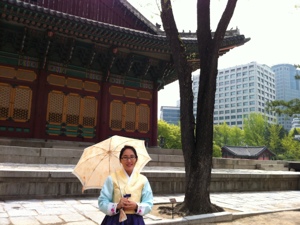
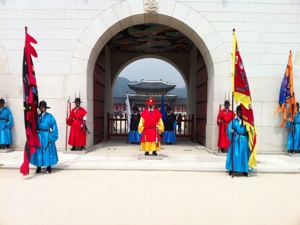
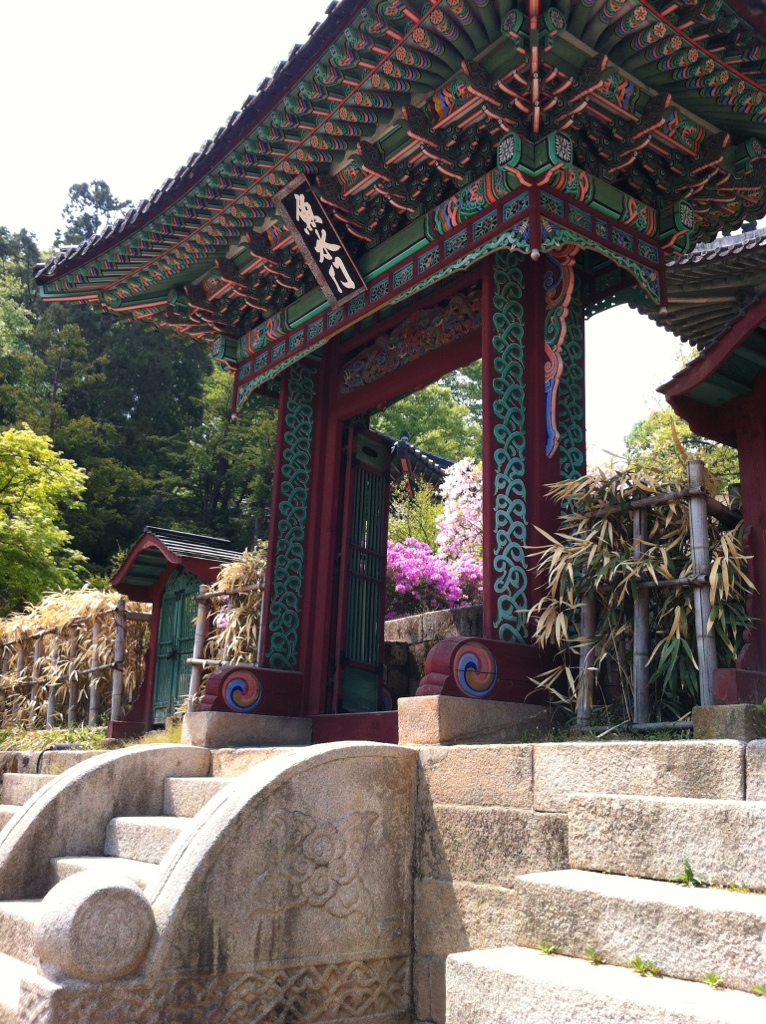
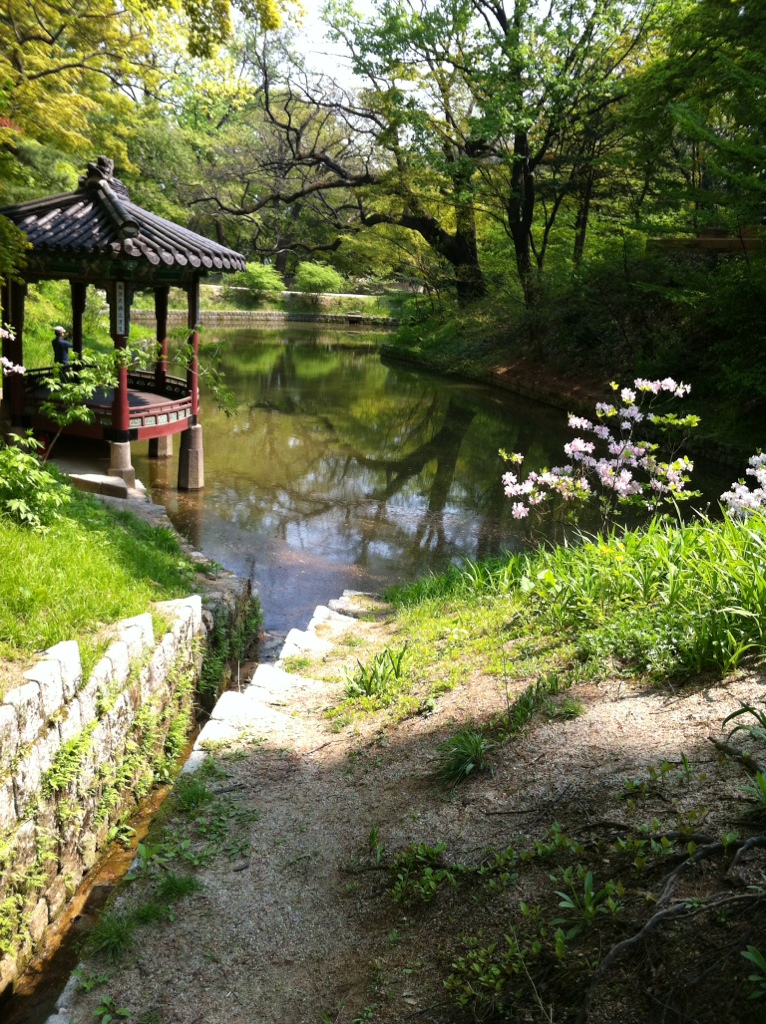
5. Seoul – 5 Palaces and the Biwon – the Secret Garden. We visited all 5 palaces, and I can tell you – don’t. Visit just 2 – Start with Deoksu which is right across from City Hall, and do the tour. That will give you a very good grasp of the history of the Joseon Dynasty – and a peek into what was going on right before and during the Japanese occupation starting in 1905. See the changing of the guard. Then walk North to Gyeongbokgung Palace, check out the guards – but don’t bother to tour. It’s huge, crowded, and just a much larger version of Deoksu – then walk East to Changdeok Palace – and my personal highlight – the tour of Biwon – the Secret Garden. It’s stunningly beautiful. You don’t want to miss it. You must take a guided tour – but it is well worth both the money and the time.

20130525-232939.jpg

20130525-232952.jpg

20130525-233004.jpg

20130525-233017.jpg

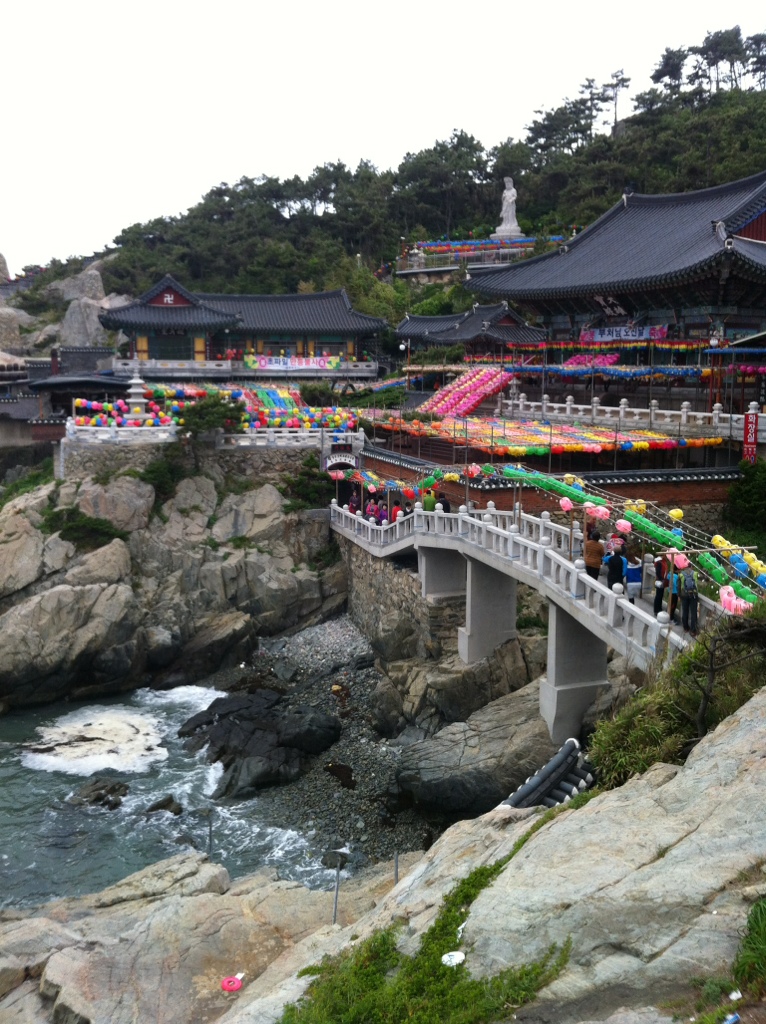
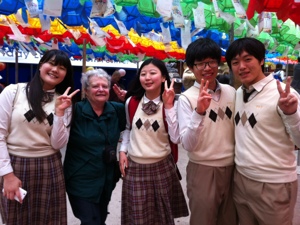
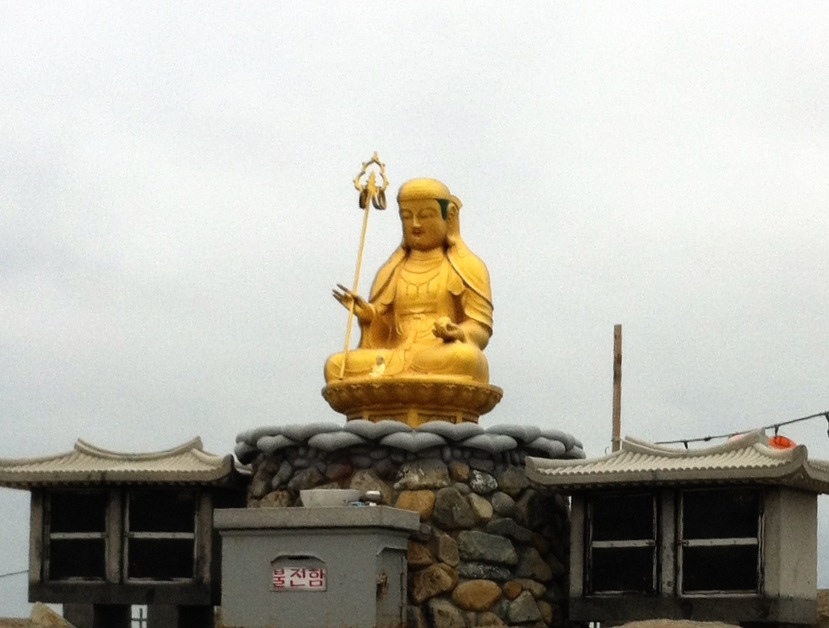
4. Busan – Haedong Yonggung Temple – Free (Getting there – Subway to Haeundae Station, then take bus 181. Attached to the temple is the Fisheries Museum – a must see in my book). This was the absolutely most commercial temple we saw. Lining the stone pathway to the temple proper were various Buddha’s with signs – in English and Korean – explaining their benefits. There was a Buddha for traffic problems (including a flat tire), a Buddha for male children, plus many other’s – each with its own collection box. But that didn’t really detract from the absolutely outstanding location of this temple. It is perched on cliffs hanging over the sea – with sub-temples tucked here and there. I particularly liked the gold painted Buddha that sits out on a promontory – all alone. The most fun we had here was people related – of course. Jill got approached by a young student, who explained that her teacher had sent them on a mission to get a picture with a foreigner. Would that be ok with Jill? Once Jill proved that she didn’t bite – the word spread like wildfire – every single one of her classmates come over to get their picture taken too. Bet that teacher is going to be surprised to get 30 pictures of the same pair of little old ladies! Touring hint – To the left along the sea from the temple is the back entry to the Fisheries Museum which we loved.

20130525-233031.jpg

20130525-233044.jpg

20130525-233057.jpg

20130525-233115.jpg

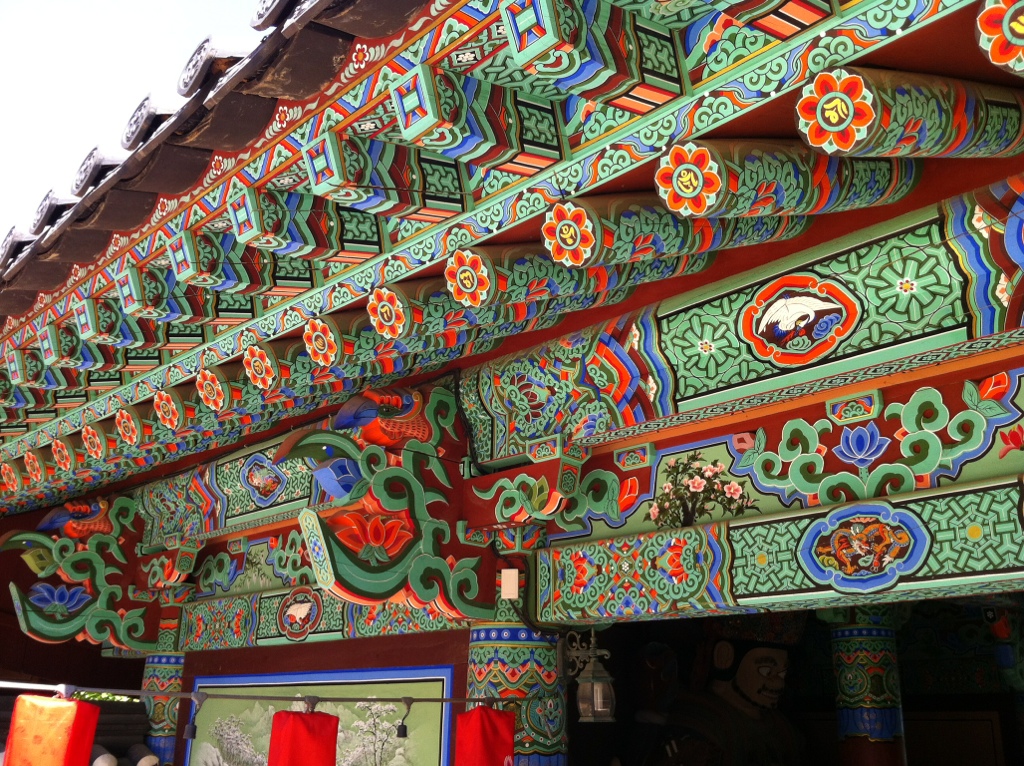
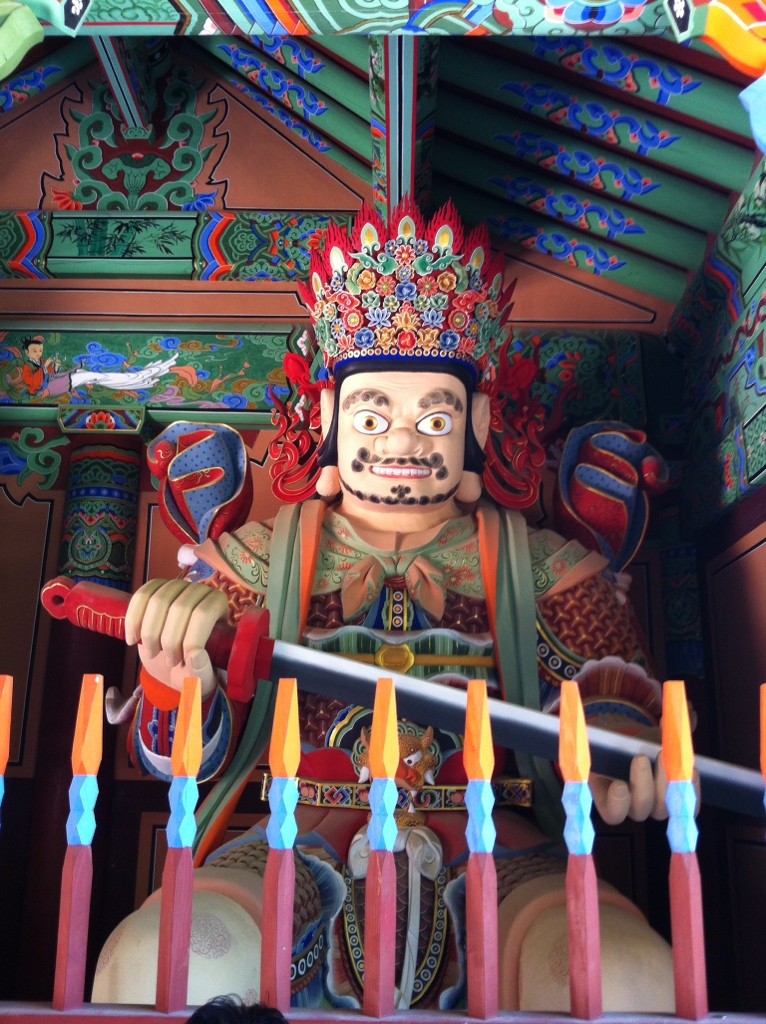
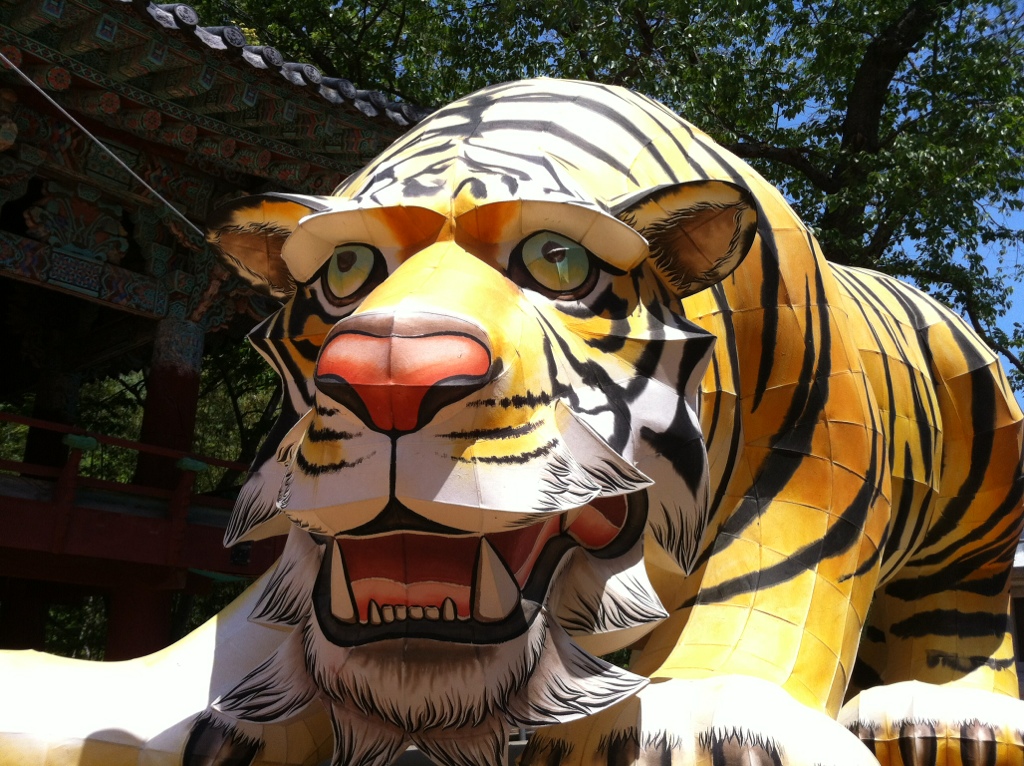
3. Busan – Beomeosa Temple – Free (Getting there – Subway to Beomeosa Station, taxi costs under $5 to take you up the hill to the temple. Getting back, it might be easier to take a bus – we were very lucky to flag a taxi.) Looks exactly like a temple should look – and feels like a temple should feel. Because we were there just before Buddha’s birthday – there were huge – and I mean giagantic lanterns shaped like animals, dragons, lions, monks, etc. on the grounds – all waiting to be paraded thru the town. The main temple is in 3 halls – each more beautiful than the last. The wooden carvings on the ceilings must be seen to be believed, twisting dragons, flying birds – you name it. I absolutely loved this temple – and I know now that they have a temple stay program. If I ever return to Korea – I definitely would like to stay here.

20130525-233127.jpg

20130525-233139.jpg

20130525-233152.jpg

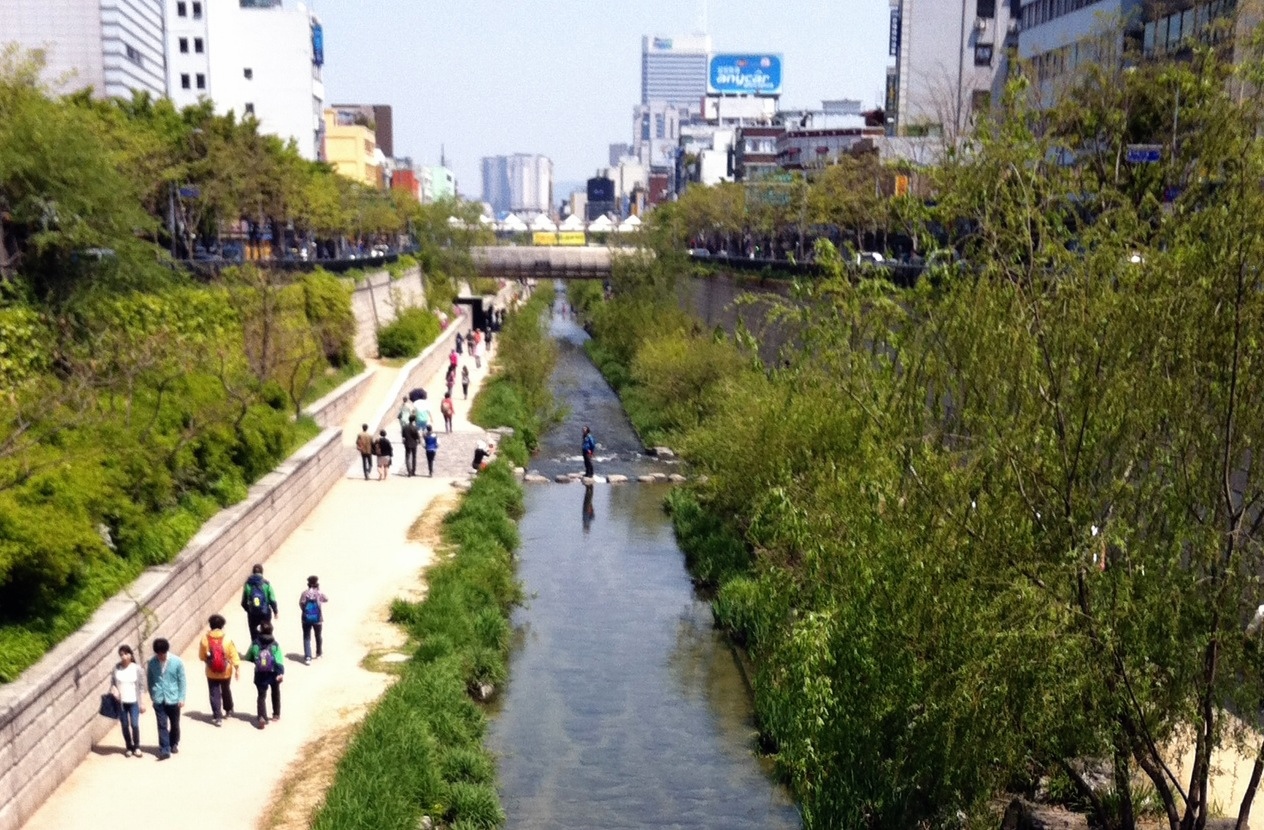
2. Seoul – Cheonggyecheon Stream (Getting there – you can’t miss it – the stream (river?) runs through the center of Seoul) This is a beautiful bit of city planning – a lot like the new High Line park in New York City – it’s a stunning example of taking a problem, and making it into a positive urban renewal project. The Stream/Park/Walking trail runs most of the length of Seoul, and there are skipping rocks to cross the stream, wide paths for walking, benches for sitting – and at night they float lighted lanterns – some really really big – down the stream. Lovely. (The Insight Guide gives you some of the history of this new – 2005 – renovation – a remarkable story to read in itself.)

20130525-233204.jpg

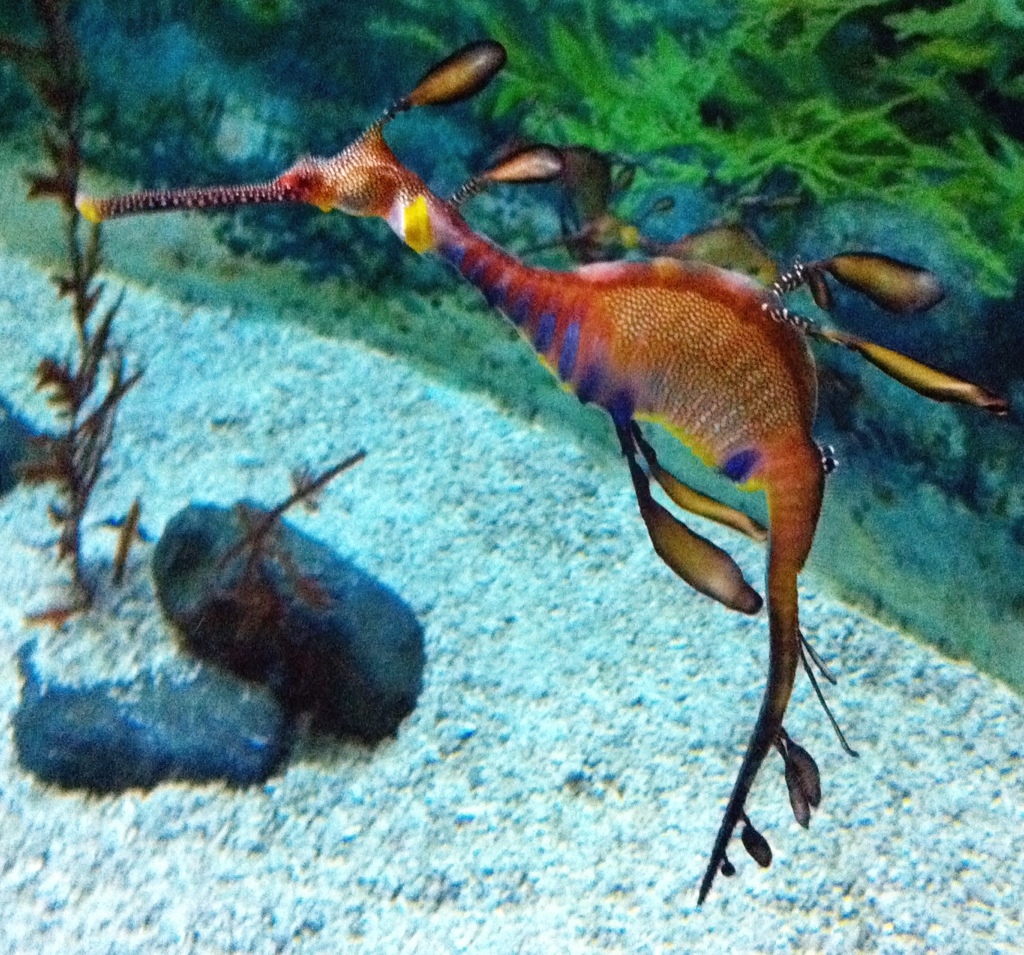
1.Busam – Aquarium – Expensive (Getting there – walk from the Haeundae subway stop). An amazing aquarium – and I’ve seen lots. They have shark feedings several times a day – a tank of weedy dragon fish – which I’d never ever ever seen before, the jelly fish section is outstanding on it own, they have a giant walk thru tank that besides the sharks – contains the largest manta rays I’ve ever seen – even scuba diving in the Caymens. They have turtles, they have eels galore, and everything, including all the descriptions, is in English and Korean. Afterwards there’s a free hot springs foot bath to the right along the Haeundae Board Walk. And if you are lucky – Korean bathing beauties to admire. So much fun.

20130525-233228.jpg

20130525-233839.jpg

Amazing Mushrooms – and Great Looking Plastic Food!


I just can’t resist sharing these pictures with every one. We went to an eMart – which is the South Korean version of a Walmart – it was huge. One giant floor of just food stuffs – you name it – they sold it. I couldn’t resist taking pictures of the Mushroom options – just a few of the bigger bagged versions. I mean these mushrooms are sold by the gram in Montreal – if you can find them. Here they are sold in bulk. And they are huge. What are they feeding these guys – steroids? Amazing.

20130521-193330.jpg

20130521-193345.jpg

20130521-193405.jpg

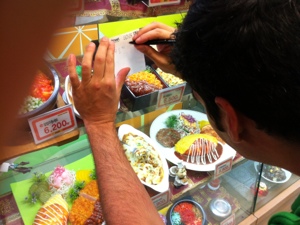
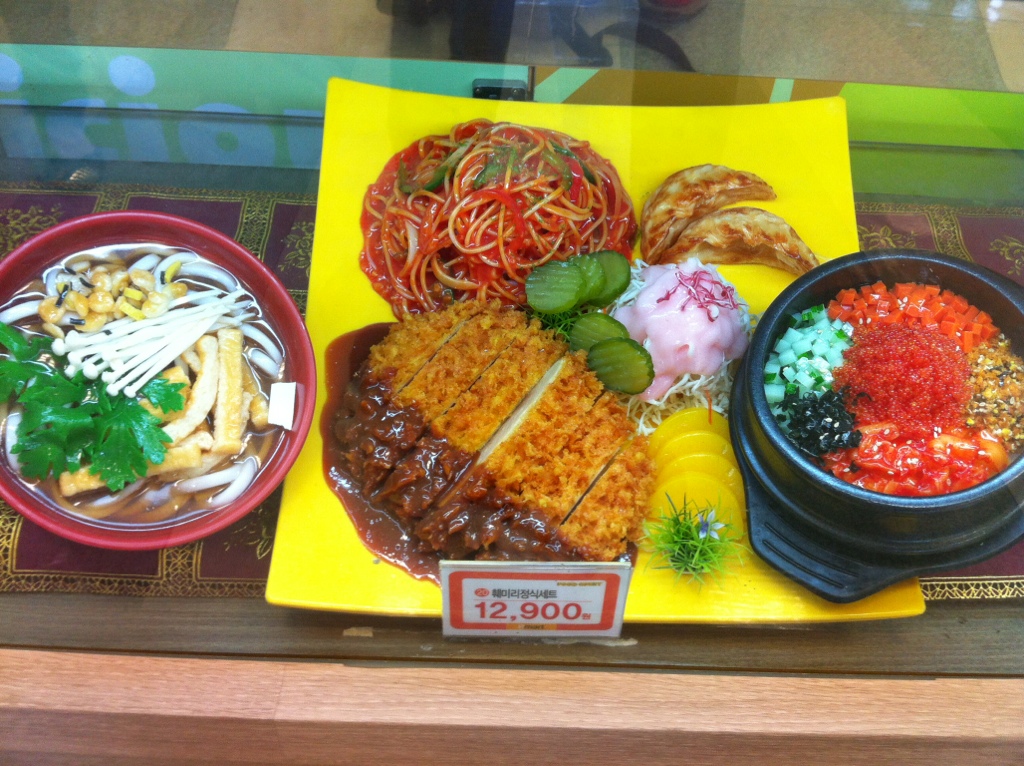
Attached to the eMart was a korean style fast food restaurant. You looked at the models of the meals – and then gave the number you wanted to the hostess. When it was ready at one of the 5 or so stations around the room (each station was a different style of Korean cuisine) – you picked it up.

20130521-193423.jpg

20130521-193437.jpg

Pretty yummy for an eMart meal I’ll tell you. Not the best food I’ve had in Korea, but think about it – under $5 per person – and these are meals – not hot dogs!

Speaking of which – they do hot dogs too!

Signing out – the Soup Lady and the intrepid Traveler

Ya win some, Ya lose some – Kensington Resort – Seorak Beach


We’ve been spending the last few days in the lap of luxury – a timeshare resort just 32 km (18 miles) from the DMZ in the far North East of South Korea. When we arrived here – after a 7.5 hour bus ride from Busan – I have to admit to being conflicted. On one hand – the resort had polished marble floors – and the check-in counter had 3 staff – in uniform. Honestly – I thought the taxi cab driver had taken us to the wrong place.

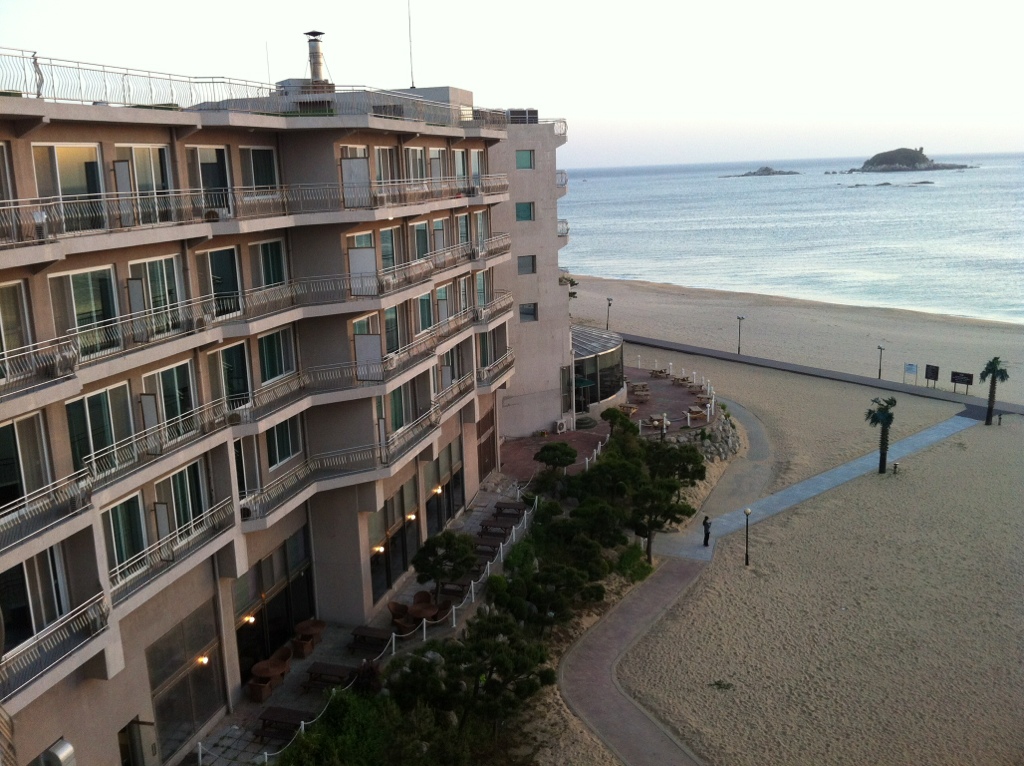
The ‘resort’ is huge – 5 floors of suites – mostly 1 bedroom, some 2 bedrooms – 2 restaurants, a tiny CU (Korean Convenience store that sells some groceries and veggies along with dozens of different brands of instant noodle soups and ‘chips’), an Ocean Spa, and a conference center. Quite the change from where we’ve been staying, I’ll tell you. The resort is directly on a soft sandy beach. Our suite is on the 5th floor and features a partial kitchen – which in Korea means a 3/4 size fridge, a sink, and a 2 burner hot plate. No microwave, no toaster, no dishwasher (but that’s ok – there are only a few dishes anyway), and a tiny garbage can. The bathroom is a palace in comparison to what we’ve been enjoying – the shower has a glass pane that separates it from the toilet and sink. Oh Luxury! Our generous sized bedroom even has a closet – something else we’ve been doing without for the past 3 weeks. Our balcony overlooks the East Sea – and we’ve been enjoying the sound of the waves as we go to bed each night.

So why the conflicted feelings? Well for starters – everywhere we’ve stayed up till now has provided shampoo, toothbrushes, toothpaste, unlimited towels, and a fully stocked kitchen with salt and pepper, oil, butter, jam, and chili paste. At Kim’s House we even had plastic wrap, at the Agit – there was ham and eggs, even the traditional house provided unlimited white bread and coffee. But here – nothing is provided besides little bars of soap, 2 frying pans, and dishes for 4. It’s pretty bare in comparison – and that’s a shock. And the location is great for the beach – but a long (1 km) walk into the village if you don’t want to eat at the restaurants at the hotel. And they are, in Korean terms, quite expensive. And worse – they are buffets – ie: All you can eat. My least favorite option. A large grocery store is a 30 minute bus ride away, as is the town of Sokcho. So we feel a bit isolated.

Worst thing is the internet – its free – but you have to go to the ‘library’ to use it – the signal doesn’t reach the rooms. Quite a shock from free high-speed all thru the house like all the other places we’ve stayed.

But after a few days – the pleasure of enough space, and a private kitchen, a private balcony, a private bedroom and a private bathroom make the annoyances feel less important. The walk to the village for a delicious BBQ lunch seems just part of the fun, and exploring the largish fish market a hoot. The fish market features crabs, octopus, and flounder in huge numbers – all fresh and swimming around. If you don’t buy them today – they just feed them, and you can buy them tomorrow! This is really fresh fish. It looks great. We just need to figure out how to get some to eat at home!

And the beach is wonderful, particularly now that we are traveling in a much larger group – Jill’s son, daughter-in-law, grand-son Marcel (5) and grand-daughter Sophie (3 months) have joined us – and the trip is now one of family not traveler. But still fun!

The weather has been strange – hot, than cold (I wore everything I brought – at the same time), wet and rainy, then sunny but seriously breezy. But we’ve gotten in a walk every day – and eaten some amazing Korean take-out including a sweet and spicy fried chicken the defies description except to say I love it – but it makes my mouth burn! One night Blanche and Chris even treated us to deep-fried Shrimp (cooked complete – including the head and shell)), deep-fried peppers stuffed with pork, and the very traditional Korean Sundae – a sausage made by stuffing Squid with pork and rice. Don’t ask me why it’s called a Sundae – it’s one of many mysteries here in Korea.

So good food, good company, amazing fireworks every night – and lots of space. I can learn to enjoy this.

Signing off – The Intrepid Traveler and the Soup Lady

20130530-025546.jpg

Busan to Sokcho – Traveling the ‘interesting’ way…


We spent the last 5 days in Busan, the 2nd largest city in South Korea, located at the very bottom of the Peninsula – closer to Japan than to Seoul. But we arranged to meet Jill’s kids in Sokcho – 50 km (30 miles) from the DMZ. So we need to get from the far south-east to the far north-east. Our travel options including flying via Seoul, Train to Seoul and then bus to Sokcho – or intercity bus the whole way. At $43 per person – the bus was the clear winner.

So we made our way from Kim’s House to Nopo subway station – helped by strangers who found it fascinating that 2 grand-mothers would be traveling alone in Korea. They had little English, we had no Korean – but we shared number of grand kids – he has 4, Jill has 4, I have 2. We even disc used food – Kimchi good, Bulgogi better!

After a bit of confusion over tickets – we had reserved seats and a separate boarding lane – and didn’t know it- we ensconced ourselves in our seats – and the bus pulled out – 1 minute late and the driver was pretty upset about it. At least we think that’s why he was yelling at the dispatcher.

Like our trip here – it seemed like it would be highway all the way – 6 lanes narrowing to 4 lanes after about 2 hours of driving. And then just north of Phang, things got interesting. The bus swerved left and right and left – and on to a 2 lane road that wound up and over hills eventually dropping down to the sea. Instead of highway – we were now winding our way past adorable fishing villages and sandy beaches. The road continued to narrow – eventual to just one lane wide.

The views along the ocean are stunningly beautiful – beige sand beaches and pounding surf, interspersed with high views of the rocky shoreline.

There are numerous campground with tents like I’ve never seen – including a roof top model that required a ladder to get in!

As expected, there are Rice paddies and tiny farm plots on any arable piece of land (including the edges of the roadside), but unexpected were the hobbit hole houses – dozens of them – some extremely fancy with brick exteriors and stone domed roofs, others more simplistic but still functional.

The stunningly beautiful scenery reminds one of the most beautiful parts of the Maine coast – weirdly carved rocks and rolling surf splashing over the rocks as the tide comes in.

We’ve been traveling now for almost 3 hours – no bathroom stop in sight. But we’re not lacking for Crabs! Fishing village after fishing village clearly features the Crab – based on the huge flower crab at the entrance to one village, the crab pincers that formed the uprights of the bus shelters of several others, and the giant (say 40′ high) crabs outside one of the restaurants. There are bulletin boards sporting 3D crabs – one restaurant where the doorway was a pair of huge crab legs and several road side ‘eating’ places with huge boiling pots of crabs. But we are just passing thru, No time to stop and sniff the crab legs.

Somewhat sadly, the Koreans are in the process of building a highway along the coast – we can see evidence of their effort in poured elevated supports in the area we’re driving through, and north of Yeogdeok, the road turns into the newer 4 lane limited access model. This is a shame. While it will make the drive much faster – it will reduce the exploration nature of the trip, and I suspect will hurt the tiny villages that live to serve travellers on the main road north from Busan.

Yeah – 2:33 – and we finally get a rest stop. It’s been 3 and a half hours… You have got to be kidding me. There is a porto-potty rest room with 6 stalls on the lady’s side – and while it is clean – there is no toilet paper. Thank goodness for spare napkins. I grab a delicious Korean ice-cream cone, and it’s back on the bus. The driver reminds everyone to buckle up, and gives us a special hands-on example to be sure we understand and we’re off.

We’re back to 4 lane express highway – which occasionally dips down the ocean Unfortunately, the only interesting things are several fisherman drying their nets on the pavement, and the occasional swerve down to the sea for a glimpse of ocean. The beach we just passed was deserted. At first Jill and I assume it’s because it’s a tad cool even though the sun is shining, but on 2nd look I’m guessing that the barbwire fence along the length of the entire beach explains the lack of sun bathers.

I’m reminded that this is the part of Korea that the Japanese freely invaded for over 2000 years – This last time in 1905. I guess the Korean’s have a right to be a bit hesitant to leave it undefended.

I’m hoping that the beaches nearer towns are open to the public at least.

A geography observation, the mountain range that makes up the spine of Korea on the east runs roughly North South, but there are many East West running out cropping. To build the road, Korea had to build long tunnels – 2000 meter are more – going through these mountains. Kinda neat actually. The coastal plain can run from about 3000 meters wide to zero – so you can imagine the challenges the Engineers must have faced.

In 2018 this part of Korea will be hosting the Winter Olympics – but right now the cherry blossoms lining the road and the greenery cut into a 2018 Olympic logo are the only reminders of that upcoming event. Wonder if they will get to eat some Crabs?

Finally we arrive in Sokcho – get off the bus and following the advice of the RCI resort – try to get a taxi. Problem – the resort didn’t send us anything written in Korean – and of course none of the Taxi drivers understand English. We try at least 7 different cabs with no luck. But thank goodness – again – for the kindness of strangers. An expat and his Korean girl friend spot us trying to get a cab, and come over to offer help. They immediately realize that our problem is that the cabbie can’t read the address – and explain to them where to go. Now they are willing to take us! We thank them, and head off.

The Kennsington RCI resort is stunningly beautiful – and our one bedroom room is a palace compare to the places we’ve been staying. And our view of the ocean is spectacular. But there’s a few problems – even in paradise. The food here is seriously expensive – 4 times what we’ve been paying in Seoul or Busan. There’s no laundry – so its back to hand washing. Instead of free internet everywhere – I have to go down to the lobby to get access – and instead of unlimited towels – we have just 4 hand towels to last the week. Plus the kitchen has no basic supplies – not only no coffee or tea, but no salt, no oil, no pepper, no hot sauce. We’ve been spoiled by the guesthouse and hostels – so sorry Kennsington – nice lobby – but you lose big time on the service!

But we are determined to solve these issues – so while dinner tonight was instant noodles – just add hot water – by tomorrow we hope to have found a decently priced restaurant – or 2 or 3.

Signing off and going to bed – The intrepid traveler and the Soup Lady.

It seems so simple – Church Services in Seoul


As people who follow my blogging regularly know, my friend Jill is Catholic – so we go to services everywhere we travel. I’ve even met the former Pope (not quite a private audience of course – but still).

So we pretty much think we know how it goes – there’s a pattern to services, whether they are in Vietnam, Italy, or Spain that is very similar. We expected the same here in Korea – but we were wrong, wrong, wrong!

We ‘googled’ catholic services in Seoul – and found out that there’s actually a Cathedral – the Myeongdong Cathedral to be exact – and it’s the largest brick gothic building in Korea. You’d think finding it would be easy – but no. We walked right past it – Twice! It is surrounded on all 4 sides by other buildings – including a former hospital. To find the Cathedral, you must turn off the major street onto a side road – and keep your eyes peeled to the left. There’s a relatively narrow main entrance way – a set of stairs and a long long ramp that go from street level to the building itself.

Anyway – to find it – we had to stop people and ask directions. Good thing they were actually heading to mass. We followed them through a garage and up a twisting flight of stairs to the cathedral entrance – this was a short cut!

We entered in – and were not surprised to find ourselves in a cathedral that could have been anywhere in Europe – complete with stain glass windows and the relics of martyrs.

So where did we get confused? Well – part of the normal pattern of service is the collection of alms. Generally a lay person (or 2) takes a long handled basket, and passes it up and down the aisles, and you can put money in as you wish. But not here. We were sitting in the front row of one section, and suddenly this lovely young lady wearing a white drap over her head is gesturing at us to get up. We can’t figure out why. Jill thinks it might be time for communion, so she gets up and exits the row. The gal gestures at Jill to put her hand in a basket – which Jill does thinking it’s communion – and it is at that moment that Jill realizes they are collecting alms – you don’t take out – you put in!

Meanwhile – our entire row is on hold – waiting for Jill and I to move. It turns out that unlike every other church we’ve ever been in – here in Korea, the congregation raises – row by row, files up to the front, deposits their ‘alms’, and then returns to their seats. Highly organized – how Korean! Once you know what to do – you can follow – and had we been anywhere but in the front row – we’d have been ok. Live and learn.

When it finally time for Communion, we aren’t nearly as surprised that it too is highly organized. A priest goes row by row, gesturing people to raise and file out to join the queue. The only problem – I’m not taking communion. So everyone in my row – and both of the rows in the side sections must stumble past me to get in line. How embarrassing.

But the singing is lovely – there is a full choir, over 10 priests, layman and altar boys, a magniciant organ, plus a string section. The music is lovely, the surrounding very peaceful, and altogether a neat experience.

On the way out – one of ladies of the parish comes over to wish us well – and to let us know that there is an English service at 9;00 am on Sunday. We thank her kindly and go on our way. If we’re here next week we’ll do the Korean mass again – only this time – we’ll be better prepared.

English in Korea – It happens!


Koreans love English words. They use them everywhere – not always correctly of course – but with delight and enthusiasm. I love it – but it does throw one off occasionally (ok – often actually).

Example 1: English on a brochure cover means nothing! – Here in Kim’s Guest House there is one labeled ‘Spring Tourist Guide’ on the outside – without a word in English on the inside! It’s completely in Korean. So why put English on the cover? Your guess is as good as mine.

Example 2: The signs – There is so much English on signs here in Korea – I sometimes forget that people may not actually speak the language. It’s quite a funny feeling. You pass a store – the slogan is in English – like Paris Baguette with its ‘Fresh and Ready’ – and no one inside speaks English at all! It happens a lot – and it is always a bit of a shock. Street signs are often translated, stores advertise ‘Sale’, you see ‘Bank’, ‘Steak and Pasta’, and ‘Korean traditional Restaurant’. But while it makes it clear what service they are offering, don’t expect more than a ‘hello’ in English – you might be pleasantly surprised – and then again – you might be reverting to sign language pretty quickly!

Check out this picture – it’s advertising a water park – English on the sign includes ‘California Water Park’ and ‘Open’ – but I’m willing to bet that no one who works there speaks English – why should they? Clearly this is for Koreans to enjoy – despite the clearly California look of the bathing beauties.

20130512-170334.jpg

Example 3: Marketing Slogans – or What exactly did you mean by that? Consider this one for the city of Gyenogju – “Meeting place – The Scent of Culture – Time to Surpass”. What do you think they were trying to say? I get meeting place – but Scent of Culture? What ever does that mean? Do you think they were hinting that the place smelled? Can’t be, right?

Or here’s another one that amuses me – In Gyenogju, they make a special Barley cake (they sometimes refer to it as ‘bread’, but it is really 2 pancakes with red bean paste spread to hold the pancakes together). What is remarkable about it in my opinion is not the cake (it’s pretty bland) – it’s the number of ‘bakeries’ – often 2 or 3 on the same block. They all have the special ovens, and use the special boxes to make these cakes. How can there possibly be enough sales to keep them all in business? We got to try (for free) cakes from 2 different bakeries – and I must admit they tasted different. Can’t say I cared for either – but they definitely didn’t taste the same. But its the marketing in English that cracks me up. On one store – the Sign cheerfully proclaimed “The Barley Way to Health”, on another it announced that here you’d find the “Rich Chewy Texture of Sticky Barley”. Yummy sounding, eh? On a third I saw “100% domestic glutinous barley” – well, that’s definitely reassuring. Do some people import the Barley? Or perhaps not all Barley is Glutinous.

But my favorite language mis-adventure happened yesterday in the Gyenogju National Museum. This is a wonderful museum that attempts to explain – in a variety of languages, just a bit of the very complex history of this remarkable city. The artifacts on display are well presented – and the audio tour quite complete, if a bit robotic sounding. But it was the free English tour in one section that was over the top. There was an older gentleman responsible for giving the tour – and he proudly explained that he was a retired English teacher. Problem? His English was literally incomprehensible. At one point we thought he was talking about growing rice, and he really meant that they had a lice problem in 800 AD – which he explained by scratching himself.

But I really shouldn’t complain. The ability of Koreans to at least attempt to communicate in ‘my’ language puts us in North America to shame. We ran into trouble at the Metro – and despite our lack of Korean – and our helper’s lack of English – we muddled through. He didn’t give up – even when it was clear that we couldn’t communicate at all. Even if it meant carrying our bags up a staircase – forcing us to sit and wait while he got help – throwing in the towel just wasn’t option – Thank goodness.

And this willingness is official – Museums here have signs in 4 languages – and not just the name of the object – the entire description is translated. Even the subway maps and signs on the metro cars use both Korean and English names. I’ve been on Metros and Buses that announced the next station in Korean and English, can’t be to help the locals. I’ve even heard cross-walk signs speak English. Bank machines and Metro card vending machines always offer an ‘English’ language button, and Audio tours in even more languages are the norm – and not just in Seoul. It’s all pretty impressive – and very tourist friendly.

So as a prospective tourist to this intriguing country – you can rest easy. You might not quite understand everything – but I can guarantee you that the Koreans will make sure you have a wonderful time. It just comes naturally to them. What a country!

20130512-170424.jpg

On the Road to Gyeongju – South Korea


My favorite seat on a bus is in front – I love the 180 degree view you get – and I must admit to watching the bus driver. So imagine my surprise when our bus driver here in South Korea – while driving – washed his hands, the steering wheel, the gear shift, the side window – then put on white gloves in order to eat lunch. That’s new and different.

He also removed the fancy leather shoes he was wearing when he put our luggage on the bus, and is now wearing comfy clean white sneakers. And he has his own set of ear phones. Wonder what channel he listens to while he drives?

I’d been told that buses here are the way to travel – and I have to admit – it’s nice. There’s satelite TV (in Korean – but that is the language here), very comfy seats that recline, clean windows (Montreal – smarten up – it is possible to have clean windows on buses), and curtains.

Leaving Seoul and heading south – we started on an 8 lane highway, driving past a surprisingly beautiful city scape of skyscraper and towering sound barriers interspersed with old-fashioned residential neighborhoods followed by huge apartment complexes. I’m guessing zoning in non-existent.

Eventually the 8 lanes became 4 lanes about an hour out of Seoul – as we steadily head south toward Gyeongjue – our next destination. The highways cuts through hills, and the signs of civilization are everywhere – this is not Vermont, people.

We are passing traditional looking (but new construction) buildings, and modern factories mixed between rice paddies and farms. If you can farm it – you farm it. I even saw vegetables planted between the highway and the fences that mark private property. Everywhere peach trees are in bloom – their flowers a brilliant offset to the freshly churned but not yet planted rice paddies. There are also Ginseng farms – recognizable by the sun shades. I’m definitely going to have to try some Ginseng.

Another observation – the use of sound barriers when the highway goes past residential areas is astonishing. And they are huge – I’d guess 40 to 50 feet above the highway. Some have glass tops, many have become supports for green vines. And there is no graffiti anywhere. This was true in Seoul as well. A surprising change for us North Americans.

Arriving in Gyeongju – we check into our next guest house – a traditional style house off an alley between two motorcycles repair shops. Like most traditional homes – the front gate is plain and unassuming – but when you round the corner into the yard – you discover that there is wooden building with 4 traditional rooms – which means you sleep on the floor.

To enter the room, your shoes come off – you climb up onto a wide wooden porch, unlock your double wide doors, and then slide back rice paper screens to reveal a 10′ by 14′ room. Korean’s heat their floors – so the floor is raised off the ground. But to get to the attached bathroom or kitchen – you must step back down to ground level – about 18″. And there are ‘kitchen’ shoes and ‘bathroom’ shoes to wear in those areas. Traditionally – the floor would be wood – but this is a modern constructions – so the floor is linoleum that looks like wood. Regardless – it’s still shoes off to enter!

Our bedding is simple comforters that we unfold to sleep on – and re-fold in the morning. There is a 27″ flat screen TV – and electric lighting – two welcome modern touches.

The biggest surprise – the pillows are barley stuffed. The intrepid traveller takes both – I’m sticking with my travelling temperpedic’s thank you!

The only other piece of furniture is a small low table with folding legs. Handy for putting stuff on.

And that’s it.

We grab dinner (read about that in another post) and make ourselves comfy. It’s very quiet – and while the floor is hardly soft – I’m so tired that I think I could sleep on anything.

Signing off –

The Soup Lady and her side kick – the Intrepid Traveller.

Bulgogi and Korean BBQ – Yum


I’ve discovered that I love Korean BBQ – in all it’s many flavors and tons of variety. And here in Korea – they really do it right. So far we’ve enjoyed 3 completely different versions of Korean BBQ – each more enjoyable – and I might say delicious – than the last.

Our first Korean BBQ was perhaps the most traditional – we ordered Beef Ribs and Pork Ribs – and while the baby-sitting by the host felt a bit like being in kindergarten and having our food cut up for us – it was fun. They brought out a selection of different side dishes – which we now know to be traditional, and two plates of chopped up small portions of meat for us to cook. Yum.

20130505-193827.jpg

Our second Korean BBQ experience – last night actually – was very different. We ended up getting (not sure what we ordered, actually) – Bulgogi. Thin slices of marinated beef – and instead of grilling the meat, a ‘sauce’ was poured into a shaped pan. The center of the pan was used to ‘cook’ the meat – then the meat and lemon grass was slid off the ‘roasting’ section into the soup to finish cooking. Oh, it was good. And the kimchi was my favorite so far – not as spice as some versions, and very easy to eat. Yum.

20130505-195451.jpg

20130505-195431.jpg

Tonight – we enjoyed our third BBQ – and it was different again. The traditional assortment of sides was presented – the kimchi was good – better than the first version, not as totally yummy as the 2nd, and there were pickles. The meat this time was pork ribs and what can only be called bacon. The slices were very thick, and once cooked had to be cut with scissors to a size suitable for picking up with chopsticks.

20130505-195345.jpg

And in this restaurant – the grill consisted of a bowl filled with hot charcoal, and the stack you see above the meat is connected to a vent that was below the low table, pulling the smoke downward. And in this restaurant, unlike the first two – the traditional floor seating was provided. (We think that about 1/3 of restaurants use floor seating, and another 1/4 offer both types. Interesting – the prices tend to be lower in the traditional seating types)

In the first restaurant – a smaller, more casual and ‘worker’ oriented place – as far as I could tell the venting was done by leaving the front door open. In the 2nd – Bulgogi – version, no venting was provided – I’m not at all sure why it wasn’t required, but the restaurant wasn’t smoky at all.

Bottom line – all 3 versions were yummy – and I’d go back if there weren’t so many other places to try here in Seoul. And Lex, our host here at the Agit, just showed us pictures of street food that we must try!

Just not completely sure I want to try the raw shell-fish restaurant he suggested – maybe a tad more experimental than I’m really to be right now.

Signing off – the Intrepid traveler and the Soup Lady.