A Rest Stop to Remember


Rest Stops on limited access highways are often a necessary evil – new or old, they offer stale food at outrageous prices – and hopefully a clean bathroom and maybe a place for kids to play.

In Germany – the food in the rest stops is actually quite good, nice cheese, tasty wurst of different types – even freshly fried schnitzels. But still – nothing to write home about.

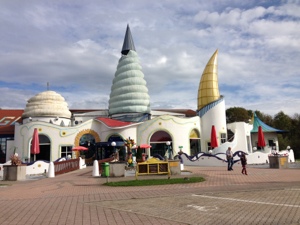
Well – the rest stop at Kellmunz an de Iller – just north of Memmingen on the A7 is a horse of a decidedly different color.

20131014-200830.jpg

Can you imagine recommending a rest stop? Well I can and I do! This place was unique.

We knew it was special as we pulled past the gas station. Swirls of what looked like ice cream decorated the roof, fun art decorated both the inside and outside.

20131014-200858.jpg

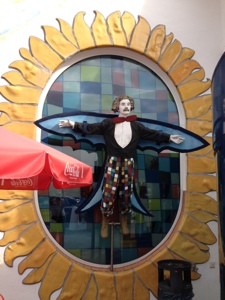
Even the revolving door had creative touches – plants in the corners, designs on the glass. Each space was unique and fantastical. There was a room just for kids, with kid sized tables, chairs, and games. Things to look at and admire hung from the ceilings, cascaded down the walls, and in some cases – ran along the floor.

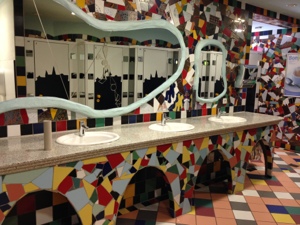
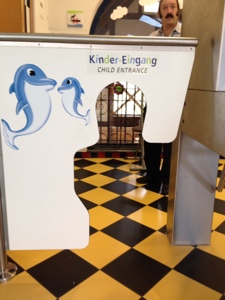
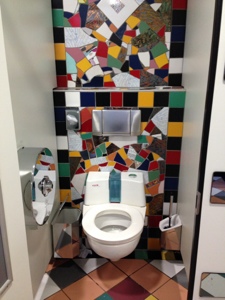
But the absolute drop dead feature were the bathrooms.

When have you ever seen such bathrooms!

20131014-200744.jpg

From the kid sized Entrance cut in the normally ‘handicap’ access – to the amazing broken tile work – These are bathrooms I shall never forget.

20131014-200733.jpg

20131014-200806.jpg

Next time you are driving around near Munich – route yourself to this rest stop. It’s a hoot.

PS: Victor is having a ball driving on the German Autobauns – the lack of a speed limit, and the quite nice Audi A3 that we rented combine to make driving quickly fun. Another advantage of the A3 – it was a wonderful GPS system. Unlike most it actually pronounces place names correctly – or at least as expected, and it was very easy to figure out how to use it. There are all the standard features – points of interest by topic, last destination, and a specific control over the volume of the spoken commands. It also offers a very nice ‘alternative’ route option, shows you the next 3 intersections of interest, as well as time and distance to your destination.Another feature I love – it’s polarized the opposite of my sun glasses – so I can see it – even when wearing them. Now why didn’t BMW think of that for their heads-up display.

And unlike the voice activated system that Helmut was using – it doesn’t argue with you if it doesn’t care for your accent!

Driving in the fast lane, averaging 150 Km/hr – and loving it.

Atelier – the Ultimate Dinner – Ignoring the price of course!


There’s a 2 Michelin Star Restaurant in Munich – the Dallmayr. It’s extremely small – extremely famous – and naturally – it’s very hard to get reservations. For some reason we’d thought we could sneak in at the last minute. Nope. But the very sweet Matre d’ asked if he could find another option for us – and suggested the Atelier. He even called and got us reservations.

So that’s how we ended up there – personal reference!

You’d never find it on Tripadvisor – 2 year ago someone reviewed it – in German, and gave it a 98 out of 100 – but blew it on the overall rating. Instead of a 5 – he gave it 2 – thinking Michelin stars. So the restaurant is ranked about 50th in Munich – instead of the first or second place it deserves. How do I know – after I ate there I emailed him to ask why the 2 stars!

Anyway – The restaurant is located in a tiny space (10 tables max – although all were large – at least double sized normal tables, with generous aisles and plenty of room for the serving staff). The tiny space is located in one of Munich’s don’t ask the price – you can’t afford it – upscale hotels. There were 2 other restaurants (at least) in the same hotel – the Garden which shared chefs and maitre d’ with the Atelier, although not the menu or wait staff, and rather surprisingly – a Trader Vic’s on a lower level. I haven’t seen a Trader Vic’s in at least 30 years. I didn’t get to see inside this one either!

But the layout was such that once in the Atelier – you didn’t hear or see or know anything about the other restaurants – it was a private space, set up to impress, comfort, and clearly feed you.

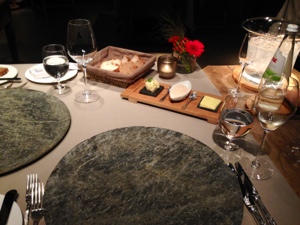
Huge round stone platters marked each place, and the salt and butter service was pink sea salt, unsalted local butter, and a house made spread.

20131014-214428.jpg

I felt very under-dressed in my blue jeans and bright blue ski sweater, but the extremely well-trained staff didn’t bat an eyelid. If I came recommended by the maitre d’ at Dallmayr – I was ok!

There are only 2 main options – a tasting menu of 5 courses, or a tasting menu of 7 courses. But our talented, knowledgeable, and very pretty head waitress assured us that the kitchen was extremely flexible – we could pick and choose as we wished.

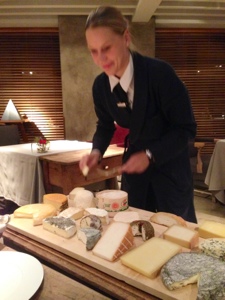
So my husband ordered the 7 course menu with wine pairings, I opted for the 5 course meal. In my opinion – I was the clear winner on this deal. My menu included unlimited selections from the cheese cart featuring raw milk cheeses from Maitre Affineur Waltmann.

Restaurants of this caliber offer additional surprise courses – delivered to the table and described as ‘gifts’ from the kitchen. At the Atelier – there were at least 4 or 5 such gifts – and the first one had 2 separate bites – both served on the same plate, I loved the mixture of crunch and soft in both the fish puree and mini ravioli. That distinctive combination of soft and crunch was a theme that niftily was repeated in most of the other offerings.

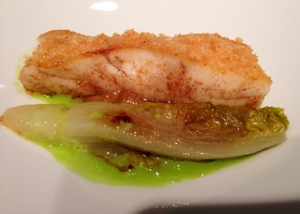
My 5 courses went from a lovely Duck breast dish with a side dim-sum of duck confit to a delightful fish slice delicately placed in a chinese lettuce and false flax oil puree. (Don’t ask me what that means – I’m just quoting from the copy of the menu they gave us when we left). What made the fish special was that they had quick fried the skin (crunchy) and properly cooked the fish (still soft and flaky – and delightfully seasoned. Yum.

20131014-214822.jpg

I didn’t much care for one of my courses – but Victor was glad to help me out. My lemon and we think lime and/or mint sorbet cleanser was delightful too.

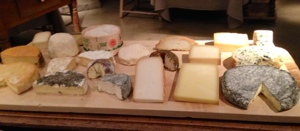
The cheese course was as perfect as it could be.

20131014-214848.jpg

The offerings ranged from cow to sheep to goat, from mild to strong to stronger. I opted for 6 different cheeses, and they were properly sliced and placed in order of complexity of flavor on a plate.

20131014-214903.jpg

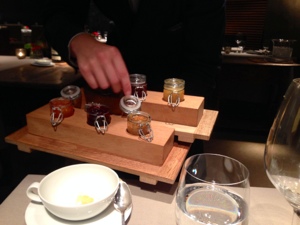
In addition there were 6 homemade jams – I asked to try all 6. And they had very lightly toasted and still soft nut bread.

20131014-214919.jpg

One of the cheese I’d picked was called Trappe Echourgnac – according to the staff – it made with a walnut liquor that we thought was exceptional. When we asked for the name – they not only provided that – they gave us a second, larger, piece to enjoy. Such an elegant way of dealing with a guest.

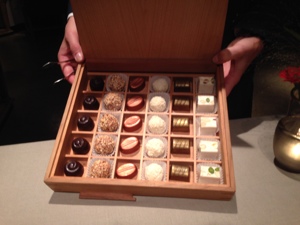
Desert – ah desert. Not just one, or two, but 3 deserts were presented. The first was a pre-desert, my main desert was a carmel butterscotch wonder with again that signature contrast of crunch and soft. In this case – the soft was home-made ice cream. After that they served a mini-desert of home-made truffle and marshmallow – followed by a box of truffles and nougat – pick however many as you want – when they presented the bill.

20131014-214932.jpg

Sigh

Meanwhile – Vic was enjoying his 7 courses – again each better than the last. His cheese course was particularly special – a goat cheese that had been bruleed on top. I didn’t taste it – but he loved it. They called it Clacbitou – and described it simply as cheese with eggplant and sesame. It was anything but simple.

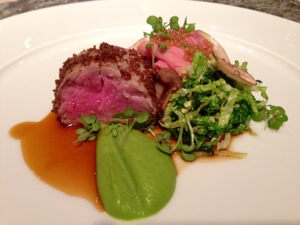
His favorite main course was the Fillet of veal and calf’s tongue with brown mushroom and Savoy cabbage. Again much more flavor and style than the description or picture could possibly could convey.

20131014-214833.jpg

Bottom line – at the Atelier you definitely get what you pay for – and if you can afford it – then it’s definitely worth the money and time! It took almost 4 hours to eat dinner – and yet we never waited for a course. There are just so many courses to enjoy, discuss, and share.

One note – Victor ordered the wine pairing – and for each course they OPENED a bottle for him, and left it available for him to enjoy as much or as little as he wanted. The same happened at the other tables – no sharing of wine. What do they do with the half-finished bottles we wondered, but didn’t ask. My guess – they become wine by the glass for the Garden restaurant next door. But if other restaurants of this type have done that in the past – I didn’t notice it. Sure made me feel special! Wine was good too.

Close up and Personal – Life in a village in Bavaria


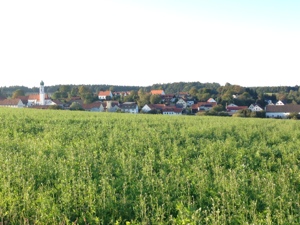
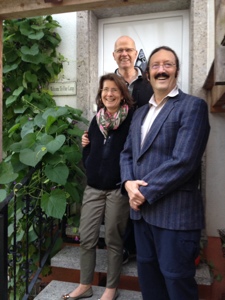
Living the nice life in Bavaria – ever wonder what it would be like to live in a village of 450 souls? Well – that’s where my German friends live – and like most dreams – the reality is always a bit unexpected.

20131015-061118.jpg

Their village is about an hour outside of Munich – but almost directly off the auto-bahn – so it’s a fairly easy drive into the city. There’s no public bus system to speak of in that area – but BMW, being the good employer that it is, provides bus service for their employees on demand. Nice, eh? So getting to and from work is not as challenging as one might imagine.

What is challenging is the lack of shopping. There are no shops of any kind in the village – if you want even a container of milk, you must drive to the next village to get it. It’s only about 5 minutes driving – but for those of us who live in the city – that’s a long way. Apparently there was a shop – but it closed. Just not enough business to be viable.

Another challenge – and this is one of those good/bad things – they know everyone. Really well. And they have a strong group of really good friends within walking distance. That’s nice – I don’t know my neighbors – so the idea of having friends so close is incredibly appealing.

20131015-061128.jpg

And they party hardy! Birthdays are a cause for huge celebrations – so large that one of the farmers actually built a room for everyone to use when they have a get-together. And they gather months prior to the party to plan the entertainment. They’ve done Can-Can numbers, written songs based on popular music – We totally cracked up on their version of ‘In the Navy’ – which had much to do with potatoes… Since it was in German, I’m sure we missed most of the jokes – but the recurring theme of potatoes was very obvious. And seriously funny.

Of course – you don’t get along with everyone – and in a village of 450 – it’s hard to avoid seeing someone who perhaps you are not that fond of. I guess avoidance is a skill you learn when you live in each others faces – all the time!

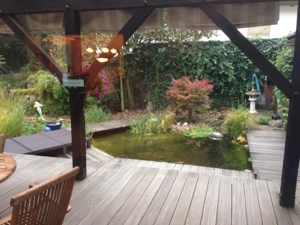
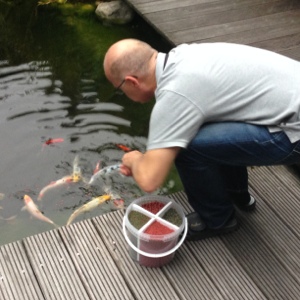
Because they live far from the city – they have a back yard. It’s small by North American standards – but fairly large by European Standards. There’s a vegetable garden, a flower garden – and a wonderful pond. Helmut has built the pond himself. It’s complete with a 4 foot high water bubbler/fall, countless frogs in season, and 20 fish. There are several sections to the pond – the 10 or so smaller fish tend to live in one part, the very large fish in the deeper portion. The pond freezes over in the winter – but Helmut assured us that the fish have no problem surviving, the water is deep enough for them to keep it from freezing completely.

20131015-061237.jpg

Like any pet – the fish respond to Helmut – and come when he calls – probably because he’s got the food!

20131015-061228.jpg

Their home is lovely – and we were lucky to be invited to stay with them. The home is new by European standards – built around 1970. It has 3 floors – a full basement, the main floor with a tiny kitchen, huge living and dining area, and the top floor with 3 bedrooms and another bathroom. What makes it distinctly different from what we’d expect in North America are the windows – that open at the top or at the sides depending on how you turn the handle. Another surprise – the size of the kitchen – they don’t even have a full-sized fridge – just a 1/2 size one. The full size fridge is in the basement. Because shopping requires planning – they also have a freezer in the basement. I would guess that farm houses would be larger – but this is more of city home, just located in the country.

About the food – being Eiser’s – we travel from meal to meal. And breakfast at Andrea and Helmut’s was great. And based on what we’ve been having at hotels since then – completely normal for this part of Germany. Eggs are offered, there’s at least 2 kinds of breads (it’s Octoberfest – at least one is a pretzel), jam, butter, meat slices and cheese. I visited a market and picked up fruit to add to the meals – fresh Strawberries, Figs, and pears. For dinner – if we’ve eaten in – we had wurst. Different kinds of wurst – but awesomely good. And one night we just had bread and cheese – naturally at least 4 different cheeses of course. And Beer. Lots of Beer. And Liquor. Can’t complain about the food.

Andrea is a great decorator – and unlike me – for her less is more. So each room reflects their love of Adventure travel – that is how we met them of course – with simple yet beautiful displays of all the wonderful things they have collected on their trips here and there. My favorites were the memories of Africa – an adventure we shared with them.

Because it’s a village – walking around is expected – but sidewalks are not provided. No need – there are hardly any cars. In fact, the only moving vehicle we saw in our hour or so tour was a tractor!

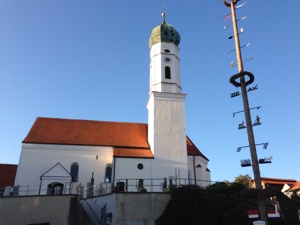
Their village has a church, a May pole, a lovely cemetery, and a huge farm – owned by one of Helmut’s very good friends. We were able to get a great tour of a working farm – by the farmer. Cool.

20131015-061157.jpg

It turns out that our friends live in the Hops growing area of Bavaria. I didn’t know this prior to our visit – but 70% or more of the hops grown to make beer in Germany is grown right near their home. We arrived just after the hops harvest had been completed. So we didn’t get to see the hops on the vines – they had been harvested, separated from the stems, and packed for shipping. But we did get to see the equipment they use today to harvest the hops – and we toured a Hops Museum.

Germany controls the stuff that goes into their beer – in a big way. A law passed in 1516 restricted what can go into German beer – just water, barley and hops! The newest research in the ‘Hops’ field is on how to naturally get the hops to have different flavors. No joke – apparently the hot new thing is raspberry Hops.

http://en.wikipedia.org/wiki/Reinheitsgebot

As you can easily imagine – having a law this strict – and given the amount of beer brewed and consumed in Germany alone – makes Hops growing a very big deal! Hops farmers do very well financially – despite the intense effort involved. And apparently the quality of the hops is key to the flavor of the beer. There is a lot of competition among the growers as to whose hops is the best. It’s a bit like growing grapes for wine – but without the cachet!

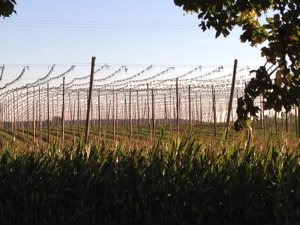
Hops are vines that grow vertically – up to about 30 feet high. So hops farms look a bit like telephone pole farms – there are poles stuck in the ground about every 10 feet – and between the poles are strung wires.

20131015-061146.jpg

In the fall, the farmers tie down wires about a foot apart – these wires are then tied to the hops plants. As the hops plants grow in the spring, the farmers manually train the plants to run up these wires. In the fall – machines cut down the wires, shake the hops seeds off the stems, grind up the stems and wires – and spit out the hop seeds into huge bags. These bags then go to the breweries to be further processed on their way to becoming beer.

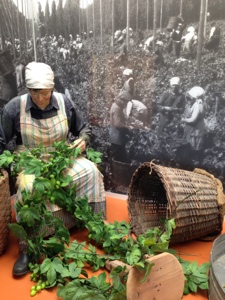
This picture – taken at the Hops Museum – shows the old-fashioned way of getting the seeds off vine. Today of course they use a huge machine.

20131015-061218.jpg

Our friends told us that most hops farms are still family owned and operated, and providing good incomes. The major concern – hops from China of course.

What made our stay with Helmut and Andrea so special – in addition to the great conversations and wonderful tours they took us on – was the chance to see how other people really live. Too often our visits to other countries are restricted to museums, hotels, and restaurants. We were lucky to spend 4 days and 4 very alcohol fueled nights enjoying a life style very different from our own. Truly a wonderful part of our trip to Germany.

A special personal thanks to Helmut and Andrea – who as you can tell – went way, way, way out of their ways to make our stay with them – and in Germany so very special. Leslie and Victor

Beer and my long lost tea pot – Color me Happy!


Sometimes a little imagination can go a really long way – and that’s pretty much sums up the art of Friedensreich Hundertwasser – or Fred Hundred Waters. I first saw his work in Montreal – the Museum of Fine Arts mounted an exposition – and I was totally blown away. Known for his outstanding use of colors and design – and lack of anything resembling straight lines – I promptly invested in one of his posters.

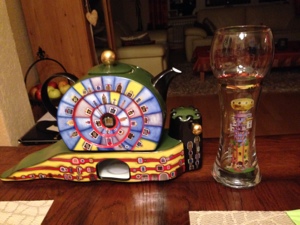
Several years later – in around 2005, I saw his tea cups – well, not really his tea cups – but tea/coffee cups that one of the high-end German porcelain producers made featuring his art. It was love at first sight. But I could only afford 6 mugs and saucers – the tea-pot that matched just seemed an impossible purchase. Naturally – I’ve mourned that decision for years – and have carefully been keeping my eyes out for it. Never saw it again.

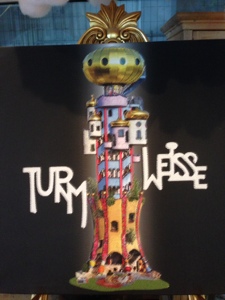
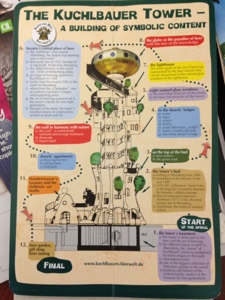
Fast forward to October 2013 – Our wonderful German hosts suggested that we visit one of the best and oldest breweries in Bavaria – Kuchlbauer. Being rather keen beer drinkers – and always fond of the lighter ‘Wheat’ beers – we promptly agreed. Now imagine our surprise when we found out that not only are they known for their beer, their copy of the last supper (full size and painted in a grotto), and their singing dwarfs (I kid you not) – they have an amazing Hundertwasser designed tower. Beer and probably my favorite artist – it’s a plan!
20131007-124107.jpg

So we drive to the brewery. Next to the parking lot is the newest work being built life-sized from his plans – I think it’s a church – but you can judge for yourself.

20131007-130652.jpg

After taking a long hard look at this newest example of art on the loose, we enter and sign up for the tour. It’s a bit pricy as these things go – but the gal selling tickets promises us it will be worth it. Things don’t start off that well – because it’s German Unification Day – there are no workers to observe – so while we can admire the equipment – it’s not really functional.

20131007-124127.jpg

Things go from ok to weird when we enter a grotto and are serenaded by dwarfs that represent the steps to beer making. Or at least I think that’s what they were singing about – it was all in German.

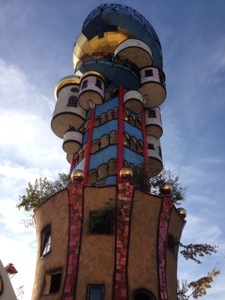
From there it was out into the daylight – and finally our look at the tower. It’s pretty cool.

20131007-124205.jpg

Inside the brewery there were demo versions, at least one built by Hundertwasser himself, the rest built by local artists following his designs. But for the real thing – you must go outside. Wow. What a tower. We climb the 150 steps to the top – admire the view of the totally solar-powered brewery below us – and then climb down.

20131007-125153.jpg

Now it’s time for beer tasting – and in German a taste is at least a 1/2 litre! They give us 4 bottles of beer and 4 wonderful tasting pretzels, my favorite part. We enjoy the beer, scarf down the pretzels, and then decide to buy 4 of the very unique beer glasses they are using. Victor sends me into the shop on my own – and what do I see? My tea-pot! Finally – I found it. Or perhaps better said – it found me.
20131007-130243.jpg

We have an emotional reunion, and I leave the proud owner of the most amazing tea-pot – and 4 beer glasses – gift from the owner of the brewery who was delighted to finally sell the tea-pot!

Great tour, Good beer, and my tea-pot – I’m happy!

20131008-104535.jpg

BMW Welt (World) – It’s all about the Cars!


Our friend Helmut works for BMW – so a visit to their house was definitely going to include a plant visit. What I didn’t expect to find was an organized touring schedule – replete with packaged video’s, museum quality audio projection system for the tour guide, and naturally – a up close and personal visit with your friendly robots! But BMW sees plant tours as a marketing tour – and packages them accordingly. Unlike Porsche, which wanted over $700 to do a plant tour – the BMW tours are reasonable, which explains why they were complete booked the day we went. Thank goodness for reservations.

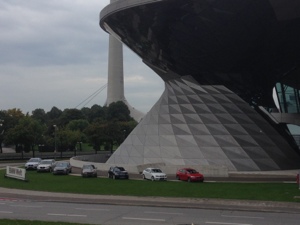
Anyway – the tour. You begin at the BMW welt – a specially designed massive building part of which is shaped like 2 stacked cones.

20131007-132333.jpg

Inside the glass doors are several huge areas devoted to various BMW product lines – there’s a section for the mini, there’s a ‘junior’ world exhibit to keep kids entertained (and informed), and on the 2nd floor – the personal car pick-up zone. If you come to Munich to take possession of your new car – you can expect only the best! A private dining room, your car presented on its own rotating platform, and then a personal ‘road’ out of the Welt and onto the streets of Munich. Nice.

For the average Soup Lady and friends – there’s a cafe offering drinks and light meals, a BMW life-style shop, a motorcycle demo which had the helmeted rider going up and down huge staircases, and the plant tour. The tour starts with a nicely produced video of the history of BMW, including an apology for using forced labor during WWII. Then a quick safety lecture (no walking outside the yellow lines, no pictures, no cell phones, no leaving the group), and we’re off.

The sprawling plant was originally built far from the city center, but the city of Munich has grown around it. There’s now a metro station right at the entrance – and across the street are the left-over buildings of the 1972 Olympics. Surrounded on all sides by housing, shops, and streets, the BMW plant blends into its surroundings, hidden in plain view.

Our tour takes us into the starting point of every BMW vehicle – the press room. Huge automated presses take flat steel and create the frames of the cars. These frames are then transported to huge rooms filled with Robots that pick up each piece, identify the type of car to be built, and then glue or bolt or spot weld the frames together.

The Munich plant only makes 3 types of BMW cars – the 3 series coupe and wagon, and the 4 series coupe. That means only 2 basic body types – but lots of options for paint color, engine, and interior. And every car is pre-sold! So each car – starting at the press room – is already pre-defined for its final look. The task is to make this happen without stopping between the steps.

Once the humanoid acting robots do the spot welding, the frames go to the body shop for their paint jobs. Robot ‘artists’ open the doors, spray on the multiple coats of paint, all while the cars are slowly moving continuously thru the plant. Attached to each frame is a transponder telling the robots what type of car, what color, what finishing needs to be done. The robots just follow the directions.

After painting, the cars spend several hours drying before the electronics, the seats, the dashboards, the chrome is carefully attached. As each car is pulled from the drying room – it joins an endless parade of cars – each being assembled. In the electronics section, there is a human ballet happening. Co-workers are assigned multi-function positions, and they rotate around the cars, standing on the conveyor belt so that they are standing still relative to the moving cars. The gas tanks are added, the padding inserted, the electronics attached. After each group of steps, a photograph is taken, and compared by both human and computer to the ‘model’. Any variation from the model is flagged – and the car removed from the assembly line for ‘repair’. Our guide explains that the system is so good that days can go by without a single car flagged for a ‘fix’.

We couldn’t tour the engine assembly room (the tour section is under renovation), but we did get to watch seats being assembled and put into moving baskets that would join up with the car assembly line just as the car for which they were intended made its appearance. Cool, eh?

It takes approximately 40 hours from rolled steel to finished car – as long as there is no problem on the line. When the cars roll off the line they are either loaded onto a train, or onto a truck for ‘local’ delivery. ‘Local’ includes the personal pick-up – but a truck is required because the cars must cross a road – and there would be too many individual cars.

We end up back where we started – having walked about 3 km around the plant.

Awesome tour – great robots – and naturally – now I really want to buy a BMW. Guess the marketing worked!

Super Foods Part 2 – yummy yourself into better health


I didn’t invent these lists, for that I must give credit to Rebecca Katz’s “The Longevity Kitchen” and my favorite source for advice to the aging – the AARP Magazine. But the comments are all mine!

Food 5: Kale
Ok – not one of my favorite veggies – so I’m more into hiding it than featuring it – but Kale is a definite Super Food. It’s rich in vitamin K (for Kale) – which is essential for blood clotting. Kale also contains lutein – which reduced the risk of cataracts and eye disorders. A surprising fact – one serving of Kale has almost 3 times the amount of Lutin as Raw Spinach. (So if you have to pick between Spinach and Kale – pick Kale!)

Food 6: Garlic
Not just for scaring off Vampires – Garlic is a great Super Food – and you can use it just about anywhere. It contains antioxidants, and antimicrobials. And when it’s crushed, it releases allicin, which wards off heart attacks, strokes – and vampires!

Food 7: Thyme
Beyond being famous for being in the title of a song from Simon and Garfunkle, Thyme fights bacteria. And in tincture form, it has recently been found to be effective in the treatment of acne. Pretty sure you don’t want to put the food on your face – but still, interesting to know, eh?

Food 8: Dark Chocolate
Ok – this is clearly my favorite Super Food. Honestly – ask me to eat more dark chocolate – I’m so there! Notice its dark chocolate – not milk and not white – that’s good for you. It’s lower in calories, rich in flavonoids, can aid in decreasing blood pressure and cholesterol levels. And – at the 60% or more cocoa level – it may reduce heart attacks and strokes in high risk individuals if consumed daily. Let’s see – daily consumption of dark chocolate. I can handle that.

Another yummy recipe from MyRecipes.com using 3 of the 4 Super Foods described above!

Whole-wheat Lasagna with Butternut Squash and Kale

You can assemble and chill the lasagna a day ahead, but add 10 to 15 minutes to the baking time. You can also freeze the lasagna, wrapped well in plastic wrap, for up to 1 month and bake it frozen (add 1 1/4 hours to the oven time).

Yield: Makes 8 servings
Total: 2 Hours

Recipe Time
Total: 2 Hours
Nutritional Information
Amount per serving
Calories: 424
Calories from fat: 38%
Protein: 20g
Fat: 18g
Saturated fat: 7.4g
Carbohydrate: 51g
Fiber: 8g
Sodium: 659mg
Cholesterol: 39mg

Ingredients

4 tablespoons olive oil, divided $
1 medium red onion, peeled and sliced
3 peeled garlic cloves (1 minced, 2 left whole)
2 cans (14 oz. each) crushed tomatoes
1 teaspoon dried oregano
About 1 tsp. each salt and freshly ground black pepper, divided
6 cups (about 2 lbs.) butternut squash, peeled and cut into 1/2-in. cubes
1/2 tsp. dried thyme
1 pound Lacinato kale (often sold as dinosaur or Tuscan kale)
9 whole-wheat lasagna noodles (about 8 oz.)
1 container (15 oz.) part-skim-milk ricotta cheese
1/8 teaspoon ground nutmeg
2 cups shredded mozzarella cheese, divided
Preparation

1. Preheat oven to 400°. Heat 2 tbsp. olive oil in a 2- to 3-qt. pot over medium heat. Add onion and minced garlic; cook, stirring occasionally, until onion is soft and translucent, 5 minutes. Add tomatoes, oregano, and 1/2 tsp. each salt and pepper. Reduce heat and simmer until thick and flavors are combined, about 30 minutes. Set aside.
2. While sauce is cooking, in a 12- by 15-in. baking pan, sprinkle squash with thyme, remaining olive oil, and salt and pepper to taste. Add garlic cloves and toss squash mixture to coat with oil. Bake until soft, 10 to 15 minutes. Meanwhile, bring 3 qts. salted water to a boil in a large pot.
3. Reduce oven temperature to 350°. Transfer squash and garlic to a food processor and purée until smooth.
4. Tear kale leaves from center ribs and discard ribs. Boil leaves until soft, 5 to 8 minutes. Drain; let cool. Squeeze out as much water as possible and chop finely.
5. In the same pot, bring another 3 qts. salted water to a boil. Add noodles and cook until tender to the bite, about 10 minutes. Drain; rinse with cold water.
6. In a bowl, mix ricotta, nutmeg, 1 cup mozzarella, and remaining 1/2 tsp. each salt and pepper.
7. Coat the bottom of a 9- by 13-in. pan with 1/3 of tomato sauce (about 1 1/2 cups). Lay 3 noodles in a single layer over sauce. Top noodles with squash, spreading evenly. Sprinkle 1/2 of kale evenly over squash. Arrange 3 more noodles on kale and top with ricotta, spreading evenly. Top with remaining kale and noodles. Cover noodles with remaining tomato sauce and sprinkle with remaining 1 cup mozzarella.
8. Bake lasagna until juices are bubbling and cheese is melted, about 30 minutes. Let stand 10 minutes before slicing.
Note: Nutrition analysis is per 4 1/2- by 4 1/2-in. serving.

Moroccan with Attitude – the Aziza in San Francisco


My kids have been trying for years to get us to go to the Aziza, and the stars finally aligned this weekend. What a treat!

Lots larger than it looks at first – but still relatively small – the Aziza is located on Geary Blvd, close to the Presidio park with its miles and miles of walking trails. Geary Blvd, at least in the area near the Aziza is a motley collection of Russian shops, low-end grocery stores, and intriguing shops. From the outside, the Aziza appears to be just another darkened doorway among many others, but inside it sparkles with subdued elegance and quiet elegance. Even full, the noise level was acceptable, the feeling a low-level comfortable sophistication completely in tune with the emphasis on fancy bar drinks (like a muddled Fig option) and contemporary cuisine.

I had to take a picture of the menu – it’s that distinctive. Rather than giving the name of the dish – the options just listed the ingredients – eggplant, caper, tomato, gypsy pepper – for example. No indication on how the food would be prepared – for that you must trust the chef.

Under the kids guidance, we opted for the 13 course tasting menu. It made for a long meal – we arrived at 5:30 and left at 8:30 – but it was well worth both the price and the patience. Stunning pretty much sums it up.

Presentation is clearly their strong suit – and I was so consistently amazed – I forgot to take pictures! For example – our 1st course – described as rice cracker, yogurt, corn, coffee – was served on a rock glass that had a piece of plastic stretched over the top to create a ‘plate’. The cracker was then perched on top – appearing to float in the air. Delicious – and amazing. Great combination.

My personal favorite courses were the Scallops (I ate mine – and my son’s), the sous-vide egg, and the deserts. Oh man, the deserts. We ordered one off the a la carte menu – a blackberry creation that was delicious, and then enjoyed the 2 desserts that came with the tasting menu.

I can’t guarantee that anything we had will show up on the menu when you arrive – but I can assure you that the presentation will be worth the wait for a reservation. Go. Enjoy. Go Again!

Aziza on Urbanspoon

Foodio54 Note – the address is right – the name is different! (and it’s been the Aziza for years..)

Kasbah on Foodio54

20130922-130316.jpg

20130922-130327.jpg

A restaurant worth Blogging about – Zeni in San Jose, CA


Ever eaten ‘Ethiopian’? Me neither. So when my son and brand new daughter-in-law suggested we try their favorite restaurant on our trip to visit them this week – we were delighted to accept. And what a meal it was!

First a bit about the restaurant. It’s located in a mall (not totally surprising around here – there are lots of restaurants in malls) in a rather laid back and lower-income section of San Jose. As my son joked – it’s the ‘wrong’ side of the tracks. But once thru the front door – the restaurant exudes love, warmth, and welcome. From the smiling staff in their very attractive bright blue blouses to the gentleman playing jazz on 3 – count’m 3 – keyboards in the corner, this is a delightful space.

There are 2 sections to the restaurant – and we were fortunate to score a table in the more traditional section with its wicker tables and low stools. These are perfectly suited to the very traditional way the meal is served – on a single large platter with a pancake like flat bread serving as the base on which the food is lovingly placed. Along with that pancake (intended to be used to mop up the remains of the meal) they gave us a basket of rolled flat breads. The basic idea – use the bread to grab the food – and good luck getting it from the platter to your mouth!

Cautioned by our kids to be careful about ordering too much food – we opted for just 3 main courses for the 4 of us – a vegetable combo, a lamb dish (stewed lamb in a curry like sauce), and a spicy beef dish that came with home-made cheese. We also ordered one appetizer to share – a filo dough pastry stuffed with meat. Everything – and I mean everything was totally yummy. I particularly liked some of the vegetable options – colorful and tasty, they were a delight to the palette. But I’m ready to eat Eggplant under just about any condition.

What was most surprising – beside the extremely reasonable price of just $70 for everything – including 2 drinks – was how incredibly filling the meal was. Despite our cautious ordering – we simply could not finish everything.

According to my kids – who apparently eat here regularly – coming early is critical. If you arrive around 7:15 – you can expect to wait in line – a truth that was obvious as we left, pushing our way thru waiting customers!

Another note – during the day they offer a ‘coffee’ ceremony that must be ordered at least 24 hours in advance – costs $40 for up to 10 people – and includes a server who roasts the beans right in front of you. My husband was keen to come back to try that – and I must agree – it would be cool to watch.

Definitely an A restaurant – do check it out!

Zeni Ethiopian Restaurant on Urbanspoon

Super Foods – Part 1


Yummy ways to eat yourself into better shape!

I didn’t invent these lists (there are 16 Super Foods in total), for that I must give credit to Rebecca Katz’s “The Longevity Kitchen” and my favorite source for advice to the aging – the AARP Magazine. But the comments are all mine!

Food 1: Coffee. Don’t need much to convince me that life without coffee isn’t worth living. But it’s nice to know that in addition to caffeine – there’s some good stuff – including antioxidants that can protect against cell damage and reduce your risk of chronic diseases like diabetes.

Food 2: Wild Salmon: It’s not just that it is a fish – and everyone knows that you should eat more fish – it’s also omega-3 fatty acid heavy (good not just for your heart, but also possibly a way to keep your DNA healthy).

Food 3: Sweet Potatoes: I admit – I just really prefer the taste of Sweet Potatoes over the plain boring white ones. But it’s seriously nice to consider that sweet potatoes have lots of Vitamin B6 and potassium. They can even help regulate blood pressure. And when eaten with the skin ON, they have more fiber than a copy of oatmeal.

Food 4: Olives/Olive Oil: Known to lower blood pressure and cholesterol, Olive Oil may even reduce the risk of stroke by up to 41%.

Need dinner tonight with 3 of the 4 super foods?
Try Salmon Burritos with Chile-Roasted Vegetables from MyRecipes.com. This recipe is rated as Outstanding!

The usual rice is replaced with pan-roasted sweet potatoes, onions, and poblano chiles, giving this burritos a healthy dose of fiber as well as heart-protecting micronutrients such as carotenoids (in the sweet potatoes), flavonoids (onions), folic acid (cabbage), and omega-3 fatty acids (salmon). Prep and Cook Time: about 45 minutes.

Nutritional Information – Amount per serving
Calories: 325
Calories from fat: 39%
Protein: 19g
Fat: 14g
Saturated fat: 2.5g
Carbohydrate: 30g
Fiber: 3.4g
Sodium: 852mg
Cholesterol: 45mg

Ingredients
2 tablespoons olive oil
2 teaspoons lime juice
4 cloves garlic, peeled and minced
1 1/2 teaspoons ground dried chiles
1 1/2 teaspoons salt
1 pound boned salmon fillet (about 1 in. thick) $
1 large Garnet or Jewel sweet potato, peeled, quartered lengthwise, then sliced 1/4 inch thick
1 zucchini, halved lengthwise, then sliced 1/3 inch thick
1 red onion, peeled, halved lengthwise, and cut into 1/4-inch-thick wedges
1 fresh poblano chile, stemmed, seeded, and chopped
6 whole-wheat flour tortillas (10 in. wide), warmed $
Chopped cilantro, shredded cabbage, low-fat sour cream, and lime wedges
Preparation

1. Preheat oven to 425°. Line two 12- by 15-inch baking pans with aluminum foil.
2. Whisk together the olive oil, lime juice, garlic, ground dried chiles, and salt.
3. Rinse salmon and pat dry. Brush flesh side of salmon with 2 tablespoons of the lime-chile marinade. Set aside.
4. In a medium bowl, toss the sweet potato, zucchini, onion, and chile with the remaining marinade. Arrange vegetables in a single layer on the baking pans.
5. Roast vegetables for 10 minutes, then add salmon, skin side down, to one pan and return to oven. Continue roasting until potatoes are tender when pierced and salmon is opaque but still moist-looking in center of thickest part, 7 to 10 minutes.
6. Remove skin from salmon and slice fillet into six equal portions.
7. Spoon vegetable mixture equally onto warm tortillas. Top each with a piece of salmon and a little cilantro, cabbage, and sour cream. Fold tortilla over the filling. Serve with more sour cream and the lime wedges.

Curious about the rest of the Super Foods? Stay tuned!

8 Easy Steps to Eating Smart when Eating out!


This is one of my all time favorite topics. I leave and breathe eating out – and I watch my weight like a hawk. I went with Weight Watchers in Feb 2002 – lost 30 pounds by June 2002 – and have kept it off for over 11 years now. Clearly – I’m pretty pound of that accomplishment. I weigh what I weighed in High School. Rocking Grannie!

BUT – there’s a price to pay in staying slim and eating out more nights than I eat in – and I call it the menu game. And like all games, there are rules.

Step 1: Before sitting down – Choose your price point and be sure that the restaurant offers options that will work. For example – if you are thinking of spending about $20 per person – the average price for the entries on the menu should be $10 to $15. The wine, the dessert, the tip and taxes will bounce a $10 entry up to $20 in a blink of the eye.

Step 2: Choose your cuisine – A study by the folks at Tufts School of Nutrition has determined that there are ‘better’ cuisines and ‘worse’ cuisines from an average calorie point of view. Not surprisingly, Vietnamese and Japanese have the lowest average calories when their most popular dishes were analyzed, while Italian, American and Chinese have the highest average calorie counts. (Check out the exact numbers in the study published in JAMA Internal Medicine by Susan Roberts, Director of the HNRCA Energy Metabolism Laboratory. Susan Roberts also is the author of “The “i” Diet” (www.myidiet.com))

Step 3: Try not to arrive famished. This is so hard to avoid, and so critical to keeping control over how much you eat. The other day I ended up devouring almost 1/2 of a delicious milk shake because I was just too hungry when I walked in to remember to ask for water.

Step 4: Always ask for water first – and always drink it before ordering. Then you can focus on what you are ordering, and not ‘shop hungry’.

Step 5: Plan ahead – and either order a small portion – or try to put 1/2 away before you start eating. Restaurants, particularly smaller ones at lower price points, serve way too much food. In fact, those crazy folks at the Tufts Nutrition School cited above studied calorie counts and determined that average meals in 33 randomly selected smaller restaurants in the Boston area ended up weighing in at an astounding 1,327 calories per meal – that’s about twice a normal meal, and more calories than I normal consume in a day. More distressing – fully 73% of the meals they analyzed in their study contained more than 1/2 the daily recommended calories per day for an adult. No wonder we get fat eating out. So plan on take out – every time you eat out. In fact 12 of the 157 meals analyzed actually contained more than 2000 calories – the calories recommended for an entire day

Step 5: Be a fussy eater! Ask for all sauces and all salad dressings to be served ‘on the side’. That way you can control how much of the most fattening things get in your stomach!

Step 6: Don’t order what you really shouldn’t eat. If you don’t order the french fries – you won’t be tempted. Don’t ruin fish (something you should try to eat at least twice a week) by getting it fried, and if you order steak – order the small portion.

Step 7: Put your fork down between bites. This works for any meal – home cooked, or eaten out. Study after study has shown that it takes time for your tummy to register ‘full’, and it’s easy to eat so fast that you go past that point. In fact – this is why I love tasting menus. The time delay between the courses gives my body time to decide how hungry I still am.

Step 8: Carry food with you – and eat it when you get hungry! I always have a small resealable container of almonds with me. They are the perfect snack – not terribly high in calories, take effort to eat (if it goes down fast – it didn’t count is false!)

Well there you have it – 8 easy steps to eating Smart when eating Out.