Children’s Grand Park in Seoul – Go with the kids for a splashing good time!


Sometimes the best things are Free!

On Monday – the museums are closed in Seoul. So we ended up going to the Children’s Grand Park. This is reputed to be the largest of its kind – at least in Korea, and I must admit that it was huge.

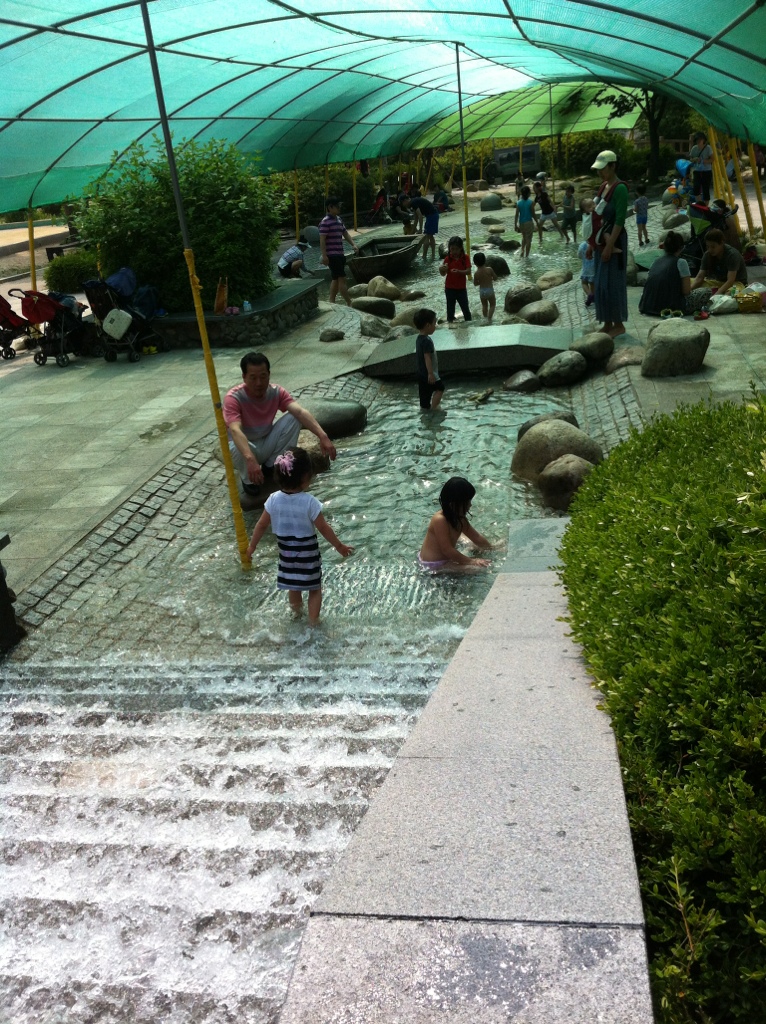
As I’ve mentioned previously – Korean’s know how to do big public spaces – and this is another wonderful example. They thrown in a bit of everything – and most of it is free. The highlight of our visit, for the younger crowd (age 5 in our case), was the adorable water playground.

20130604-113926.jpg

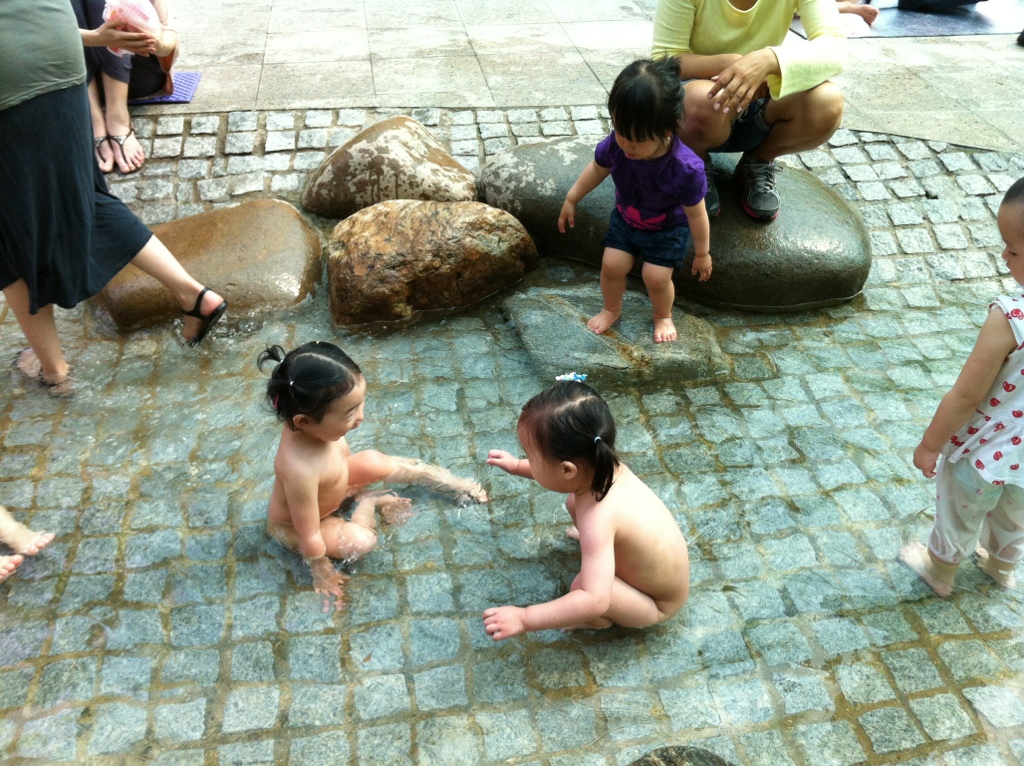
It had fountains, it had mini-waterfalls, it had rocks, and bridges, and lots and lots of kids. Including an adorable pair of toddlers who proved why man invented ‘swmmies’ – diapers designed for swimming. They weren’t wearing them – and quickly were clothed in incredible soggy messes! Off with the diapers!

20130604-113939.jpg

There was also a Zoo – a tad tired around the edges, but it did have tigers, and leopards, and a Puma. I’d never seen a Puma before. The best exhibits were hidden away in separate buildings – I loved the bonsai tree garden, and found the kiddie zoo section quite cute.

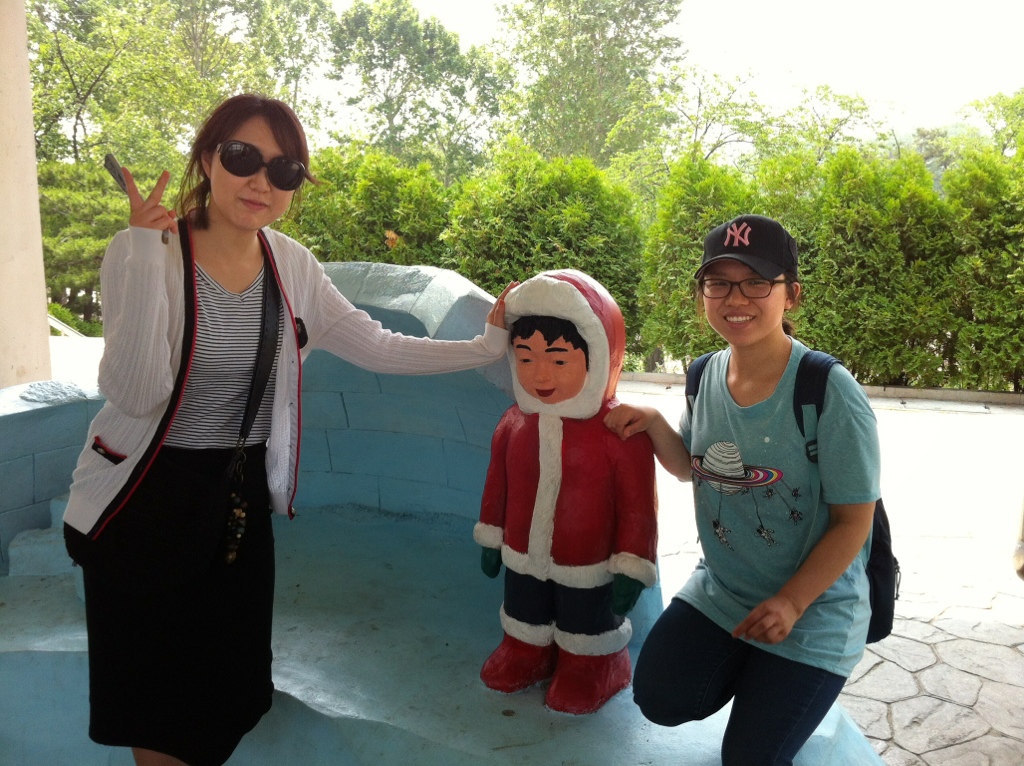
One Koreanism that struck me as very funny was the Polar Bear exhibit. Yes they had a Polar Bear – for whom I felt very sad. But they had also created a photo moment of an Inuit with an Igloo. I couldn’t resist taking a picture – and got 2 willing Korean volunteers to pose for me. Based on this zoo’s image of Canada – Inuit are small – and vaguely resemble Santa Claus. Doesn’t it make you wonder what we have wrong in our Zoo’s?

20130604-115036.jpg

There is a sculpture garden made out of bits and pieces of everything (including ET) – quite fun to examine. And there are bridges to cross, animal shows that charge $, and 2 amusement parts – one for little kids, and one for bigger kids (More $), and the predictable junk to buy.

But really – it’s about the water playground if you are with kids – and that is well worth seeing.

Signing off – completely exhausted – the Soup Lady and the Intrepid Traveler.

Are National Museums a Window into the soul of the Country?


I think that National Museums might be considered one Window into the Soul of a Country, along with school curriculum, and the employment rate. After all, what National Museums say, and what they don’t say, how they look, and how they are maintained, while not the only way to get to know a country, can be imagined by the visitor as one way to find out how the country sees itself and how at least officially it wants ‘foreigners’ to see them.

From this perspective – the National Museum of Korea in Seoul – the 12th most visited museum in the world – offers a unique and intriguing glimpse into how Korean see themselves.
20130604-111259.jpg

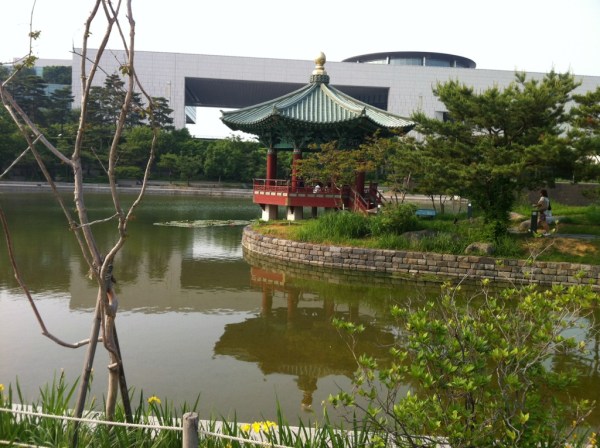
The Museum is huge – and extremely modern. I’ll give the Korean’s credit – they sure know how to do huge public spaces. This is not the first example I’ve seen of this kind of massive public building here in Korea – and if Museums are windows – the first look at this Museum says – I’m a huge house.

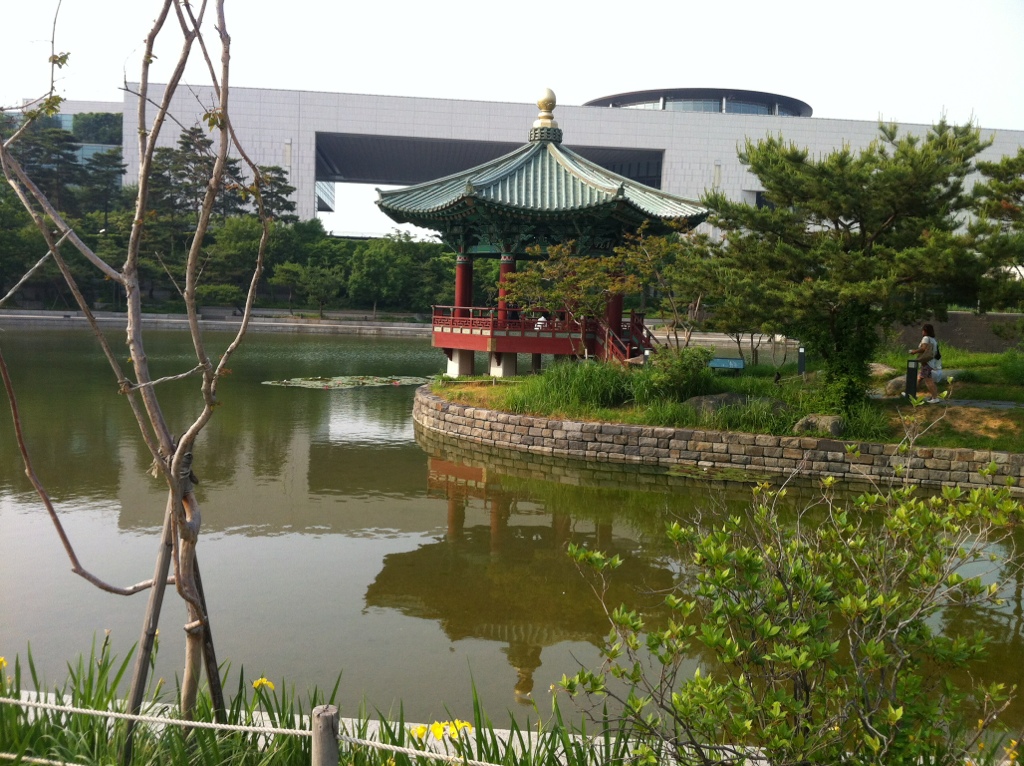
The landscaped grounds alone are impressive – acres and acres of lakes, sculptures, pagoda, entrance walkways, ramps, and gathering spaces. So large that I can’t even imagine walking around the entire complex – not if I wanted to see the Museum too.

And it’s clean and it’s all free. Only the special exhibits carry a charge – and the next one is a bit surprisingly entitled – “Art in America”. The good news – it hadn’t opened yet – so we were free to concentrate on seeing the Permanent (Rotating) collections. The museum’s total collection is 330,000 pieces – only 13,000 of which can be displayed at any one time. They have 67 National Treasures, 131 General Treasures, and 4 folklore assets.

There are 3 huge floors – each one large enough to be considered a museum on its own, a gigantic and un-photograpable rotunda paved in marble, a children’s museum which we could not enter (no kids with us), a huge and moderately priced restaurant on the main floor, 2 more restaurants on other floors, a tea room, a gift shop that stretched at least 500 feet, free lockers for back-packs, stroller rental, cell phone charging station (not sure why on that), an information booth, and an audio rental booth with 2 kinds of guides – an audio only one and a fancier Samsung version complete with pictures. The pleasant hostess told us that foreigners tend to like the simpler one better – so we opted for that. Grabbing our maps – we headed into the Museum proper.

Korea is extremely proud of its history – and there is evidence of sophisticated civilizations on the Korean Peninsula since pre-historic times. Clearly this pride rings out thru the museum – and is one of the reasons I felt that I was looking into the soul of the country. School groups, even on Sunday, were present though out the museum, but unlike other groups we’ve seen – these groups were small in numbers (10 to 12 max) – and the instructors focused the kids attention on selected small sections. Discussions were clearly animated and conversational not lectures. Very different from what we’d seen in other Museums on other days.

The first floor of the museum covers the history of Korea – from Paleolithic to what is called on the map – Early Modern – but in fact ended just prior to the invasion by Japan in 1905. This in itself is interesting. Nothing in the museum dates from the last 100 years. Consider the meaning of this – is the modern history of Korea inappropriate for the National Museum? Is it not interesting? Is there nothing worth collecting? To say I was surprised by the abrupt end of the ‘history’ section is an understatement, and left us wondering who and why this happened.

There were several extremely interesting sections in the ‘history’ portion – primarily a copy of a book printed in moveable metal type 71 years before Gutenberg’s bible and an exhaustive explanation (in English) of the events between the end of the Silla era and the beginning of the Joseon Dynasty. We’d been wondering what had happened during those almost 500 years – and we finally got to find out.

The most interesting parts of the exhibits on the 2nd floor were the collections of works donated by individuals to the museum. It is amazing how many beautiful things are saved by the actions of just a few individuals.

The third floor was split into two sections – One half was a series of mini-rooms devoted to the art from other Asian countries – most impressive of which was an animated multi-part Chinese painting. As you watched, the seasons changed, people moved around the landscape, night fell, snow-covered the ground, the moon rose. All very beautiful and very peaceful. The 2nd section was devoted to pottery (see one pot, seen most..) and a fabulous collection of Statues of Buddha rescued from various temples around the country. Easily my favorite part.

Bottom line – this is a huge museum – there are highlights, a lot of things to see – and while nothing outstanding breath-taking, well worth the full day it took us to see all 3 floors. And such a great price point – free!

Signing off – The Soup Lady and the Intrepid Traveler.
Mise-en-Scene – a must see exhibit – coming to a museum near you!


While we were in Seoul, the LEEUM Museum was putting on what might be one of the best ‘special’ exhibits I’ve even seen. It’s too late to see it in Seoul – it’s gone as of June 2, 2013 – but something this good will surely be re-appearing at a Museum near you. Keep your eyes peeled!

The theme of ‘Mise-en-Scene’ is theatre – as it applies to moving images, stage sets and the like. Leaving aside the ‘blab blab’ of the curators – the resulting collection of works by assorted artists was both intriguing, unforgettable, and surprising.

The first major piece is a series of 12 video monitors by Adad Hannah – each showing a bit more of a scene. In the first – there is a simple close up of a woman’s face and a man’s hand. In the next monitor – the camera has pulled back just a bit, showing more of the man’s hand. As the camera apparently pulls back further and further, more of the scene is revealed – you gradually realize that the man is turned away from the woman, and is actually looking at another woman who has just entered the room. In the final monitor, you see that in fact the entire scene is a scene within a scene – there is another camera man, a prompter, sound crew, etc. At the end of the installation is the room itself. You are left wondering what you were thinking when you saw the first few monitors – thinking about thinking in the Buddhist vocabulary.

20130602-093412.jpg

The next several pieces are works by Jung Yeondoo. In all of them – there is a trick – not everything you see in the final ‘photograph’ is real. For example – one image is of a woman apparently sitting in a boat on a lake. But alongside the final image is a photograph of how the first image was created – the lake is a backdrop, the lady is real, but the boat is a flat cut-out prop. In another series – the first photograph is a battle scene – an explosion with dirt flying, 3 men running for cover, a fourth man being blown away. But the reality is that only 2 men are real – the dirt is being spread from above, the rest of the scene – including the tank – are again cut-outs. These are so cool.

20130602-093312.jpg

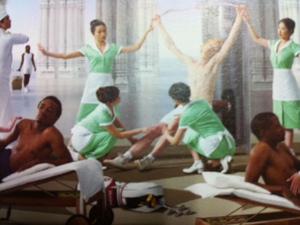
We also got to see several of the works from the Feast of Trimalchio by AES+F. Check this out on the internet – these are huge format photographs with 20 or more people taking part. The final photographs are created by taking pictures of small groups of two to 6 people – then pasting the individual pictures together. The theme is also interesting – a decadent roman festival set in modern times. The background is a modern resort with a beach, housekeeping maids, golf pros, chaise lounges, and – true to the theme – decadent looking customers. The final pictures are replete with detail – the construction method intriguing.

20130602-093400.jpg

There were also 3 video sections.
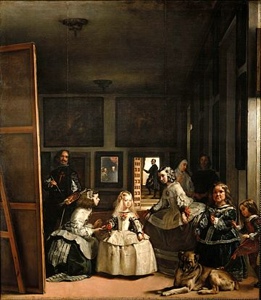
The first by Eve Susman and the Rufus Corporation is an 89 second video that captures the action just before and just after the scene captured in Velazquez’s las Meninas. Look it up if you do not know the reference, but to help you out – here’s the picture. Now just imagine all those various characters – from the artist to the dwarfs – coming to life.

20130602-094331.jpg

The original painting shows a members of the Spanish Court – and dates from 1656. The painting shows people looking in different directions, some towards the artist, some away – and even shows the artist himself in front of the easel. What the video does is show all the same people – dressed exactly as they are in the painting – but moving around and interacting with each other. At one precise moment – it all snaps together into the painting – but then the performers continue to move – deconstructing just as the finished constructing the famous painting.

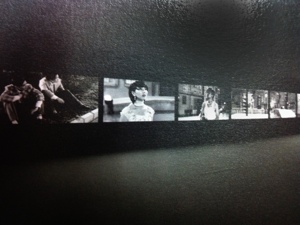
The 2nd video was even more intriguing. Done by Yang Fudong, it is 7 different movie screens – each showing a different view of a specific landscape with a cast of interesting characters. The characters move in and out of the different screens, things behind them change positions and travel also from screen to screen. Filmed in black and white, and completely open to any and all interpretation, it is again a challenge to your thought processes. What did you think was going on – did you expect what happened to happen. Are you predicting what will occur – or do you not see the screens as connected. Consider how interesting – art that makes you think about thinking.

20130602-093349.jpg

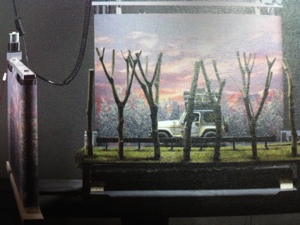
The final piece – by Zin Kijong – is the hardest to describe. The viewer is in a space between 2 parts of the installation. On one side is a series of models – dioramas that capture a single moment in time. In front of them is a track on which 2 cameras are placed, each one slowly moving past the models. On the other side of the space are 2 video monitors – each showing the ‘view’ of one of the cameras. The models have been designed to create a story in the mind of the watcher – again – making you think about what you are thinking.

20130602-093324.jpg

So – keep your eyes open for exhibits by any or all of these artists. There work is outstanding. I just can’t believe how fortunate the Intrepid Traveler and I were to wander into this Special Exhibit. And how glad we were that we did.

Signing off – The Soup Lady and the Intrepid Traveler.
Outstanding – the LEEUM Samsong Museum of Art


Contemporary Art Museums are always a bit of gamble. Sometimes you win – sometimes you lose. This one was a winner. One of the best Museums we’ve seen in Korea – and maybe one of the best I’ve ever seen. World Class in every respect. Like the grading system in Harry Potter – Exceeds Expectations.

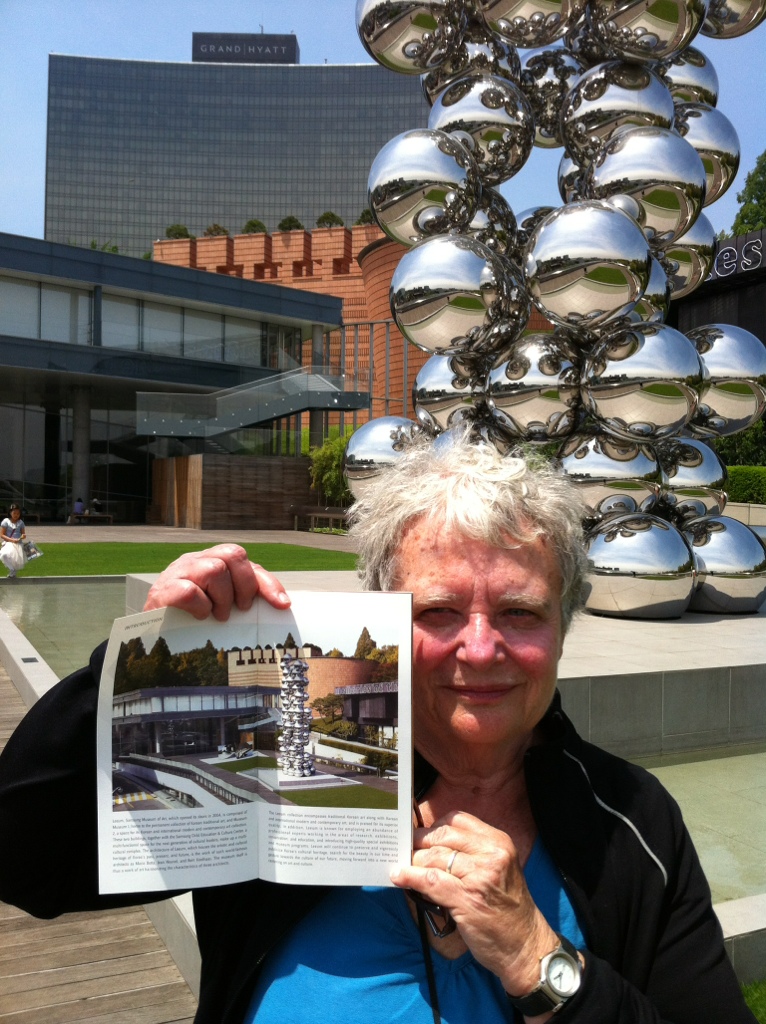
The building – actual 3 different interlocking buildings – are worth a look-see just on their own. As you can see from the photograph that Jill is holding – on the left is a rectangular building with windows, in the middle ground is the brown building designed to remind viewers of a fort (on the left) and a pot (on the right). On the extreme right – labeled memories of the future, is the third part – a lopsided jigsaw of black walls. Under the green grass in the middle (behind Jill and the ‘silver’ ball sculpture) is the main lobby of the museum.Plus, inside the first building is a suspended concrete black box (apparently the first of its kind) that holds an entire traveling exhibit.

20130602-081247.jpg

What you can’t see in the photo Jill is holding – but you can see in my picture is the gigantic Hyatt that got built just behind the Museum, and literally dwarfs it.

Trust me – seeing is much better than trying to describe.

But it’s not about the outside of a museum – it’s about the inside – and this one has insides to die for! We got the digital guide – a Samsung smart tablet that allowed you to see videos of the objects and rotate them at will, link to further information, plus provided an audio guide – and a guide to the artist with a bit of their history. Bottom line – coolest guide I’ve ever used. And it was controlled wireless by the art work – you moved close to a piece – it began to talk to you. Move away – and the next piece started to ‘chat’. Way cool.

Of the 5 distinct exhibits – 3 permanent, 2 temporary – two were completely outstanding – of the do not miss this – variety. The other 3 exhibits were good – just not amazingly awesome great. My plan – I’ll review the Permanent one in this blog – then cover the ‘traveling’ exhibit – which was amazing – in the next blog.

So – Outstanding Exhibit 1 – Permanent – “Modern Art”. This was 3 floors (80 pieces) of outstanding art, extremely well ‘curated’ in the audio guide – but clearly labeled by Artist, Date, and Title in the Museum itself. On the top floor were the works by the Korean contemporary Artists – names that I didn’t recognize of course – but art I won’t soon forget. There was a glorious scene of mountains that combined Korean Classical penmanship with modern sensitivities to create a scene full of movement and drama. I didn’t need the guide to tell me to admire the dramatic curves of the path, the stream with its nude bathers, the rocks, the fog, or the mountains. Stunning. Another favorite on the third floor was called something like ‘The Modern Woman’ in Korean. It featured a drawing of a very typical middle-aged Korean peasant woman showing the traditional effects of the hard life of a farmer (wrinkled skin, chunky body, thick muscular arms and legs) holding up a ‘modern’ dress about 6 sizes too small. East meets West, Expectation meets Reality. Traditional confronts the Future. Very powerful, very simple, unforgettable.

On the 2nd and first floor were a mix of works by international acclaimed artists and internationally known Korean artists. I only have time and space to describe a few of these amazing pieces.

There were 3 works by Mark Rothko, meaningful because I saw the play ‘Red’ (the story of Mark Rothko) in Montreal just before leaving the city. There was a wonderful series by a Korean artist who took clothes racks and decorated them to reflect the current state of Korean confusion – modern vs traditional, appealing junk vs ‘mom’s’ boring conservative tastes. Very interesting.

I also liked a gigantic cyborg woman, hung dramatically from the ceiling, and a simple piece of just a large rock and a sheet of iron. The contrast between natural and man-made – and your ability as the viewer to move around and within the piece made it very captivating – way more interesting than I can easily explain. I also liked a large pentagonal mirrored surface that fractured any image – creating an interesting play on the term – mirror.

The majority of the pieces were well-lit, easy to see and to enjoy. One exception, and I hate to be negative, was an installation called ‘Death’ that was composed of several thousand pills. The problem? To protect the installation, they had used several large sheets of glass. Since they were highly reflective – the result was the piece across was reflected so strongly that it was almost impossible to see the pills.

On the other hand – a pair of life-sized ‘models’, cunningly made by pasting photographs on the appropriate body part were so well position in a corner that it was hard to realize they weren’t alive. On top of these pieces, there was an Easter Egg by Jeff Koons, a statue by Alberto Giacometti and a piece by Andy Warhol.

I always think that if I see 2 or 3 pieces I enjoy – I’ve done well. But in this one part of this museum, at least 2/3rds of the art was if not wonderful, at least approachable. Having the audio guide helped of course.

Come back tomorrow to hear about an even more impressive part of the museum – a traveling exhibit called ‘Mise-en-Scene’.

Signing off – The Soup Lady and the Intrepid Traveler.