Mise-en-Scene – a must see exhibit – coming to a museum near you!


While we were in Seoul, the LEEUM Museum was putting on what might be one of the best ‘special’ exhibits I’ve even seen. It’s too late to see it in Seoul – it’s gone as of June 2, 2013 – but something this good will surely be re-appearing at a Museum near you. Keep your eyes peeled!

The theme of ‘Mise-en-Scene’ is theatre – as it applies to moving images, stage sets and the like. Leaving aside the ‘blab blab’ of the curators – the resulting collection of works by assorted artists was both intriguing, unforgettable, and surprising.

The first major piece is a series of 12 video monitors by Adad Hannah – each showing a bit more of a scene. In the first – there is a simple close up of a woman’s face and a man’s hand. In the next monitor – the camera has pulled back just a bit, showing more of the man’s hand. As the camera apparently pulls back further and further, more of the scene is revealed – you gradually realize that the man is turned away from the woman, and is actually looking at another woman who has just entered the room. In the final monitor, you see that in fact the entire scene is a scene within a scene – there is another camera man, a prompter, sound crew, etc. At the end of the installation is the room itself. You are left wondering what you were thinking when you saw the first few monitors – thinking about thinking in the Buddhist vocabulary.

20130602-093412.jpg

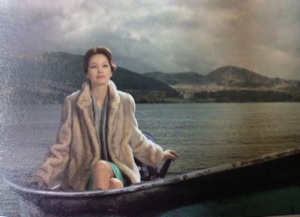
The next several pieces are works by Jung Yeondoo. In all of them – there is a trick – not everything you see in the final ‘photograph’ is real. For example – one image is of a woman apparently sitting in a boat on a lake. But alongside the final image is a photograph of how the first image was created – the lake is a backdrop, the lady is real, but the boat is a flat cut-out prop. In another series – the first photograph is a battle scene – an explosion with dirt flying, 3 men running for cover, a fourth man being blown away. But the reality is that only 2 men are real – the dirt is being spread from above, the rest of the scene – including the tank – are again cut-outs. These are so cool.

20130602-093312.jpg

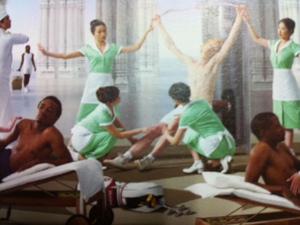
We also got to see several of the works from the Feast of Trimalchio by AES+F. Check this out on the internet – these are huge format photographs with 20 or more people taking part. The final photographs are created by taking pictures of small groups of two to 6 people – then pasting the individual pictures together. The theme is also interesting – a decadent roman festival set in modern times. The background is a modern resort with a beach, housekeeping maids, golf pros, chaise lounges, and – true to the theme – decadent looking customers. The final pictures are replete with detail – the construction method intriguing.

20130602-093400.jpg

There were also 3 video sections.
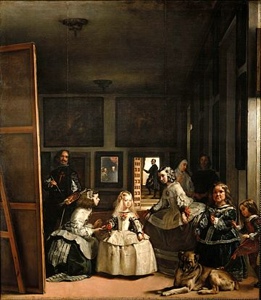
The first by Eve Susman and the Rufus Corporation is an 89 second video that captures the action just before and just after the scene captured in Velazquez’s las Meninas. Look it up if you do not know the reference, but to help you out – here’s the picture. Now just imagine all those various characters – from the artist to the dwarfs – coming to life.

20130602-094331.jpg

The original painting shows a members of the Spanish Court – and dates from 1656. The painting shows people looking in different directions, some towards the artist, some away – and even shows the artist himself in front of the easel. What the video does is show all the same people – dressed exactly as they are in the painting – but moving around and interacting with each other. At one precise moment – it all snaps together into the painting – but then the performers continue to move – deconstructing just as the finished constructing the famous painting.

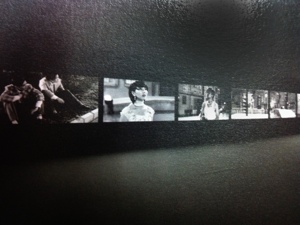
The 2nd video was even more intriguing. Done by Yang Fudong, it is 7 different movie screens – each showing a different view of a specific landscape with a cast of interesting characters. The characters move in and out of the different screens, things behind them change positions and travel also from screen to screen. Filmed in black and white, and completely open to any and all interpretation, it is again a challenge to your thought processes. What did you think was going on – did you expect what happened to happen. Are you predicting what will occur – or do you not see the screens as connected. Consider how interesting – art that makes you think about thinking.

20130602-093349.jpg

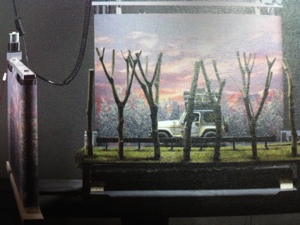
The final piece – by Zin Kijong – is the hardest to describe. The viewer is in a space between 2 parts of the installation. On one side is a series of models – dioramas that capture a single moment in time. In front of them is a track on which 2 cameras are placed, each one slowly moving past the models. On the other side of the space are 2 video monitors – each showing the ‘view’ of one of the cameras. The models have been designed to create a story in the mind of the watcher – again – making you think about what you are thinking.

20130602-093324.jpg

So – keep your eyes open for exhibits by any or all of these artists. There work is outstanding. I just can’t believe how fortunate the Intrepid Traveler and I were to wander into this Special Exhibit. And how glad we were that we did.

Signing off – The Soup Lady and the Intrepid Traveler.
Lessons from South Korea


Having been here for several weeks – the intrepid traveler and I agree that there are somethings that Koreans just do a whole lot better than we in North America do – and what would a ‘blog’ be if we didn’t let you guys in on the facts? I hereby challenge us in North America to beat the Koreans at this game!

1. Greet your incoming guests – as soon as they walk in the door. Here in South Korea you never walk into a restaurant or a shop without someone immediately greeting you with a smile and hello and welcome. Not a snarly “how can I help you”, but a sincere sounding “Welcome”. Makes you feel glad you walked in.

2. Stand up when people walk up to you. Here in South Korea, if we walk into an information booth or up to a hotel reception desk and the staff is seated – immediately all the staff stand up, bow, and say welcome. It’s really nice. There’s eye contact – and you know that they are attentive to your request. Even if there are 2 gals – and clearly only one is going to respond – both stand up – and stay standing until you leave. They don’t chat on their cell phones, pretend to be busy on their computers, or keep their heads down to ignore you. Nope – they stand up. Every time!

3. Say thank you when people leave your place of business. On the buses, when you walk out the door, there is an automated ‘thank you’. When you press your pass to the machine – it says – ‘Thank you’ to acknowledge receipt. When you leave a shop – even if you didn’t buy anything – the staff says ‘Thank you’. How nice is that!

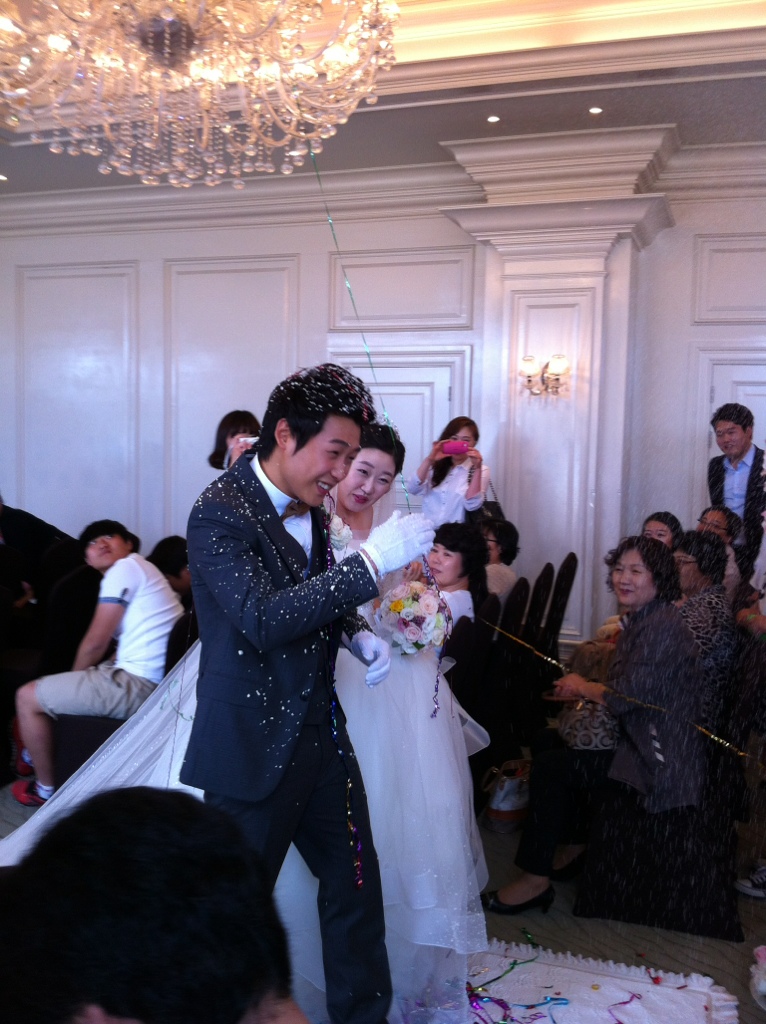
4. During a wedding ceremony – thank the guests, and thank your parents. I’ve seen 3 weddings so far – and in every single one, at the very beginning the mothers of the bride and groom walk down the aisle first – and light candles to thank the ancestors. And at the end, before the ‘you may now kiss the bride and run down the aisle’ part – the bride and groom – together – officially thank their parents – who stand, face the crowd and are applauded. And the Bride and Groom also bow and thank the guests. How nice is that. I’ve been to weddings where one side or the other was ignored because they didn’t feel comfortable about making a speech. By officially thanking them – no speech is required – it’s just a formal acknowledgement that without the ancestors and without the parents – no wedding would have take place today.

Another Beautiful and Unique moment in a Korean Wedding – the groom kneels in front of his bride – and presents her with a bouquet of flowers… not a dry eye in the house – trust me!

20130526-050013.jpg

5. Smile at strangers. We’ve been at the Kensington – a big and basically Korean only Resort – for over a week. And while the guests change – the politeness doesn’t. People here smile when you walk past – they don’t just shove you out-of-the-way – or worse – ignore you. They take a second to smile, and if you smile back – their smile goes all the way to the eyes. It’s nice.

20130526-045938.jpg

6. Clean up after yourself – Even on the Beach. There are not a lot of trash cans, and those they have they hide (check under the cash – see the flap – that’s the trash!) – but there isn’t a lot of trash on the ground either. People come prepared to gather their garbage – and because everyone cleans a little bit, the place in general stays clean. Now it’s not like Rwanda (where the President mandated no plastic bags and a monthly – everyone must clean – policy) – but it’s pretty nice.

7. Men shouldn’t be afraid to carry ladies purses. We’ve seen guys – and I mean older men – in their 50’s and 60’s – cheerfully carrying their wife’s purses. It’s the in thing. (Ok – I agree – shocked me the first time too.)

Just little things – but things you notice – and remember – and they add up to a wonderful place to visit.

20130526-051949.jpg

Korean Museum Smack-Down


The Intrepid Traveler and I love Museums – in fact that’s a big part of the reason we became Visitors instead of Tourists – guided tours never give you enough time in the Museums. We can easily spend 3 to 4 hours in a museum – we get the audio tour, we read every sign, we examine every display carefully. I mean – we love museums.

Now I know that not everyone likes museums the way we do, people don’t even like Aquariums the way we do. So instead of a blog on every museum we visited (it would take way too many days) – I’ve decided to rank them – from worst to best – and defend why.

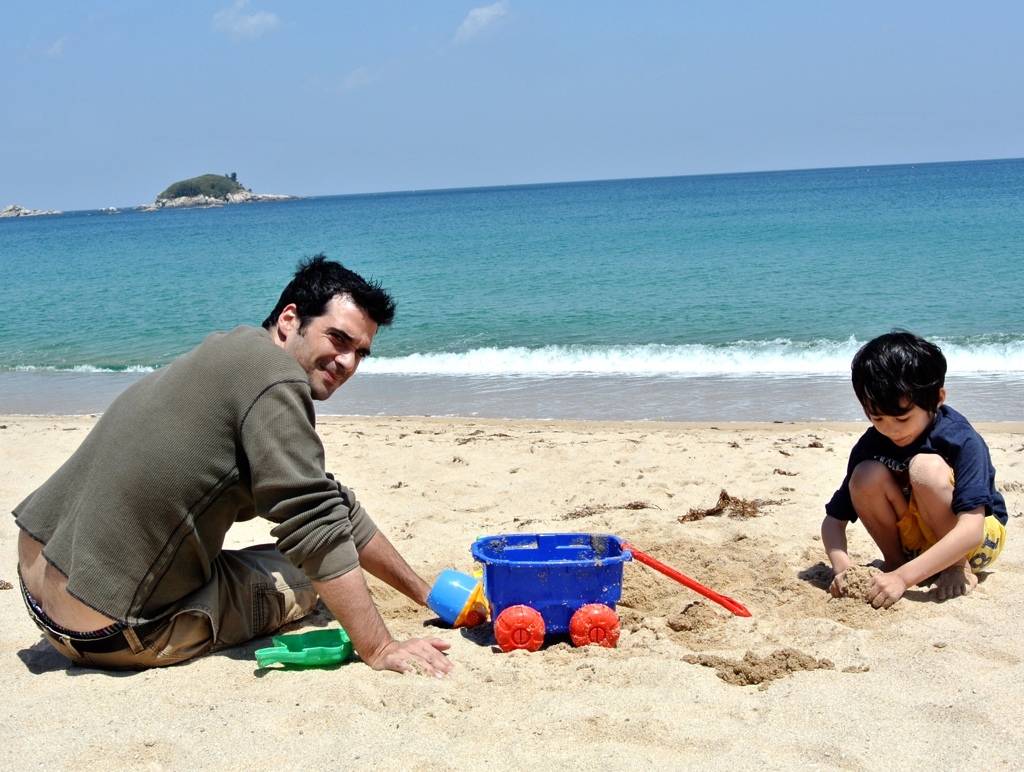
8. Our least favorite Museum – The Sokcho Beach Nature Museum (Walking distance from the Express Bus Station). Size matters – and this one was a single large room on the 3rd floor of a building full of restaurants. The stellar attraction was a model of a dinosaur that was sensitive to movement. When you got close – the jaws moved. Marcel (age 5) loved it. The rest of the museum was a taxidermist dream come true. There was a mock-up of an aquarium – poorly preserved fish with a paper ‘sea’ background, no explanation in English, I’m not even sure there was an explanation in Korean. Most of the ‘fish’ were plaster models – I think. The next big section was a series of land animals – lions, tigers, wolves, coyotes, polar bears (?), and the like – again – either poorly done plaster models or really badly done taxidermy. The highlight, besides the view and the moving dinosaur, were a series of animal skeletons and 3 large models of sailing ships. I didn’t get the shell collection at all. For free – it was a fun way to entertain a 5-year-old, if I’d had to pay – it would have been a complete waste. Lots less fun than building sand castles – trust me.

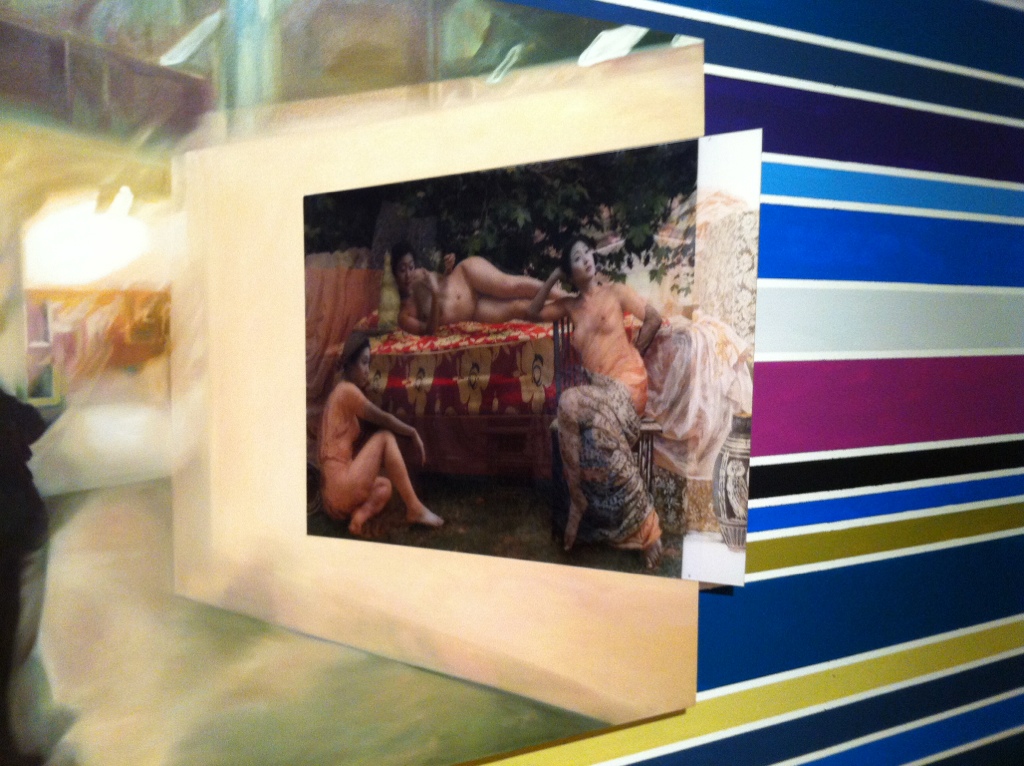
7. Busan – Museum of Art (Modern/Contemporary) – Free. (Has its own subway stop) Modern art is always a challenge to the viewer – and while I always enter museums like this with a feeling of excitement, I often walk out wondering what the world is coming to. The current exhibit contained some really interesting pieces, and some really strange stuff. Highlight – art that ‘stripped’ the clothes off the people in the paintings when you stood in the right place. Bottom line – the price is right, and if you never go – you’ll never find out how artists are seeing the world we live in.

20130524-050157.jpg

6. Busan – Museum – Free. (Ask for directions – its right next to the UN Cemetery – and not hard to reach.). Best parts of this museum were the life-sized re-creations – including a street from 1900 (when they first had barber shops in Korea – before that men wore their hair long and never cut it), the amazing video footage of the aftermath of the war, and some of the displays from earlier periods. Free Audio tour is a must of course. I liked the use of walk over displays too. In one, the first street car in Busan drives down the road. This museum is a must on the school tour circuit – and I got trapped between an exhibit and a stream of about 300 3rd and 4th graders walking through the museum. Trust me – I’m not sure they stopped anywhere – they just walked straight from the entrance to the exit. Tour Done. But then there was this foreign lady to see – I got hi, hello, hi from about 80% of the kids – so not only was this my personal highlight – I think I was theirs!

5. Seoul – National Korean Folk Museum – Free. (Close to the Gyeongbok Palace – walk around the outside of the Palace keeping the wall to your left – you won’t have to pay to enter) This was the very first museum we saw in Seoul, and what I remember most were two sections – a life-size traditional home, furnished as if the family had just gone out. You could see the kitchen area, and imagine the bustle as food was being prepared. The other part I thought was neat was the Children’s Museum – basically a space attached to the main museum but kept for just parents and young children. There were holes to stick your hand in, there was a large egg that you sawed in half to reveal a treasure (I’m guessing this is a Korean Fairy Tale). The kids got extremely excited to have the opportunity to do the sawing. We plan to go back with Marcel (age 5) to check this out.

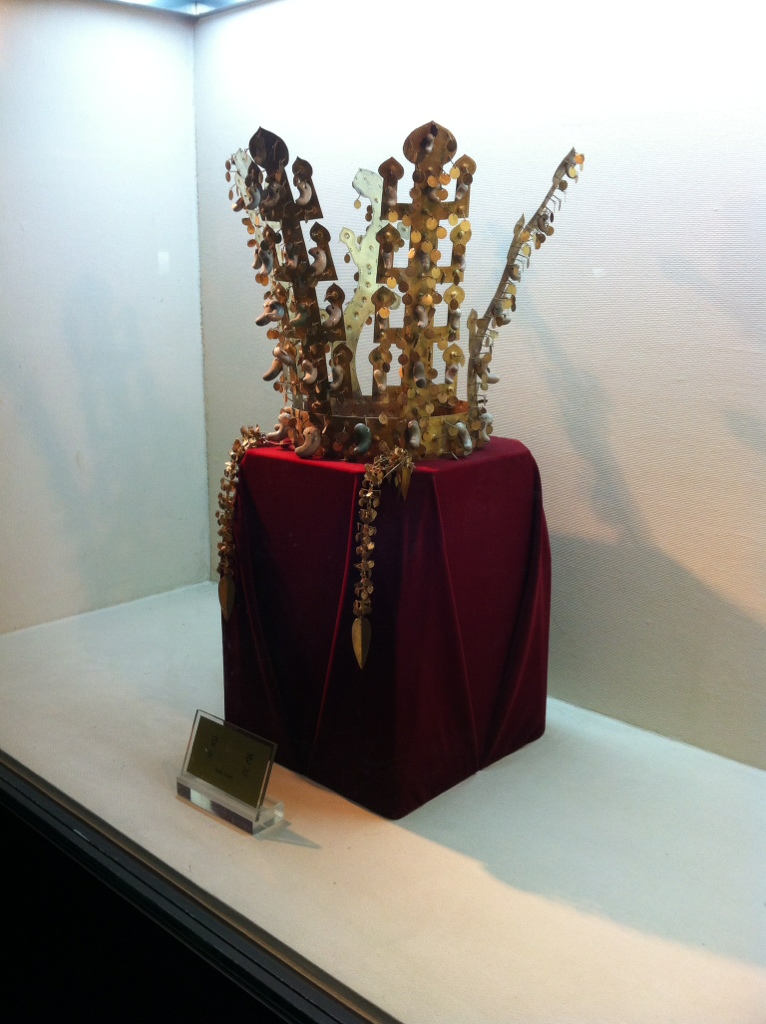
4. Gyeongiu – National Museum – Free – (Ask for directions) (in 3 parts – Shilla History, Stuff found at the Anapji Pond Historic site, and Buddhist Collection). We opted for the Audio Tour (1000 Won = $1) and it was well worth it. Even though they had moved the collection into a smaller building while they ‘earth-quake proofed’ the larger museum, seeing how seriously old the culture in Korea is was stunning. On one wall is a timeline of what was happening in Korea vs what was happening in the world – puts things into perspective fast. I also particularly loved the Buddhist collection – which since we saw this following our temple stay at Haein-sa – made a lot more sense. This is also the place we met the ‘English’ Teacher/Tour guide who confused rice and lice. But the collection of Silla remains is worth seeing. Over 1000 years old and still so beautiful.

20130524-050307.jpg

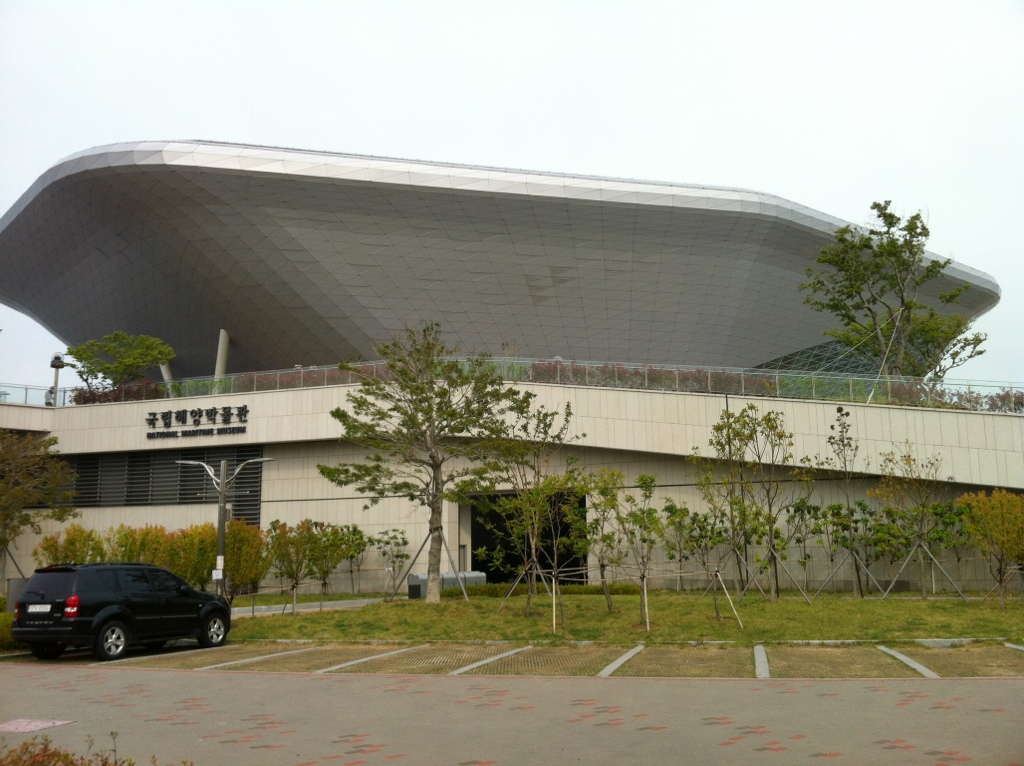
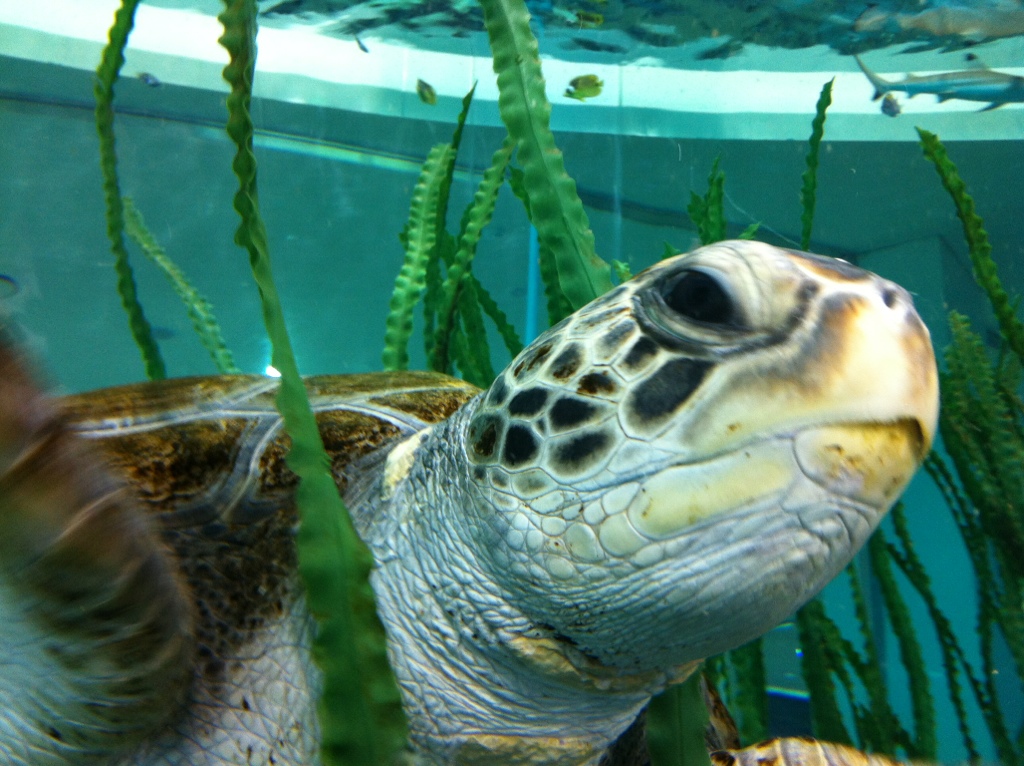
3. Busam – Maritime Museum – Free (Getting there – take the 66 bus from the Nampo-dogg subway stop). The building is worth the visit – a gigantic stainless steel Ship sailing off into the future. The exhibits were excellent as well – including a full-sized mock-up of one of the ships that the Josen rulers sent to Japan to try to keep peace – in the 1600’s. There’s a huge walk thru sea tanks – this one had a very friendly turtle. The video footage of the port of Busan in operation is definitely worth seeing as well.

20130524-045955.jpg

20130524-050020.jpg

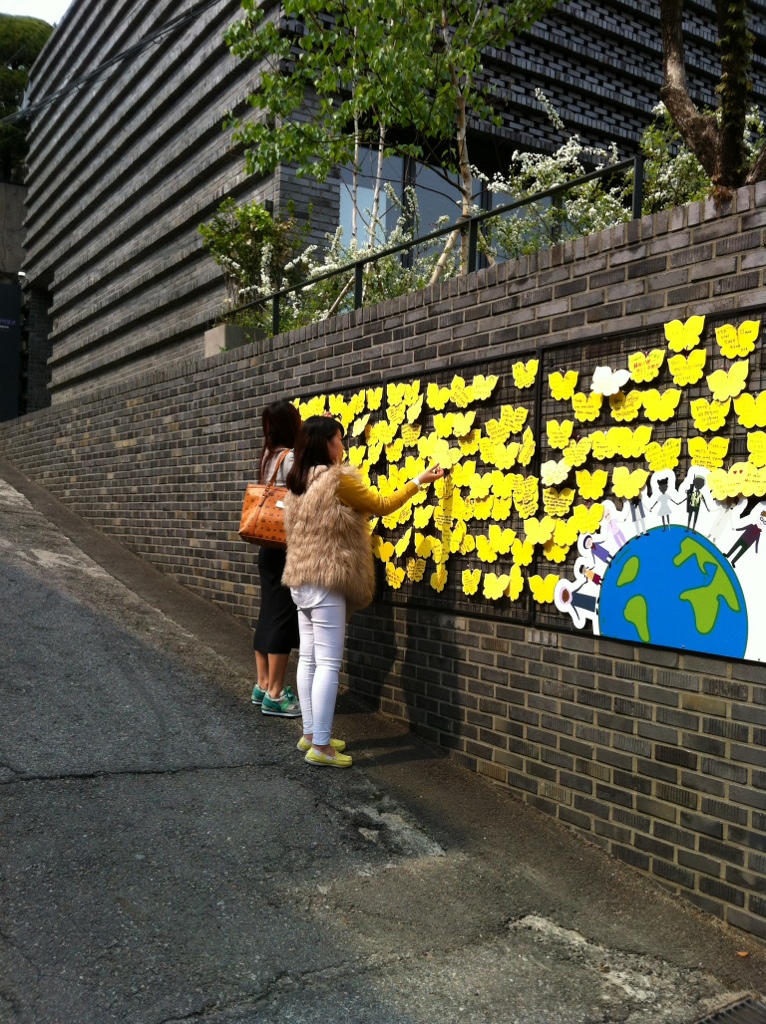
2. Seoul – Women’s Rights Museum – Charge. (Getting there – it’s walking distance – sort of – from the Hongik University subway stop) This is a small, but extremely interesting museum devoted to the ‘comfort’ women (starting at age 11!) effectively imprisoned by the Japanese to ‘service’ their soldiers during the occupation from 1905 to 1945. What is most interesting is the amount of ‘evidence’ they have collected about what was happening, including numerous stories by ‘comfort’ women who have openly and painfully revealed their past. The history is shameful, but the effort put into this tiny museum is worth seeing. Highly recommended. Picture below shows the ‘memory’ or ‘butterfly’ wall outside the museum – visitors were encouraged to sign a ‘butterfly’ dedicated to the memory of one of the ‘comfort’ women and pin it to the wall. Lovely thought, eh?

20130524-050232.jpg

1. Busam – Fisheries Museum – Free (Getting there – walk 2 minutes from the Haedong Yonggung Temple – makes it definitely worth visiting the Temple. They are connected by a red bridge and a seaside path. To get to the Temple – take the 181 bus from Haeundae Beach Station.). I liked this Museum for several reasons – there were lots of fish in tanks to look at – they made the path ‘up’ to the main area look like you were swimming thru an underwater cave, and the exhibits were very good at explaining the different types of fishing nets – without a word of English. There was even an entire section devoted to how pearls are made in oysters, another about women breathe-hold divers, and another one on harvesting abalone. Plus there were 2 interactive sections that were quite unique – one showed you the nutritional values of different foods on thermometers – the other allowed you to spin a dial and point and ‘shoot’ a fishing area off the coast of Korea. Your reward for hitting the target – a picture and description of the type of fish you’d find there. Fun museum – great location – and you can easily walk from there to one of the top temples of Busan – the Haedong Yonggung Temple. Plus – if you like fish – there were several quite reasonable restaurants nearby. A win, win, win!

20130524-050114.jpg

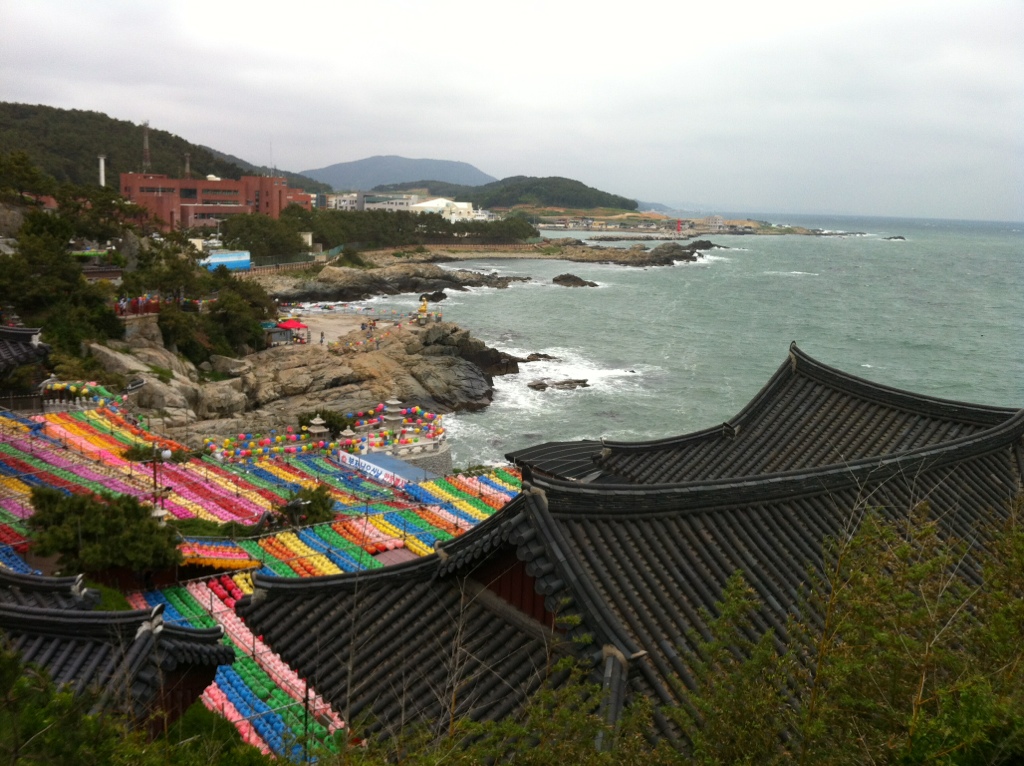
The picture above is taken from the highest point in the temple – looking towards the fisheries Museum – that blue wall you can see in the middle distance. All the lanterns are strung to celebrate Buddha’s birthday – which was the day after our visit. Lovely, eh? Very peaceful scene, wonderful temple, great museum.

But it’s not all about Museums! Check out my next blog for our ratings of ‘Not a Museum’ must see attractions in Korea. Our favorite…. well you’ll just have to wait to see

Ya win some, Ya lose some – Kensington Resort – Seorak Beach


We’ve been spending the last few days in the lap of luxury – a timeshare resort just 32 km (18 miles) from the DMZ in the far North East of South Korea. When we arrived here – after a 7.5 hour bus ride from Busan – I have to admit to being conflicted. On one hand – the resort had polished marble floors – and the check-in counter had 3 staff – in uniform. Honestly – I thought the taxi cab driver had taken us to the wrong place.

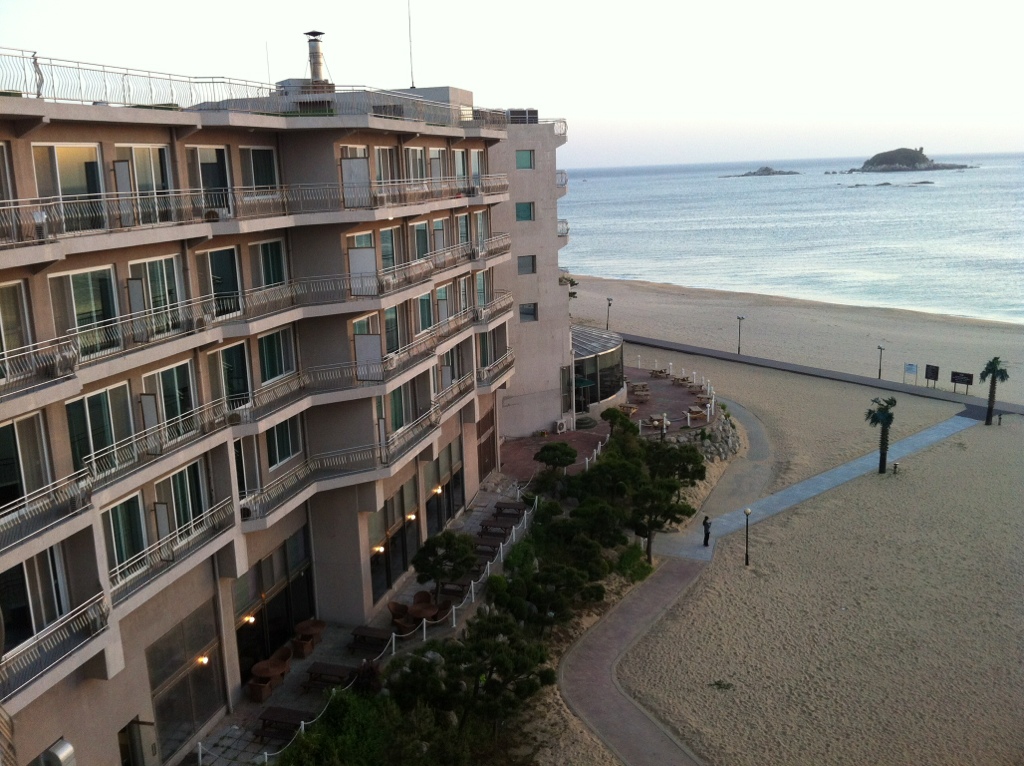
The ‘resort’ is huge – 5 floors of suites – mostly 1 bedroom, some 2 bedrooms – 2 restaurants, a tiny CU (Korean Convenience store that sells some groceries and veggies along with dozens of different brands of instant noodle soups and ‘chips’), an Ocean Spa, and a conference center. Quite the change from where we’ve been staying, I’ll tell you. The resort is directly on a soft sandy beach. Our suite is on the 5th floor and features a partial kitchen – which in Korea means a 3/4 size fridge, a sink, and a 2 burner hot plate. No microwave, no toaster, no dishwasher (but that’s ok – there are only a few dishes anyway), and a tiny garbage can. The bathroom is a palace in comparison to what we’ve been enjoying – the shower has a glass pane that separates it from the toilet and sink. Oh Luxury! Our generous sized bedroom even has a closet – something else we’ve been doing without for the past 3 weeks. Our balcony overlooks the East Sea – and we’ve been enjoying the sound of the waves as we go to bed each night.

So why the conflicted feelings? Well for starters – everywhere we’ve stayed up till now has provided shampoo, toothbrushes, toothpaste, unlimited towels, and a fully stocked kitchen with salt and pepper, oil, butter, jam, and chili paste. At Kim’s House we even had plastic wrap, at the Agit – there was ham and eggs, even the traditional house provided unlimited white bread and coffee. But here – nothing is provided besides little bars of soap, 2 frying pans, and dishes for 4. It’s pretty bare in comparison – and that’s a shock. And the location is great for the beach – but a long (1 km) walk into the village if you don’t want to eat at the restaurants at the hotel. And they are, in Korean terms, quite expensive. And worse – they are buffets – ie: All you can eat. My least favorite option. A large grocery store is a 30 minute bus ride away, as is the town of Sokcho. So we feel a bit isolated.

Worst thing is the internet – its free – but you have to go to the ‘library’ to use it – the signal doesn’t reach the rooms. Quite a shock from free high-speed all thru the house like all the other places we’ve stayed.

But after a few days – the pleasure of enough space, and a private kitchen, a private balcony, a private bedroom and a private bathroom make the annoyances feel less important. The walk to the village for a delicious BBQ lunch seems just part of the fun, and exploring the largish fish market a hoot. The fish market features crabs, octopus, and flounder in huge numbers – all fresh and swimming around. If you don’t buy them today – they just feed them, and you can buy them tomorrow! This is really fresh fish. It looks great. We just need to figure out how to get some to eat at home!

And the beach is wonderful, particularly now that we are traveling in a much larger group – Jill’s son, daughter-in-law, grand-son Marcel (5) and grand-daughter Sophie (3 months) have joined us – and the trip is now one of family not traveler. But still fun!

The weather has been strange – hot, than cold (I wore everything I brought – at the same time), wet and rainy, then sunny but seriously breezy. But we’ve gotten in a walk every day – and eaten some amazing Korean take-out including a sweet and spicy fried chicken the defies description except to say I love it – but it makes my mouth burn! One night Blanche and Chris even treated us to deep-fried Shrimp (cooked complete – including the head and shell)), deep-fried peppers stuffed with pork, and the very traditional Korean Sundae – a sausage made by stuffing Squid with pork and rice. Don’t ask me why it’s called a Sundae – it’s one of many mysteries here in Korea.

So good food, good company, amazing fireworks every night – and lots of space. I can learn to enjoy this.

Signing off – The Intrepid Traveler and the Soup Lady

20130530-025546.jpg

Korean Fireworks are the best!


And on top of that – they have Floor Heating.

Koreans don’t heat their homes – they heat their floors! And they’ve been doing that since around 71 AD – so it’s not exactly a new technology – but it sure is an effective one. Basically the system is very simple – either hot water or hot air is circulated thru pipes under the floors of the living space – not the bathroom, and often not the kitchen’s – and the rest is high efficiency heating and a cozy warm living space. Got to Korean creativity.

On the other hand – we are currently at a resort on the beach – and fireworks are a huge thing here. I love setting off fireworks on the beach in Maine – but we’re not talking sparklers here. Oh no – we’re talking rockets that fire 30 separate shots out of one tube, and depending on the price – you either just get a series of flying sparks and a bang – or you actually get a flowering display. I’ve even seen colored bursts. It’s way cool.

But people here go crazy. In the states and Canada there are really strict rules about lighting fireworks – here it’s a free for all. Last night a family was literally standing next to the resort sending off their fireworks – which go at least 60 to 100 feet in the air – with no idea where the sparks were flying! And another family stood on their 5th floor balcony – and just held the firing sticks in the hands – pointed out from the building at least.

Every morning you can see the remains of at least 5 dozen fireworks – just from the night before.

All this said – We absolutely love it. And of course I had to go buy a box – $10 (10,000 Won) at EMart will buy you a box with 17 different fireworks – 5 of the 30+ shooting stars, plus a series of smaller ones including fountains that shoot up about 8 feet high.

I keep trying to think of a way to bring a box home – but I think the custom agents would have a field day – not in a good way either.

Signing off – The Fireworks Madame…

Thinking about Thinking – more info about Korean Buddhism


Before you read this blog – be sure you’ve read my blogs about the temple stay at Haein-sa – this blog will make a lot more sense then.

One of our guides at Haein-sa summarized Buddhism into 3 rules.
1. Do not do all evil things
2. Do do all good things
3. Clear your mind

Our Monk suggested the following mantras:
1. Think about thinking
2. Share your thinking with others – not what you know or have read – but what you think
3. Walk slowly and be silent. It is in being silent that you can hear yourself thinking.
4. Focus on this moment. On Now. Only what you do now affects your future. The past is gone, the future yet to be written. Only Now counts.

At one of the temples I visited it was suggested that to be a Buddha you must eliminate 3 things:
1. Greed
2. Anger
3. Foolishness

Heady stuff, eh? How often do we just stop and think about thinking unless forced to by some outside force. Even today – Buddha’s Birthday here in Korea, people are consumed with material things – selling their apples or onions or cakes, playing their computer games , or in my case – writing my blog. Are any of us thinking about thinking? Is even thinking about this wasting time?

It’s hard to say from my perspective – I love wandering around markets, if every one was doing mediation, what fun would that be? Maybe it’s enough to know that there are people out there – Priests, Monks, Rabbis, Imams – who ‘job’ it is to think about thinking so we don’t have to.

Signing off so she can do some thinking – the Soup Lady.

Are you a Tourist, a Visitor, or a Traveller?


At Kim’s House in Busan, South Korea, the Intrepid Traveller and I met up with Alfonso – a young (36) Doctor from Spain who asked us if we were Tourists, Visitors or Travellers? When pressed further, the discussion got very interesting.

Tourists have plans, they know where they will be every evening, they know what they will see every day. They join tour groups, eat in ‘safe’ restaurants with English Menus and familiar foods, and they stay in ‘comfortable’ surroundings. You see them at all the major attractions, but rarely at the minor ones – not enough time in their schedules. They arrive in a city in the morning, and leave the next evening, enabling them to check that one-off their list. If there’s an important festival – they plan to attend. They prefer to talk to other foreigners, or among themselves. They often either ignore, or never learn any words in the language of the country they are visiting, again – not enough time.

I think we have all been tourists – sometimes in our own home towns We structure our day to be sure to capture the important ‘stuff’, leaving no time and no room for chance.

Visitors spend more time in each place they go. Because they have more time, they can afford to take a chance on different kinds of food – street food or meals in local restaurants. They may hit all the ‘top’ attractions, but they will also visit lesser known temples, museums, shopping areas, sections of town. Having more time means seeing fewer destinations, but makes it easier to see more of the ones you do land in.

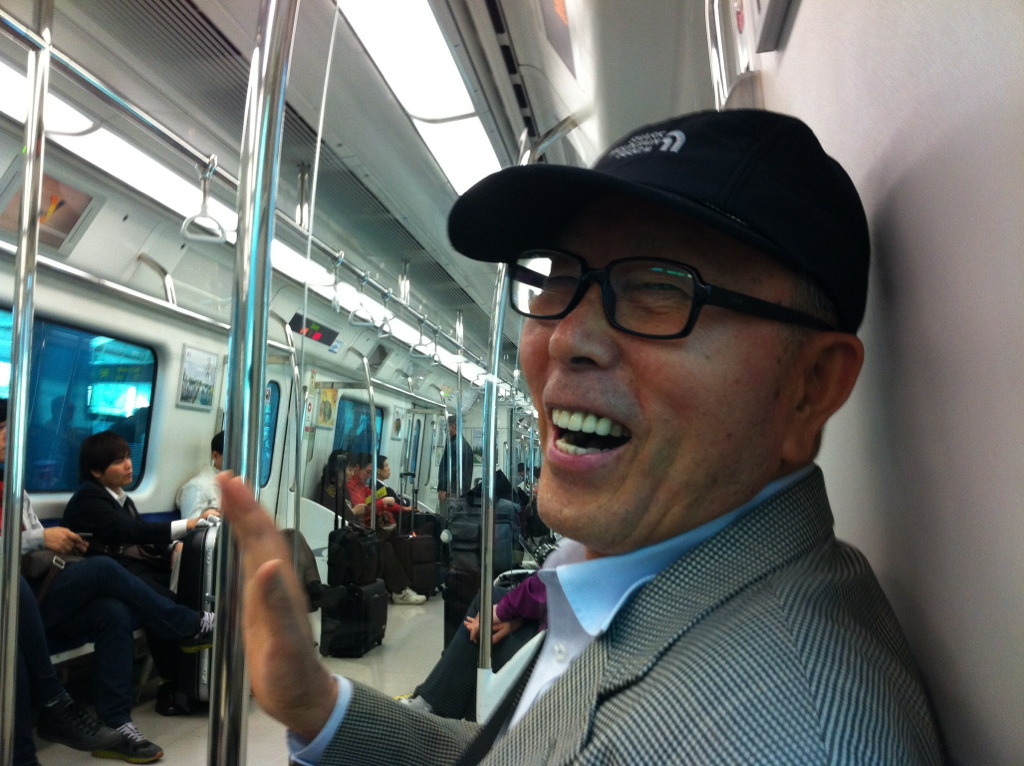
The Intrepid Traveler and I are visitors. We chat up locals – even if only a few words, we exchange favorite foods on the metros with our seat mates. we spend time in religious meeting places, letting our feet relax, and our minds wander. We accept gifts from strangers – a taste of ginseng from a lady on the subway, cookies from a vendor on the street, a cake from our seat-mate at the bus station. We smile and wave at everyone – and get rewarded by becoming the ‘mission’ for a group of Korean School kids – asked by their teacher to talk to a foreigner. We are Visitors.

Tourists take Cruises – visitors take boats.
Tourists fly – Visitors take trains or Buses.
Tourists make plans – Visitors rely on the kindness of strangers.
Tourists and Visitors stay in all kinds of lodging – it’s not the lodging that makes the difference – it’s the time, the need for planning, the openness to adventure that makes the difference.

But what is a traveller. Alfonso was basically referring to himself. He is extremely fortunate to have the ability to work, and earn a very good income, any time he feels the need. So instead of taking a long-term position, he takes short-term contracts when he runs out of money, and otherwise – he travels. Many times his destination is unknown, even to him. The wind of chance blows him as it will, allowing him the opportunity to wander the streets of a district without a plan, without a goal, just the desire to experience the life there before he moves on.

To me – being a traveller sounds wonderful on the surface, but consider the downside. Like a rolling stone, a traveller by Alfonso’s definition will never get married, have kids, have grand kids. They will never have a place to call ‘home’, a garden to worry about missing the azalea blooms, friends to see month after month.

Nope – I don’t want to be a traveller – being a visitor is good enough for me.

Signing off – Korean Visitors – the Intrepid Traveller and the Soup Lady.

Busan to Sokcho – Traveling the ‘interesting’ way…


We spent the last 5 days in Busan, the 2nd largest city in South Korea, located at the very bottom of the Peninsula – closer to Japan than to Seoul. But we arranged to meet Jill’s kids in Sokcho – 50 km (30 miles) from the DMZ. So we need to get from the far south-east to the far north-east. Our travel options including flying via Seoul, Train to Seoul and then bus to Sokcho – or intercity bus the whole way. At $43 per person – the bus was the clear winner.

So we made our way from Kim’s House to Nopo subway station – helped by strangers who found it fascinating that 2 grand-mothers would be traveling alone in Korea. They had little English, we had no Korean – but we shared number of grand kids – he has 4, Jill has 4, I have 2. We even disc used food – Kimchi good, Bulgogi better!

After a bit of confusion over tickets – we had reserved seats and a separate boarding lane – and didn’t know it- we ensconced ourselves in our seats – and the bus pulled out – 1 minute late and the driver was pretty upset about it. At least we think that’s why he was yelling at the dispatcher.

Like our trip here – it seemed like it would be highway all the way – 6 lanes narrowing to 4 lanes after about 2 hours of driving. And then just north of Phang, things got interesting. The bus swerved left and right and left – and on to a 2 lane road that wound up and over hills eventually dropping down to the sea. Instead of highway – we were now winding our way past adorable fishing villages and sandy beaches. The road continued to narrow – eventual to just one lane wide.

The views along the ocean are stunningly beautiful – beige sand beaches and pounding surf, interspersed with high views of the rocky shoreline.

There are numerous campground with tents like I’ve never seen – including a roof top model that required a ladder to get in!

As expected, there are Rice paddies and tiny farm plots on any arable piece of land (including the edges of the roadside), but unexpected were the hobbit hole houses – dozens of them – some extremely fancy with brick exteriors and stone domed roofs, others more simplistic but still functional.

The stunningly beautiful scenery reminds one of the most beautiful parts of the Maine coast – weirdly carved rocks and rolling surf splashing over the rocks as the tide comes in.

We’ve been traveling now for almost 3 hours – no bathroom stop in sight. But we’re not lacking for Crabs! Fishing village after fishing village clearly features the Crab – based on the huge flower crab at the entrance to one village, the crab pincers that formed the uprights of the bus shelters of several others, and the giant (say 40′ high) crabs outside one of the restaurants. There are bulletin boards sporting 3D crabs – one restaurant where the doorway was a pair of huge crab legs and several road side ‘eating’ places with huge boiling pots of crabs. But we are just passing thru, No time to stop and sniff the crab legs.

Somewhat sadly, the Koreans are in the process of building a highway along the coast – we can see evidence of their effort in poured elevated supports in the area we’re driving through, and north of Yeogdeok, the road turns into the newer 4 lane limited access model. This is a shame. While it will make the drive much faster – it will reduce the exploration nature of the trip, and I suspect will hurt the tiny villages that live to serve travellers on the main road north from Busan.

Yeah – 2:33 – and we finally get a rest stop. It’s been 3 and a half hours… You have got to be kidding me. There is a porto-potty rest room with 6 stalls on the lady’s side – and while it is clean – there is no toilet paper. Thank goodness for spare napkins. I grab a delicious Korean ice-cream cone, and it’s back on the bus. The driver reminds everyone to buckle up, and gives us a special hands-on example to be sure we understand and we’re off.

We’re back to 4 lane express highway – which occasionally dips down the ocean Unfortunately, the only interesting things are several fisherman drying their nets on the pavement, and the occasional swerve down to the sea for a glimpse of ocean. The beach we just passed was deserted. At first Jill and I assume it’s because it’s a tad cool even though the sun is shining, but on 2nd look I’m guessing that the barbwire fence along the length of the entire beach explains the lack of sun bathers.

I’m reminded that this is the part of Korea that the Japanese freely invaded for over 2000 years – This last time in 1905. I guess the Korean’s have a right to be a bit hesitant to leave it undefended.

I’m hoping that the beaches nearer towns are open to the public at least.

A geography observation, the mountain range that makes up the spine of Korea on the east runs roughly North South, but there are many East West running out cropping. To build the road, Korea had to build long tunnels – 2000 meter are more – going through these mountains. Kinda neat actually. The coastal plain can run from about 3000 meters wide to zero – so you can imagine the challenges the Engineers must have faced.

In 2018 this part of Korea will be hosting the Winter Olympics – but right now the cherry blossoms lining the road and the greenery cut into a 2018 Olympic logo are the only reminders of that upcoming event. Wonder if they will get to eat some Crabs?

Finally we arrive in Sokcho – get off the bus and following the advice of the RCI resort – try to get a taxi. Problem – the resort didn’t send us anything written in Korean – and of course none of the Taxi drivers understand English. We try at least 7 different cabs with no luck. But thank goodness – again – for the kindness of strangers. An expat and his Korean girl friend spot us trying to get a cab, and come over to offer help. They immediately realize that our problem is that the cabbie can’t read the address – and explain to them where to go. Now they are willing to take us! We thank them, and head off.

The Kennsington RCI resort is stunningly beautiful – and our one bedroom room is a palace compare to the places we’ve been staying. And our view of the ocean is spectacular. But there’s a few problems – even in paradise. The food here is seriously expensive – 4 times what we’ve been paying in Seoul or Busan. There’s no laundry – so its back to hand washing. Instead of free internet everywhere – I have to go down to the lobby to get access – and instead of unlimited towels – we have just 4 hand towels to last the week. Plus the kitchen has no basic supplies – not only no coffee or tea, but no salt, no oil, no pepper, no hot sauce. We’ve been spoiled by the guesthouse and hostels – so sorry Kennsington – nice lobby – but you lose big time on the service!

But we are determined to solve these issues – so while dinner tonight was instant noodles – just add hot water – by tomorrow we hope to have found a decently priced restaurant – or 2 or 3.

Signing off and going to bed – The intrepid traveler and the Soup Lady.

It seems so simple – Church Services in Seoul


As people who follow my blogging regularly know, my friend Jill is Catholic – so we go to services everywhere we travel. I’ve even met the former Pope (not quite a private audience of course – but still).

So we pretty much think we know how it goes – there’s a pattern to services, whether they are in Vietnam, Italy, or Spain that is very similar. We expected the same here in Korea – but we were wrong, wrong, wrong!

We ‘googled’ catholic services in Seoul – and found out that there’s actually a Cathedral – the Myeongdong Cathedral to be exact – and it’s the largest brick gothic building in Korea. You’d think finding it would be easy – but no. We walked right past it – Twice! It is surrounded on all 4 sides by other buildings – including a former hospital. To find the Cathedral, you must turn off the major street onto a side road – and keep your eyes peeled to the left. There’s a relatively narrow main entrance way – a set of stairs and a long long ramp that go from street level to the building itself.

Anyway – to find it – we had to stop people and ask directions. Good thing they were actually heading to mass. We followed them through a garage and up a twisting flight of stairs to the cathedral entrance – this was a short cut!

We entered in – and were not surprised to find ourselves in a cathedral that could have been anywhere in Europe – complete with stain glass windows and the relics of martyrs.

So where did we get confused? Well – part of the normal pattern of service is the collection of alms. Generally a lay person (or 2) takes a long handled basket, and passes it up and down the aisles, and you can put money in as you wish. But not here. We were sitting in the front row of one section, and suddenly this lovely young lady wearing a white drap over her head is gesturing at us to get up. We can’t figure out why. Jill thinks it might be time for communion, so she gets up and exits the row. The gal gestures at Jill to put her hand in a basket – which Jill does thinking it’s communion – and it is at that moment that Jill realizes they are collecting alms – you don’t take out – you put in!

Meanwhile – our entire row is on hold – waiting for Jill and I to move. It turns out that unlike every other church we’ve ever been in – here in Korea, the congregation raises – row by row, files up to the front, deposits their ‘alms’, and then returns to their seats. Highly organized – how Korean! Once you know what to do – you can follow – and had we been anywhere but in the front row – we’d have been ok. Live and learn.

When it finally time for Communion, we aren’t nearly as surprised that it too is highly organized. A priest goes row by row, gesturing people to raise and file out to join the queue. The only problem – I’m not taking communion. So everyone in my row – and both of the rows in the side sections must stumble past me to get in line. How embarrassing.

But the singing is lovely – there is a full choir, over 10 priests, layman and altar boys, a magniciant organ, plus a string section. The music is lovely, the surrounding very peaceful, and altogether a neat experience.

On the way out – one of ladies of the parish comes over to wish us well – and to let us know that there is an English service at 9;00 am on Sunday. We thank her kindly and go on our way. If we’re here next week we’ll do the Korean mass again – only this time – we’ll be better prepared.

Korean Socks – Over the Top Adorable!


Oh man – do I love Korean socks. They are beyond cute – right up there with adorable! And yes – these are for adults. We’ve seen at least a zillion different designs. Free bonus – not only are they cute – they are comfy.

I think Korean’s are so ‘socky’ because they take off their shoes constantly – to enter a house, to enter a temple, sometimes just to enter a restaurant. So socks are on display – why not make them worth looking at?

Check out the options – and these are just the one’s we’ve brought – there are zillions of other options. If you’d like a pair for $5 (I promise to send you a pair (or 2) – and I’ll do my best to get you the style you want – but no promises) – send me a comment with your email – it will be private. I’ll contact you with the style you’d like and your shipping address!

20130515-210049.jpg

20130515-210102.jpg

20130515-210116.jpg

20130515-210129.jpg

20130515-210147.jpg

20130515-210201.jpg

20130515-210219.jpg

20130515-210542.jpg

20130515-210555.jpg