What is a Maine holiday worth to you?


For years my family and I have been going to Wells Beach, Maine for our annual lobster, chow’da, and ocean fix. I’ve come with my husband alone, I’ve come with my entire family (and there are a lot of us). I’ve come when my kids were small – I’ve come when my kids were grown and their kids were small.

Right now I’m here with just one grand-daughter – Sophie. She’s 7 – and we’re totally into her time schedule. Wake and start the day when she does (which is around 9:30 am – but don’t tell her parents – I think I’m supposed to wake her earlier), eat, go to the beach, practice reading (I’m teaching her to read English), eat, go to the beach, practice reading, play dominos (she’s killer at that), and read stories and go to bed.

Occasionally there’s a bath in there – and occasionally – like today – we have to break down and use the car to go get some food.

Our needs – as you can imagine – are pretty simple. We’re walking distance from the Well’s Lobster Pound – which sells amazingly good clam chow’da. They have lobster too – but we just like to admire them swimming in the tanks. We’re really all about the chow’da. I happen to love sauting veggies in butter (yes – real butter – my ateries will survive) – so I have a tiny bit of chow’da and mostly veggies. Sophie loves the chow’da.

So – chow’da and fruit and corn on the cob if we can find it are pretty much the staples of our diet – when we’re not on the beach of course.

Last night we broke down and visited the Scoop Deck for ice cream. Huge portions – even the kiddie size is insane – and a zillion flavors. Of course I only get pistachio and Sohpie likes either Cotton Candy or maybe Bubble Gum. Which is better than it used to be when her flavor was color selected – PINK of course.

We spent yesterday doing our favorite thing  – exploring the tide pools near our shack. Us and about 50 other kids (ranging in age from 3 years to over 80) clambered over and on the rocks and into the pools. Sophie’s bucket contained a tiny lobster, 4 star fish, and a huge (at least hand sized) crab. There were also a selection of smaller objects – most of them still alive after being man-handled by probably 20 kids on their way into her bucket.

The rule is – nothing that was ever alive goes to the house. You do have to be firm on this – rocks are ok – even dead lobsters are a no-no.

Plan for today – replacing my dead aero bed, get food for dinner (we’ve cleaned out the house), and beach, beach, beach!

Signing off – the Soup Lady and the lady in Pink (what can I say – Sophie is still in her pink phase)

My Aero Bed just died


Ok – so maybe a funeral is not in order – but I still have to figure out what to do with the dead body.

It’s not funny.

I’ve enjoyed this aero bed for years – and now – in the midst of my annual Maine vacation – it decides to die.

I woke up this morning sleeping on a balloon. No kidding. The maze of pathways that channel the air in the Aero Bed to keep it flat and bed like must have given way – and I was lying in the middle of a wall of puffed up bed-clothes.

Extremely uncomfortable – let me tell you.

At first I thought the bed had a slow leak, and my lying on hard surface meant I had to inflate it some more. So I stupidly did that – which just dramatically increased the balloon effect.

Once I was awake enough to appreciate the horror of what lay beneath and beside me and above my head and below my feet – I managed to swim my way out of the bed and turned to survey the damage.

It’s like a massive whale lying where my bed used to be.

And guess what – you can’t get the air out either. It’s stuck in there.

What am I going to do with the body….

Signing off in complete puzzlement – the soup lady

Re-enactment 101


Why would anyone dress up like a solider – march around for 3 days – and go back for more.

Excellent question. And this time – we are doing 2 re-enactments. First we’ll re-enact the Quatre Victories in Montmirail, France. Then we’ll journey to Elba to celebrate Napoleon’s arrival on the Island – not so good for him – but great for Elba.

But first Montmirail. Instead of doing one battle each day in each or the Quatre Victories locations – we’ll do 2 battles in 2 days – both on just one battle field, the Montmirail-Marchais.

But first – we must arrive, find our friends, set-up a tent, get started. It turns out that Victor is well-known by almost everyone – including the Emperor. We barely walk 20 paces before people recognize Victor and rush over to say hi.

For this re-enactment – Vic is going as Marin de la Guarde and I’m a doctor. Not a very high-ranking doctor – a low-level doctor, who has just graduated. My uniform is perfect for this role – and it gives me the opportunity to march with the troops, provide them with water, tend to the ‘wounded’, and move among both enemy. Which is why I’ve been shot at several times by my own troops. Nice guys, eh? Don’t they know a doctor when they see one?

We’re bivouacked with the other Marin – who are staying with the Grognards de Fontainebleau. And we are on the right flank of the Emperor’s tent. Which means we get to watch him (in civilian dress – actually combat fatigues) – setting up his tent! Naturally – the emperor doesn’t get his feet dirty – once he’s the Emperor. So first thing is to lay down huge carpets to form the ground of the ten and dinning/meeting/combat prep room. In his sleeping area there’s a cot with a leopard skin spread, several of his saddles on display, and various other items, including a wash cabinet. In the ‘Pavilion’ area there is a huge table with chairs bearing the Emperor’s Bee’s – cabinets for holding his silver, candlesticks for light.

The Marin and the Imperial Guard set up guard posts – 15 to 20 minutes on guard when ever the Emperor is in ‘Residence’.

When all is done – the transformation happens – and out from the tent strides the Emperor. Cheers from every corner as he visits each bivouac – troops line up at ‘Gardez Vous’ – and he strolls down the line – commenting here and there on this and that. He remembers Victor from Fountainbleu and singles him out for a comment. He gives the young son of one of our officers a coin with his likeness – and after prompting (this is how it would have happened) – gives a Medal of Honor to one of the troops that displayed great bravery at a previous battle.

More Cheers – and he moves on.

Friday night we eat dinner late, relax around the campfire, visit the tavern (there is always a tavern), and eventually people drift off – some like us to a hotel, others to bed down in tents or even in the open air.

Saturday is the day of the great battle – all day friday and all friday night troops and Calvary and cannon crews have been arriving. The number of re-enactors has grown from one or two, to several hundred, to several thousand. There are well over 100 horses, and I counted over 20 large cannons. But not everything is for us – there are also facilities that have bloomed up overnight for the spectators – and that’s a source of much fun for the re-enactors.

There are several different food vendors – this is France – so the cheese is amazing, there are croissants available to buy – 1/2 price for re-enactors. We spot tents with books on Napoleon, others with antiques (and not so antiques) for sale. Ladies in long gowns, white parasols and long gloves stroll amid soldiers in various uniforms, officers in gold braid, Calvary in all their finery, and the strangely dress tourists!

Bleachers have been built with seats – but standing room only space is the norm, and provides great views of the entire battle field. To the amusement of the growing crowds, the French Line decides to drill in the middle of the space allocated to the viewers. We do our drill in a separate area, and I’m not sure where the allied forces were drilling. Everywhere there is Calvary – and the cannon crews practice their drills.

As a doctor – I’m free to roam – and I watch the cannon crew for a while. Cannons are very very loud – and there’s a ton of smoke released – much to the surprise of a photographer who had gotten up close for a perfect shot. It was perfect ok – until he had to run out of the dense smoke cloud!

Drill complete – we resume camp life – then gather for the muster of the troops prior to the battle.

We don’t really know the plan – we just follow the shoulder pack of the guy in front of us. I spot a collection of Medical men – all French – standing off behind the army. But I greatly prefer to be in the heat of the action, and stand directly behind our troop of around 100 Imperial Guard, made up of Marin, Grenadiers, Moyan Guard and Jeune Guarde. Victor is positioned to the front – and acts as an NCO, repeating orders as the Marshal and Generals and Majors yell them out.

Napoleon canters by with his entourage – to gay cries of Vive L’Emporeur.

For this battle, we are being held in reserve – so while the solders of the line see plenty of action, our involvement is limited. When we finally do charge the enemy – we quickly over-run their lines – and I’m busy helping the wounded – of both sides. I suddenly realize that I’ve become separated from the Imperial Guard. There are soldiers every where – just done of them my ‘team’.

Shoot.

This is awkward.

I search madly for someone – anyone I recognize the uniform of – and eventually spot Rudy marching with the 85th. At least I know for sure they are on ‘our’ side. I march with them off the battle field – relieved to get off the field, and to put down my now depleted supplies of water.

We re-form lines for a final salute – we break ranks to ‘Vive L’Emperour’ – and collapse into our tents, our piles of straw – or head to the tavern. Whew – one battle down, one to go.

Sunday we repeat as above – only this time we start the battle much earlier in the day – around 10:00 am – and thus it is neither so hot – not so ‘touristy’. And this time the guarde is called upon to fight. We rush uphill towards the ‘town’ – firing as we go. We are rushed by Calvary – and form square to defend ourselves. As the doctor, I’m ‘smushed’ into the middle of the square – unable to see much besides the heads of the horsemen as they gallop around our outward facing bayonets.

At the town, we rescue the townsfolk, and defend the town. We even take over several cannon positions  – it’s really hard to move a cannon quickly. I minister to the wounded – narrowly avoiding being shot by my own troops again. I heard the command to load the muskets this time – and fled before they could fire. Whew.

The battle continues, boiling down the hill of long grasses towards the bleachers – until the Marshal’s call for a cease-fire. When I finally catch up to the Guarde – Victor proudly shows me his saber – nicked in battle with a Prussian who was up for a bit of a fight.

Eventually we march off the field, dismantle the camps, and head back to the hotel for a very much-needed bath and shower.

Success was ours today!

Venice – City of Delight


I love Venice

I knew I’d like Venice – I mean it’s all about boats and water and art – what’s not to like. But I didn’t plan to love it.

And I loved it.

Finding a place to stay was quite the challenge. My husband had heard of the Gritti Palace – but $1500 a night off-season – is a tad over any price range I’d feel comfy sleeping in. So internet searching happened – and I discovered ‘The Bert’. The Bert is a Bed and Breakfast on a yacht that is moored in a Yacht club on an island near the main island of Venice. And for me – it was the perfect place.

Breakfast on the stern deck, coffee and tea in the afternoon in the main cabin, and upstairs a bar and relaxing area for drinks in the evening.

We arrived late the first night – in the rain. Not fun, and not the best start. We had followed directions – taking one of the transport boats from the airport to the island dock. What we had not quite understood was that we had to leave the main dock before the shuttle boat for the Yacht could pick us up. And with our multiple pieces of luggage (re-enacting is not for the carry on only traveler) this was a challenge. But once the folks from The Bert had understood our challenges – they were quick to help.

We squared away our cabin – with private en-suite bathroom – tiny but efficient. It even had a bidet – although taking a shower meant getting the entire bathroom wet. Stephano – the captain and host extraordinaire offered to cook us dinner – for 30 euros each. We gladly accepted the offer – and I think had one of the most price effective meals of our stay in Italy. Our 30 Euros included unlimited wine (white and red), bread, an amuse, a pasta course, a main course, and dessert. Yummy – private – and served on the stern deck to the lapping of waves and the sound of crickets. Color me happy.

The Bert also provided an ample breakfast – including fresh eggs – cooked to your specifications. That plus unlimited cappuccino – I’m happy.

After breakfast, we either caught the Bert Shuttle to the island dock – or walked 10 minutes. From the dock to Venice was a short boat ride – we spent more time waiting for the boat than actually travelling. Once you figured out when the boats came (you can set you watch by them) – it was easy to time your travel. We quickly become very efficient at getting to and from the heart of Venice.

Venice. Oh yes – Venice. I had pre-planned our first 2 days to be sure that I got to see the ‘highlights’ – St. Mark’s Basilica and the Doge Palace. Then we had 2 days to wander on our own – most of which I spent visiting museums, and Victor spent on the internet.

Best museum adventure ever? I wandered into the First Public Library in Venice – and a lovely young female artist explained the drawings – she had written the story of the library – giving the ‘player’s’ – key among them Napoleon – Animal faces. Wonderfully complete, and extremely creative.

In the evenings, we ate. My favorite meal – Quadri. It’s been on St. Mark’s Square for over 100 years – and it rates 2 Michelin starts. Location is perfect, Service is amazing. Souffle was delicious. And as a parting gift – they gave us the menu to remember the meal. Nice touch. After dinner, we wandered the square, then took the boat home.

Sigh – Venice – perfect – absolutely perfect.

2 Star Michelin Restaurants – Seriously – are they worth the price?


Hard to say actually. We only ate at two 2-star restaurants this trip – the fabulous Atelier in Munich has only 1 star.

The first was the Essigbratlein in Nuremberg, the 2nd was the Fischers Fritz in Berlin. Both are seriously expensive, very elegant, service intensive restaurants – both are clearly intended to offer ‘blow-you-away’ food at prices that will dent your pocketbook.

First – the Essigbratlein. Nuremberg is not Berlin, and one wouldn’t expect either Berlin prices, nor Berlin quality – and you’d be exactly right. The meal at the Essigbratlein – a tiny 10 table hole-in-the-wall located within spitting distance of the Nuremberg Castle – was good – heavy on veggies (unusual in restaurants of this type) – and generous with the wine. But the courses blur together in my memory – delicious why we enjoyed them, but except for the Brussel sprouts with mandarin – not worth blogging about. The one exception were the Brussel sprouts. Not a vegetable I would quickly assume I would enjoy – and in this case – I’d be very wrong. This was a stunning dish. Light, flavorful, full of texture – completely delicious.

And I must compliment the restaurant on the wine service. Traditionally – I don’t order the wine pairing – it’s a lot of money for a lot of alcohol I simply can’t drink. But at the Essigbratlein they went ahead and poured me a sipping portion of each wine served at the table. I could taste, enjoy – and they didn’t charge us. Cool.

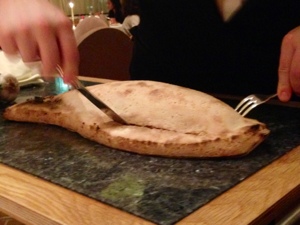
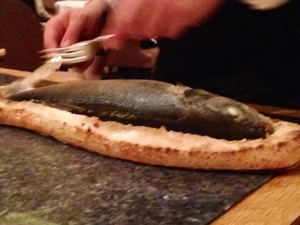
Second – the Fischers Fritz. This is a much larger restaurant – more servers, more tables, more space. And located as it is in the Regency Hotel in Berlin, I’m going to guess a much much larger kitchen. The result is as should be expected – a superior experience. Highlights included the Sea Bass in Sel (an entire fish cooked in a flour/salt pastry shell so that the juices are sealed in), and the Cheese Course.

20131025-233806.jpg

20131025-233813.jpg

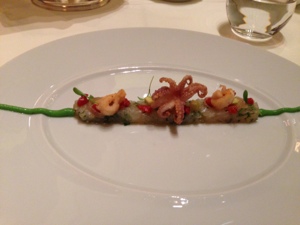
I adore a cheese trolley – and their trolley was outstanding. On the other hand – they did not accompany the cheese with as many treats as did the Atelier in Munich – so I can only give them a B+ for that course. I also loved the first appetizer – a tartare of sea bass with avocado and quickly fried mini-octopus.

20131025-233758.jpg

Wonderful texture, delightful favors, plus it looked great. Unfortunately – the desert was a disaster – I think the Fishers Fritz needs a pastry chef – bad! The ‘franchise’ on the other hand were delightful tiny bites of chocolate truffles, jellies, and treats. They were as good as the desert was bad.

I must admit that while the Fischers Fritz was the better of the two, the Atelier in Munich trumped them both. Oh well – you never know if you never try!

5 Hotels – 5 Cities – all different – all definitely European!


In Europe, the price you pay and the value you get seem quite independent – I say this because we’ve been in Germany and Switzerland for 4 weeks now – and stayed in 5 quite different hotels. All except the last have been ‘middle’ of the road quality – not brand names – not super spectacular – just well located.

Our needs were simple – in each of the cities we visited – Munich, Zürich, Nuremberg, Leipzig, and Berlin – we wanted the best possible location at a reasonable price.

In Nuremberg, Zürich and Leipzig – we had one further requirement – we needed parking.

We used only 2 ways to get our reservations – Hotwire (Berlin) and Booking.com (all the others). The rates we paid varied considerably – and were definitely not in line with the quality of the hotel! I’m guessing it’s more a question of the city and maybe timing than the hotel itself. In any case – despite staying in really quite similar properties for size, location relative to featured attractions, double rooms in all cases with bathroom en-suite – the prices actually doubled from our lowest price option to our most expensive night stay. Amazing.

And in several of the hotels – namely the Atlanta in Leipzig, the Goethe in Munich, and the St. Gotthard in Zürich – our bathroom didn’t even have a tub – just a shower! An acceptable one in all cases though – and I have to say often I prefer a shower to a tub. Easier to get in and out of if you are seriously tired!

Our least expensive hotel is the Eurostar in Berlin. This is a fabulous hotel – 4 stars, with a breakfast price point to match (17.50 Euro – per person). But over priced breakfast buffet aside, the hotel is extremely well located – right next to the haufbanhof (Main train station), and a 5 minute walk to Museum Island in one direction and the Brandenburg Gate in the other. Ideal for exploring Berlin – although restaurant options – while plentiful, are hardly cheap. In fact – that’s probably my biggest complaint! Our room is on the top floor – with a glorious view of the city. The front desk is extremely pleasant and easy to deal with – and the spa – while lacking a whirlpool, has a lovely indoor swimming pool and 2 – count’m 2 – saunas. Both are clothing optional if you must know. I’d definitely rate this the best hotel we’ve stayed at – and it’s by far the least expensive. Under $100 a night. Go figure. Internet is free – although fussy – you have to sign in separtely for all devices, and repeat the sign-in everytime the device goes to sleep. Bottom Line – 5 Stars and a Definitely Stay here.

Next lowest price – the Hotel Atlanta in Leipzig. In this case – I’m not surprised at the price – just surprised we could get it that cheap since we stayed there during the Battle of Nations celebration. Everything was full! I suspect our great rate is more due to the length of our stay (4 nights) than anything special we did. And it included breakfast – which was absolutely perfect. Unlimited coffee, cereal, fruit, meat, cheese, lots of different breads and rolls and cakes, crepes, sausages, bacon, meatballs, and boiled eggs. I particularly liked the cheese selection – from Baby Bel’s to herbed cream cheese to traditional sliced cheeses. It was yummy. The location for our purposes was perfect. There was a free parking lot – and the hotel was just a 7 minute drive from the bivouac area for our re-enacting group. The spa offered a whirlpool bath (lukewarm – not hot), and a sauna – definitely clothing optional. But the spa had a nice sized resting area – and a lovely view. Room was nice and large – I could have used a fridge with more space – I had to remove their ‘charge’ items to put in my bread and fruit. And if I had to be fussy – the fact that you had to know to ask for bathrobe was weird. We only found out the hard way – went to the hot tub area – and everyone had one but us! Internet was an additional 17.50 Euro’s a week – but at least we only paid once for all our devices. And TV was additional too – if you wanted more than the basic channels. Bottom line here – 5 Stars – and a definitely Stay Here.

Next up – and it’s a big jump – (175 Euro a night) was the Hotel Agneshof in Nuremberg. But location, location! It was a wonderful location – off a quite side street – right under the eves of the Nuremberg castle, and right around the corner from a great antique shop selling discounted pewter mugs. Oh did I enjoy that shop! The Agneshof also offered parking – at 15 Euro a day – but an essential if you drove into Nuremberg with a car and no assigned parking place. Breakfast was a reasonable 7 Euro per person – and quite ample. They even offered my Cafe Macchiato – my favorite. The Spa was in the basement – rather cool whirlpool, but nice and clean, and a glorious sauna. Oddly the fitness equipment was in the same space – hard to exercise in a room full of steam and clorine. We spent every day out on the town – and quite enjoyed our stay. Bottom line – another 5 stars, and a definitely stay there again – but try for a better rate.

Top dollar prizes (Over 220 Euro a night) go to the hotels in Munich and Zürich. And I have to say – the hotel in Zürich was clearly worth the price – of the hotel in Munich – I’m not so sure. I’ll bet other people were staying there for a whole lot less.

In Munich we stayed at the hotel Goethe – picked because it was a middle of the road price – which says something about the prices of hotels around Octoberfest time if over 200 Euros is middle of the road! It was located in a very ‘mixed’ neighborhood, right by the main train station. I call the neighborhood mixed because our neighbors were either Casinos or shops selling sex toys. Walking the streets was an experience as well – there were ladies in full burka with only their eyes visible walking slowly past the bums and homeless you’d expect to see next to a train station. And most annoying – particularly for the price – the hotel is doing a major renovation – so there was no elevator. The front desk clerk had to carry our suitcases upstairs – thank goodness we were only on the first floor! Plus there was scaffolding outside our window – blocking both the view and the breeze. Most annoying – the light in the bathroom was on a movement sensitive switch. If you didn’t move enough while sitting on the toilet – the light went off! Quite a surprise the first time, let me tell you. No Spa, No fitness center, No Whirlpool. Just a tiny sitting area near the front desk, and an equally tiny breakfast area. Speaking of breakfast – at 7.50 Euro per person per day – it was quite a bargain. No fancy coffee – but there was fruit, meats, cheeses, eggs, sausages, and a selection of rolls and sweet breads. I particularly like the Stollen. I know it’s a Christmas Cake – but hey – you cut it, I’ll eat it! Thank goodness we didn’t have a car. Because of the construction – which took out the garden of the hotel, not to mention the entire front of the building – there was barely room to drive by the hotel, let along park. I certainly would have expected a better price given the challenges we had – but I suppose they charge even more when not in the midst of reconstruction. At least the internet was free. Not very powerful, but free. Bottom line – 3 stars and I’d definitely look for somewhere else next time I’m in Munich.

In Zürich we stayed in the Hotel Gotthard. Breakfast not included – and at 32 SF (about $32 per person) not happening for me. I just don’t eat that much food. Awkwardly – the first morning we walked the wrong way – and were in the ‘expensive’ part of town – no breakfast spots to be found. We ended up at the breakfast buffet of a ‘lesser’ hotel – and paid 22 SF ($22 per person) for breakfast. It became my personal goal to locate a better option. Eventually we walked the right way – into the train station – and for just 10 SF ($10) found a lovely breakfast place – they even included my cafe Macchiato for no extra charge. I love you for that! The hotel is an older grande dame – rooms aren’t huge – but they are comfortable, and for our purposes the location and car parking option, which while pricy, totally worked. I won’t say it’s the nicest hotel we stayed in (That definitely goes to the Eurostar in Berlin) but it was comfortable, had 2 elevators, and the staff was very nice. Internet was free – a nice bonus. So a clear recommendation – just try to get a better deal on the price!

So – not a terrible place in the lot, even the Hotel Goethe had its location going for it – but some clear favorites. And I’ve learned something I didn’t know about German’s and Austrians – Clothing is definitely optional in whirlpools and Saunas. So come prepared!

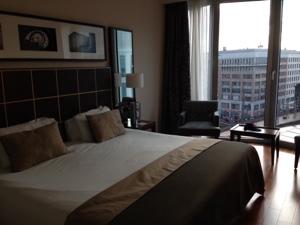
Picture below is our room in the Eurostar –

20131025-103034.jpg

Report from the Battle of Nations 1813 (October 20, 2013)


A day in the life of a re-enactor – Fighting the Battle of Leipzig – 1813
20131022-100439.jpg

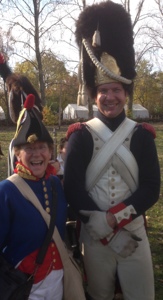
I’m the Chirurgien aide-major on the left. On my right is a Grenadier a Pied of the Imperial Guard – Pavel. There’s been some discussion that perhaps I need a new nickname – instead of san-fatigue (tireless) – maybe La petite (The small) would be better.

But back to my day – which really started the day before – when our officers decided that we should get a look at the battle field – rather inconveniently located about 5 km from our bivouac site. So full dress on – and off we march.

The French army – at least the infantry portion – gathers in a large field about 1/3 of the way to the battle field itself to regroup. There are a lot of us – at least 2000 – representing several different nations – all fighting under the leadership of Napoleon. And boy – do we look good. Great uniforms, tight formations – we’re well-trained, well armed, and ready for battle.

We march to the battle field, drill in sections and then together, and finally march off again – clearing the way for others to get their chance at a look at the field.

On the march back, we finally get to see some of the enemy – it’s a group of Austrians on their way to the battle field – but that doesn’t stop us from mounting bayonets and charging. They mount bayonets and charge back! Such fun.
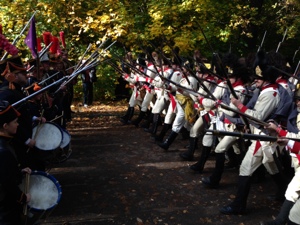
20131022-095301.jpg

We disengage – and march on – back to our bivouac to be told – be ready to fight at 10:00 am tomorrow – but tonight you are free to drink and be merry. Right. For some it’s on to hours in the Rathskeller – for me it’s an early night. My stomach is seriously in knots.

10:00 AM (day of the battle) – We gather again at the bivouac site – we’ve eaten a good breakfast, and our support teams of vivandieres have prepared some slices of sausage for us to take with. As the Chirurgien Aide-Major (that’s Surgeon 2nd Class to you) – I prepare bandages in case the battle goes against us, and make sure I have plenty of water. Keeping the soldiers hydrated is one of my most important duties. And I practice amputations – besides putting on a bandage – as battle field doctors we’re more likely to have to cut off an arm or a leg then just about anything else.

10:45 AM – We march back to the ‘re-grouping’ area – and all the members of the troops fighting on the French side are assembled. Again – over 2000 strong – we’re looking good. No sign of any opponents yet – and that’s probably a good thing. I’m beginning to get nervous – and I’ve run out of water already. A fast trip to refill my bottles – then we’re off on our slow march to the battle field. Cheering crowds surround us en-route – and we feel like heroes. We’ve yet to lose a battle – are we perhaps feeling a bit too confident?
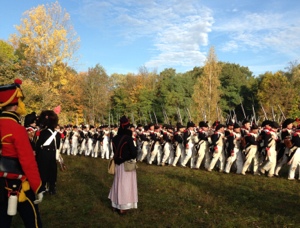
20131022-095244.jpg

11:30 AM – We’re reached the battle field – and it is huge. There are people everywhere – all trying to get into position to watch the battle. I can’t imagine where you would have to sit to see everything – but then I spot a powered Paraglider – and I realize – that’s probably going to be the best view. Yup – he’s got a camera.

12:15 PM – We’re told to eat our lunch – and again – I’m out of water. 45 guys on a hot day – there’s a lot of water required. Another trip to re-fill my bottles – I end up at a local sports facility that’s been turned into a triage/hospital center by the local EMT guys. They have 6 beds ready, along with various other equipment. Issues may not be with the soldiers after all – there are 75,000 spectators expected – plus 6000 re-enactors – that’s a lot of potential for things to go wrong. And one of the beds is already occupied by a bystander – I’m hoping it’s just heat related.

12:35 PM – I’m back where my division of Marine de la Garde had been sitting – and they are gone. Along with my satchel filled with water bottles and bandages. And all the other 2000 members of the French Army. Now what? All that’s left where before there were dozens and dozens of troops is an empty field.

12:40 PM – I spot a troop heading for a break in the huge fences set up around the battle field proper. My troop has gone into position on the field. It’s like chess – everyone has a place to start – and I’m late! I run as best I can – the field is very rutted – and slip thru the opening onto the main battle field.

12:45 PM – How different it looks today – Everyone looks so similar and yet there are significant differences. Calvary rides here and there – I see Polish Lancers in formation to my left. But I need to find the Marine. Where did they go? There are at least a dozen cannons that I can see – and I’m just at the top quarter – the field seems to go on forever. On the far side there are smudges of silhouettes – is that enemy? If it is – there sure are a lot of them!

12:46 PM – I spot what looks like a familiar uniform and head in that direction – when I get close – I realize it’s a completely different unit. But then I hear I high-pitched whistle. Following the sound – its my chief – the Chirurgien Major! He’s seen me and waves madly. I move quickly into position – no time to waste. The battle is set to begin at 1:00 PM – and this is Germany – it might even start on time.

12:50 PM – The emperor is on the field! We hasten into position – he walks by – twice – greeting those of us he recognizes, and generally being encouraging. His entourage is huge – more generals and aides then I imaged. And he’s afoot – I wonder if he’ll mount up later – or run the battle from the background. We shall see. But meanwhile – we give him 3 cheers – and I have to say – seeing him did make me feel better.
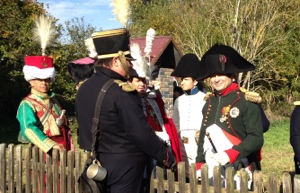
20131022-095253.jpg

12:55 PM – Our troop is looking good. We’re right near the line of spectators – kept off the field by heavy fences set up all around. I spot non-combatants – those are the women and older soldiers who support the troops lined up on our side of the fence. We’re positioned right next to an artillery set-up – hope they don’t fire the cannon while we’re this close. It’s going to be seriously noisy.

1:00 PM – German timing – the Royal Horse artillery posed on the far side of the battle field – looking so small as to be more of a smudge than men – start firing off their rockets. Historically these didn’t work so well – mostly noise, little damage. And they haven’t improved the design. A lot of noise – but not much else.

1:15 PM – finally we’re called into battle. Our first and most important task – get about half way across the battle field and build a bridge over the ‘river’. It’s really more of a stream – but still – we need to get the bridge built so that our army can cross to capture the town on the opposite side. It’s about a km run – over rutted terrain – into the face of the enemy.

1:25 PM – we’re in position – 1/2 of the Marines guard the position from attack – we can see that there are significant troops lined up on the far side of the battle field – and 1/2 start to build the bridge. They get the logs into position, and then realize that during the night someone made off with the nails and hammers and more importantly – the planks – that had been placed near the location of the bridge. What to do – without the bridge – our troops can’t get across!
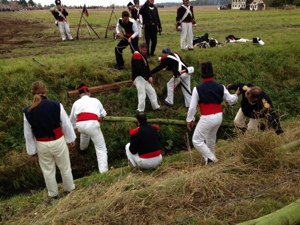
20131022-095310.jpg

1:30 PM – Bridge building continues – and the search is on from nails, hammers, and planks. Meanwhile – one of our men has been hit by a stray bullet – probably from the snipers on the far side of the field – and we are called on to amputate his leg.
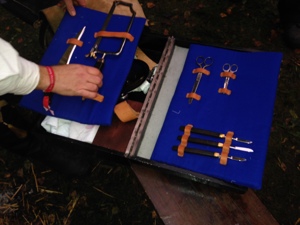
20131022-095330.jpg

1:33 PM – we’re fast – Aprons on (don’t want to get our uniforms dirty), equipment ready – we bring the patient nearer to the spectators so that they can get a good view. 3 guys hold him down while he bites on a piece of wood (more to shut him up then to relieve the pain – if he gets much noisier the team holding him down have been told to hit him hard in the head. The noise is annoying the doctors). Personally I think the thrashing is most annoying. I guess a musket ball in the leg must really hurt.

1:35 PM – We’ve made the first cut – after putting on the tourniquets (couldn’t get it quite tight enough – but hey – it’s only the first patient – we’ll do better next time), the Chirurgien Major takes his scalpel and cuts away the flesh – leaving the bone exposed.

1:36 PM – I hand him the saw – and hold the leg steady against the thrashing of the patient. He saws thru the leg – then hands me the part of the leg with the foot attached to show the spectators! I hold it above my head – then toss it to the ground to help cap the wound.
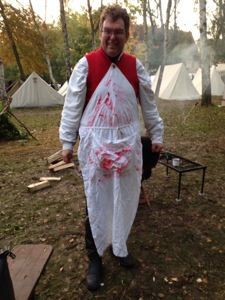
20131022-095338.jpg

1:37 PM – Perfect. Such a good job that the patient can get up and hobble away.

1:40 PM – Bridge is finally done – and we’re ordered into the village to protect the villagers. So we re-group – check on the patient (he’s fine – and back on the line) – and then march into the village. In the village are some members of a Russian Calvary unit whose horses were refused entry to the re-enactment – no papers. So they are afoot – and not that happy about it. But that’s not our problem – our problem is to protect the village. We form up along the village cemetery – to our left is another battalion of French troops – but ahead of us appears the enemy. And they are endless.
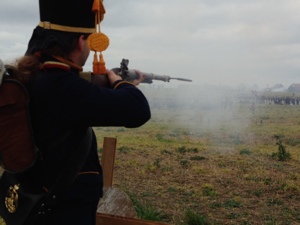
20131022-095322.jpg

2:00 PM – After firing in volleys into the on-coming troops – our Calvary appears to help us. The troops of the enemy retreat – the Calvary rides away – and the troops re-appear. Fighting is hot and heavy! Suddenly their Calvary appears. The infantry men to our left form squares – which protects them. We’re standing in the cemetery – not good ground for Calvary – so they don’t bother us.

2:10 PM – Our Calvary comes back – a Calvary fight ensues – with quite a lot of close combat – and on the part of the Polish Lancers – some stabbing. No one falls off a horse though – they are all excellent riders. There are moments of quiet – followed by periods of so much noise it’s hard to think – let alone hear the commands of our leader.

2:30 PM – Fighting continues hot and heavy. We march out to attempt to take more of the field – and are forced back by heavy artillery fire. But first we take our first real injury. When you fire the musket, you must keep your mouth open to equalize the pressure – one of our soldiers forgets to do that – and is complaining that he can’t hear. We help him equalize the pressure – he eventually returns to the line.
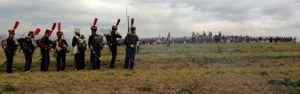
20131022-101806.jpg

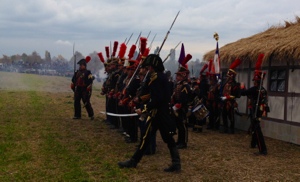
2:45 PM – We retreat back into the village – and re-group. Our orders have changed – we’re to abandon the village – and move to protect another bridge to our far left. At that moment, the enemy mounts a bayonet charge against the remaining forces protecting the village. There’s nothing we can do – so we march out in orderly fashion, abandoning the village and the villagers. They are forced to flee – waving white flags and heading for the bridges.
20131022-095345.jpg

2:50 PM – Looking back I realize that the village buildings are now ablaze. The fresh thatch must have been easy to light. I feel a bit bad for the villagers – but they are no longer our problem.

3:15 PM – we’ve maneuvered out way to our new position – and are defending the bridge at our back. We make a charge – take some causalities – as we pull back – our officer tells myself and the Chef doctor to go see to the wounded. We patch as best we can – and fall back. Another rally – another group of casualties. We’re in trouble.

3:30 PM – Our backs are to the bridge – but we can’t continue to hold that ground. Under orders, we re-group again and cross the bridge – determined to hold that side.

3:31 PM – I realize that we’ve left a soldier behind – and the officer gestures to me to take care of him. I run to his side, figure out where he’s been injured – and put on a bandage – accompanied by significant yelling and screaming by the wounded solider – all to the delight of the onlookers.

3:40 PM – We join up with a large group of Imperial Guard forces, and there’s a change in leadership. Our new leader is the head of the Guard – he’s on horseback – and he’s riding back and forth behind our lines getting us into position to defend the ground we gained earlier in the day. It’s not looking good, though.

3:45 PM – The King’s Foreign Legion is attempting to take our bridge – but we’re ready for them. 1/2 of our company is hidden from their view to our left – when they cross the bridge they are caught in a wicked cross-fire.

3:50 PM – Despite our excellent tactics, the enemy has crossed the bridge – and we’re forced further back. Now the commander of the entire French troop is trying to rally us and get us to stand firm.

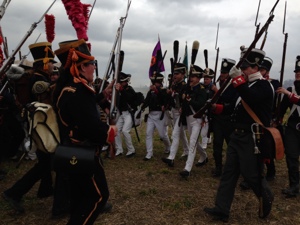
3:55 PM – We’re being forced further and further back onto our original part of the field – between the soldiers coming in endless waves and the Calvary forays – we are unable to stand firm.
20131022-095355.jpg

4:00 PM – The officers call for a cease-fire. There is still random shots being fired as soldiers discharge their weapons. As doctors, we tend to any wounded, adjusting bandages as needed. We also give all the soldiers a drink. Dehydration is a potentially huge problems as the day has gotten warmer and warmer. I’m officially out of water.

4:05 PM – The wounded requiring professional treatment are identified – there’s one soldier with 4 broken ribs – apparently another soldier got carried away and struck him on the side with the butt end of a musket, and there’s a face wound. A re-enactor with no experience held his musket too close to his face (its supposed to be on your shoulder), and the recoil struck his eye glasses, causing a superficial face wound.

4:25 PM – We get back into line, march up to the rows of spectators and are applauded and cheered. Now we must march all the way back to the bivouac. That’s almost 8 km from our present location – and we are extremely tired.

5:00 PM – We are about 2/3rd of the way home when one of our soldiers drops from dehydration and heat prostration. As the Doctors, we remove his backpack, gibarne (for carrying black-powder cartridges), and take his musket. We find him water from another group of soldiers, and eventually get his body temperature back to normal.

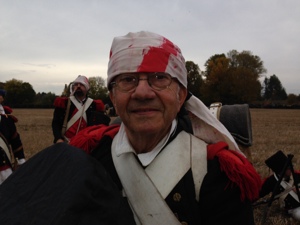
5:30 PM – Back at camp – everyone removes uniform pieces, gets a beer, and in the case of our commanding officer – and his sergeant – takes off their shoes to soak their sore feet. We trade battle stories – and agree that it was probably the best battle ever.
20131022-095405.jpg

Man – did we have fun!
The Madness Continues – Another stunning castle, another wasted 3 years


Ludwig II continued… Or where he really lived…

Ludwig never lived in Neuschwanstein. He did spend some time overseeing the construction work from the Gate House. So where was he living while his dream castle was being built?

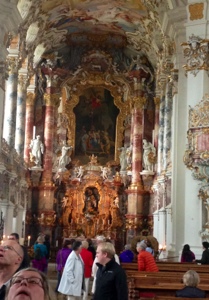
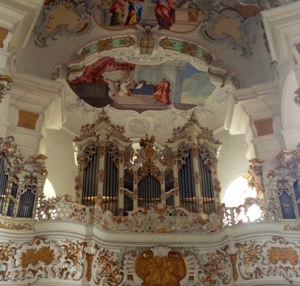
Linderhof Castle – our stop after a quick visit to the glorious pilgrimage Church at Wies.

20131017-001212.jpg

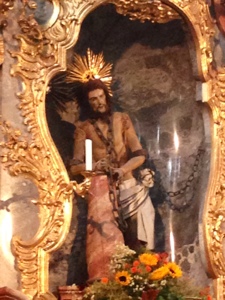
You can read all about it – and its miraculous statue of Christ here:

http://en.wikipedia.org/wiki/Wieskirche

20131017-001220.jpg

20131017-001228.jpg

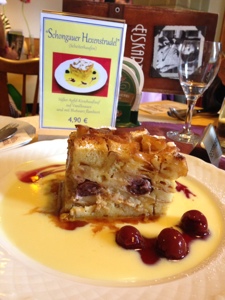
The Church boggles the mind – it’s a whirlwind of Rocco madness. If you’ve seen one cherub – you’ve seen a hundred. After our walk thru, and hungry for lunch, we popped into the restaurant just opposite the door to the church. Surprisingly yummy – I opted for dessert – HexenStrudel – and I had the best meal! Oh it delcious. Color me content if there a nice sweet cake to enjoy.

20131017-001238.jpg

Tummy happy – it’s on to the Linderhof.

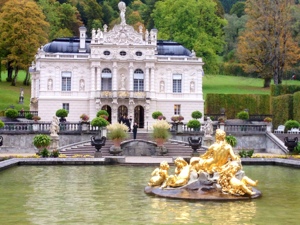
Linderhof Castle is located in an isolated area – a short distance as the crow flies from the drop dead splendor fo Neuschwanstein – but if the crow is driving a gear shift car – it’s an hour on curvy country roads. Worth the trip though – this is a wonderful castle to see – made more interesting by the fact that Ludwig II actually lived here in almost absolute isolation for the last 3 years of his life.

20131017-001246.jpg

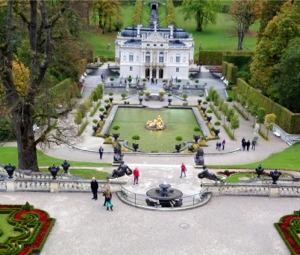
Linderhof, unlike Neuschwanstein, is located on rolling grounds that lend themselves nicely to some serious landscape gardening. Opposite the front door is a large pool – with a highly decorative and very attractive fountain that ‘erupts’ every 15 minutes. Ludwig II had been to the worlds fair in Paris (1867) – and had seen Versailles – so he decorated Linderhof to honor the Sun King – Louis XV. It’s filled with gifts given Ludwig from various monarch, and planned so that Ludwig could live here without seeing his servants.

For example – his dining room features a table that sinks into the kitchen so it can be set and served – then ropes pulled to raise the table in front of the king. No servants to ignore. Perfect.

Like Neuschwanstein, you must take a guided tour. Unlike Neuschwanstein, the out-of-the-way location and less dramatic appearance keeps the crowds away. In our tour group there were just 7 people – the guide, us (English), our friends (German), and a couple of Russians. So our guide handed out printed books to our friends and the Russians – and gave us the best tour ever. She showed us hidden cabinets and staircases that the servants used to hide from Ludwig. She pointed out details on paintings and explained Ludwig II’s fascination with the Sun King and his mistresses. And most importantly – made sure we knew to go visit the ‘Venus Grotto’.

Following her directions, we wandered into the extensive gardens, admired the arbors and various planting – including the magnificent waterfall system framed to perfection by the windows of Ludwig II bedroom. You can see it behind the Castle in the picture taken from the top of the landscaped buildings in front of the castle.

20131017-001305.jpg

Eventually we make it to the Venus Grotto – and again must wait for a tour group. Well worth the wait I have to tell you! Ludwig II was enraptured by Richard Wagner’s operas – and the fact that scene painters not architects were asked to design Neuswanstein is well know. Less well-known is that he had the same person design for him a personal grotto. The place is huge – completely artificial of course – with a oversided rough shaped pool and a swan boat for the king to relax in while singers and the chorus performed Wagner’s operas from ‘shore’. All for an audience of exactly one. The hight of extravagance – a 25′ waterfall that turns on and off on command.

Futher foolishness – while at the Worlds Fair in 1867, Ludwig saw the Moroccan exhibit – and bought it! It now sits proudly in the garden of Linderhof.

Magnificat decor, beautiful furniture, and a fascinating back history. The Linderhof is worth driving out-of-the-way for.

Ludwig II – Never envy the life of the rich and bored!


In 1868, at age 18, Ludwig II became the king of Bavaria. But the times they were a-changing! He could never be an absolute ruler as he wished – instead he had to tread a very careful path around Bismark – a task for which he was apparently ill prepared. The result – a war that ended badly, and a rank of king only in name.

But he had money – and nothing really to do. So he retreated into a life of fairy tales and Wagner inspired Grand gestures. Friendless at the end, but surrounded by servants – his cause of death in 1886 remains a mystery – although the ill minded might wonder about his uncle, who became regent upon Ludwig II death and ruled for quite some time.

Sad life aside – Ludwig II wanted to build things – things that people would remember. And build he certainly did. We visited only 2 of his 8 palaces, one of which I’ll chat about today – the other tomorrow.

20131016-232925.jpg

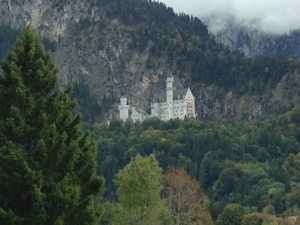
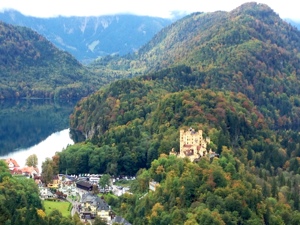
We also saw a third (Hohenschwangau) from a distance. That was more than enough to get the general idea- this was a king that loved the ornate, the over-the-top, the extreme. And he had the money to make it happen.

20131016-232851.jpg

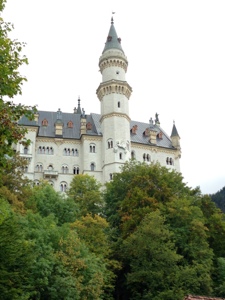
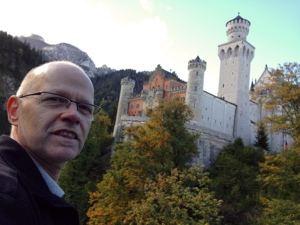
Neuschwanstein Castle is the stuff of picture books and Disney fairy tale fame. It’s not hard to imagine that Disney used Neuschwanstein as his model for Cinderella’s castle – even the guide books admit that this is one of the most famous buildings in the world.

But Ludwig II only spent about 8 nights here – by all accounts he visited during the multi-year construction, but there were never any parties, any balls, any sparkling lights and magnificently dressed people – not in reality. But on the walls – Ludwig fished his wish. Heros of Wagner Operas are everywhere – proud, glorious, and for many – insane. The tour (it’s required that you take a tour – no self touring) needs to be reserved ahead – but if you are aware of that – the reservation is free, and the time you will save is counted in multiple hours. We walked in, walked up to the booth, paid and left. Others were less lucky – and dealt with snaky lines that looped and curled. Don’t do that – reserve your tour!

Just a note – I don’t think you actually reserve a time – just a date. I’m not sure – but I typed in 11:00 as my desired time – and when we arrived – our tour ticket was 11:30. Not completely sure how that happened – I wasn’t the one who paid for the tickets. On the other hand – since we had 2 German speakers and 2 English speakers – they may have decided the only good choice was the tour with audio guides!

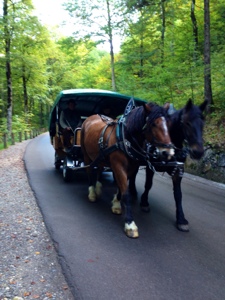
Anyway – cars are not allowed on the access road – only horse-drawn carriages and people walking.

20131016-232819.jpg

Shuttle buses take a completely different route. We thought we’d take the carriages – realized that the line was seriously long – and opted to walk. Good thing. No carriages passed us on the entire walk up. And it was a very easy walk, along a paved road through a forest. About 3/4 of the way up is the ‘carriage’ stop – and from there the views just get better and better.

It’s a completely beautiful castle. No wonder it’s one of the top tourist spots in Germany. I get it. Totally get it!

20131016-232808.jpg

We had plenty of time to wander around the outside and take pictures – if the tour starts at 11:30 – it’s going to start at 11:30. This is Germany you know. There are normally so many tourists – they have a loading now – and a pre-loading line. And still the wait without reservations can be hours. Part of the reason – it’s not that horribly expensive. Combine relatively inexpensive with seriously famous and you have a winner.

I carefully read the tripadvisor reviews before hand – and while the advice to get reservations is a winner – along with the advice to come early – the occasional complaint about the number of rooms you can see is completely unfounded. The issue isn’t the number of rooms you visit – it’s the number of rooms that were completed! And the rooms are huge. confiding that Ludwig was effectively hermit – it makes the castle even more amazing.

Ludwig II had two floors completely done when he fled here in an attempt to escape the government representatives who were coming to put him in an insane asylum. But those 2 floors are wonderful. The life-size murals telling the legends that Wagner immortalized in his opera are simply stunning.

The only sad thing is the speed that you must move thru in order to stay with your group. I actually ended up with the group after mine – caught between locked doors. No matter – that guide just waved a smile and continued on with their explanations.

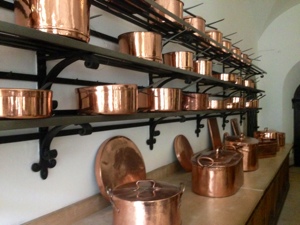
You are not allowed to take pictures inside (they want to sell those postcards) – but you can take pictures in the kitchen. Got to love copper pans, eh?

20131016-232902.jpg

One of the best parts of the tour is one not often mentioned in the reviews. After you tour the castle, you end up at the restaurant. Decent prices, and standard German food awaits there. But across the hall is a stellar exhibit – a video subtitled in at least 3 languages that shows using animated sequences the history of the building of the castle. it shows the original medieval forts that determined the shape of the foundation, it showed the castle being built step by step – and most importantly it showed what was on the original plans, but never brought to fruition.

Ludwig had planned on a Knight’s bath – effectively a private hot tub just for him. He’d also imagined a huge secondary terrace and overview on the Western side of the castle – the one overlooking his childhood home, the Schloss Hohenschwanagau. That’s the castle we saw from a distance, but never visited.

20131016-232830.jpg

After seeing the castle and watching the video, I was so impressed by the beauty of the paintings – not to mention the gold and gilt and ornamentation – I actually bought a story book that summarized the legends emblazoned on the walls.

Bottom line – worth the trip!

Close up and Personal – Life in a village in Bavaria


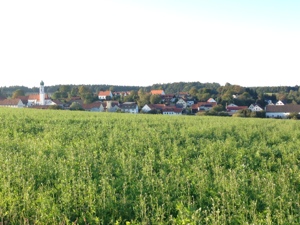
Living the nice life in Bavaria – ever wonder what it would be like to live in a village of 450 souls? Well – that’s where my German friends live – and like most dreams – the reality is always a bit unexpected.

20131015-061118.jpg

Their village is about an hour outside of Munich – but almost directly off the auto-bahn – so it’s a fairly easy drive into the city. There’s no public bus system to speak of in that area – but BMW, being the good employer that it is, provides bus service for their employees on demand. Nice, eh? So getting to and from work is not as challenging as one might imagine.

What is challenging is the lack of shopping. There are no shops of any kind in the village – if you want even a container of milk, you must drive to the next village to get it. It’s only about 5 minutes driving – but for those of us who live in the city – that’s a long way. Apparently there was a shop – but it closed. Just not enough business to be viable.

Another challenge – and this is one of those good/bad things – they know everyone. Really well. And they have a strong group of really good friends within walking distance. That’s nice – I don’t know my neighbors – so the idea of having friends so close is incredibly appealing.

20131015-061128.jpg

And they party hardy! Birthdays are a cause for huge celebrations – so large that one of the farmers actually built a room for everyone to use when they have a get-together. And they gather months prior to the party to plan the entertainment. They’ve done Can-Can numbers, written songs based on popular music – We totally cracked up on their version of ‘In the Navy’ – which had much to do with potatoes… Since it was in German, I’m sure we missed most of the jokes – but the recurring theme of potatoes was very obvious. And seriously funny.

Of course – you don’t get along with everyone – and in a village of 450 – it’s hard to avoid seeing someone who perhaps you are not that fond of. I guess avoidance is a skill you learn when you live in each others faces – all the time!

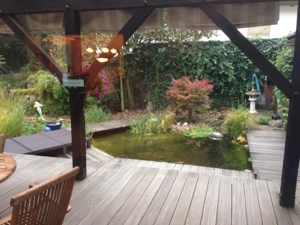
Because they live far from the city – they have a back yard. It’s small by North American standards – but fairly large by European Standards. There’s a vegetable garden, a flower garden – and a wonderful pond. Helmut has built the pond himself. It’s complete with a 4 foot high water bubbler/fall, countless frogs in season, and 20 fish. There are several sections to the pond – the 10 or so smaller fish tend to live in one part, the very large fish in the deeper portion. The pond freezes over in the winter – but Helmut assured us that the fish have no problem surviving, the water is deep enough for them to keep it from freezing completely.

20131015-061237.jpg

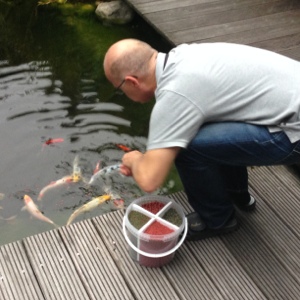
Like any pet – the fish respond to Helmut – and come when he calls – probably because he’s got the food!

20131015-061228.jpg

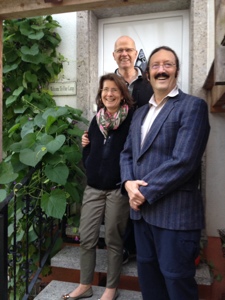
Their home is lovely – and we were lucky to be invited to stay with them. The home is new by European standards – built around 1970. It has 3 floors – a full basement, the main floor with a tiny kitchen, huge living and dining area, and the top floor with 3 bedrooms and another bathroom. What makes it distinctly different from what we’d expect in North America are the windows – that open at the top or at the sides depending on how you turn the handle. Another surprise – the size of the kitchen – they don’t even have a full-sized fridge – just a 1/2 size one. The full size fridge is in the basement. Because shopping requires planning – they also have a freezer in the basement. I would guess that farm houses would be larger – but this is more of city home, just located in the country.

About the food – being Eiser’s – we travel from meal to meal. And breakfast at Andrea and Helmut’s was great. And based on what we’ve been having at hotels since then – completely normal for this part of Germany. Eggs are offered, there’s at least 2 kinds of breads (it’s Octoberfest – at least one is a pretzel), jam, butter, meat slices and cheese. I visited a market and picked up fruit to add to the meals – fresh Strawberries, Figs, and pears. For dinner – if we’ve eaten in – we had wurst. Different kinds of wurst – but awesomely good. And one night we just had bread and cheese – naturally at least 4 different cheeses of course. And Beer. Lots of Beer. And Liquor. Can’t complain about the food.

Andrea is a great decorator – and unlike me – for her less is more. So each room reflects their love of Adventure travel – that is how we met them of course – with simple yet beautiful displays of all the wonderful things they have collected on their trips here and there. My favorites were the memories of Africa – an adventure we shared with them.

Because it’s a village – walking around is expected – but sidewalks are not provided. No need – there are hardly any cars. In fact, the only moving vehicle we saw in our hour or so tour was a tractor!

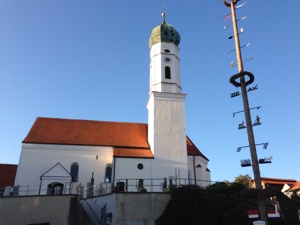
Their village has a church, a May pole, a lovely cemetery, and a huge farm – owned by one of Helmut’s very good friends. We were able to get a great tour of a working farm – by the farmer. Cool.

20131015-061157.jpg

It turns out that our friends live in the Hops growing area of Bavaria. I didn’t know this prior to our visit – but 70% or more of the hops grown to make beer in Germany is grown right near their home. We arrived just after the hops harvest had been completed. So we didn’t get to see the hops on the vines – they had been harvested, separated from the stems, and packed for shipping. But we did get to see the equipment they use today to harvest the hops – and we toured a Hops Museum.

Germany controls the stuff that goes into their beer – in a big way. A law passed in 1516 restricted what can go into German beer – just water, barley and hops! The newest research in the ‘Hops’ field is on how to naturally get the hops to have different flavors. No joke – apparently the hot new thing is raspberry Hops.

http://en.wikipedia.org/wiki/Reinheitsgebot

As you can easily imagine – having a law this strict – and given the amount of beer brewed and consumed in Germany alone – makes Hops growing a very big deal! Hops farmers do very well financially – despite the intense effort involved. And apparently the quality of the hops is key to the flavor of the beer. There is a lot of competition among the growers as to whose hops is the best. It’s a bit like growing grapes for wine – but without the cachet!

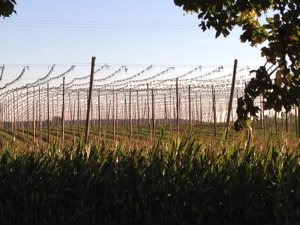
Hops are vines that grow vertically – up to about 30 feet high. So hops farms look a bit like telephone pole farms – there are poles stuck in the ground about every 10 feet – and between the poles are strung wires.

20131015-061146.jpg

In the fall, the farmers tie down wires about a foot apart – these wires are then tied to the hops plants. As the hops plants grow in the spring, the farmers manually train the plants to run up these wires. In the fall – machines cut down the wires, shake the hops seeds off the stems, grind up the stems and wires – and spit out the hop seeds into huge bags. These bags then go to the breweries to be further processed on their way to becoming beer.

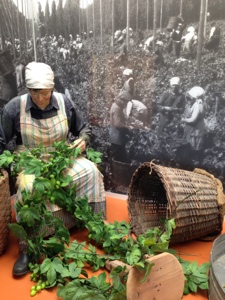
This picture – taken at the Hops Museum – shows the old-fashioned way of getting the seeds off vine. Today of course they use a huge machine.

20131015-061218.jpg

Our friends told us that most hops farms are still family owned and operated, and providing good incomes. The major concern – hops from China of course.

What made our stay with Helmut and Andrea so special – in addition to the great conversations and wonderful tours they took us on – was the chance to see how other people really live. Too often our visits to other countries are restricted to museums, hotels, and restaurants. We were lucky to spend 4 days and 4 very alcohol fueled nights enjoying a life style very different from our own. Truly a wonderful part of our trip to Germany.

A special personal thanks to Helmut and Andrea – who as you can tell – went way, way, way out of their ways to make our stay with them – and in Germany so very special. Leslie and Victor